Tag: neuroaffirming
-

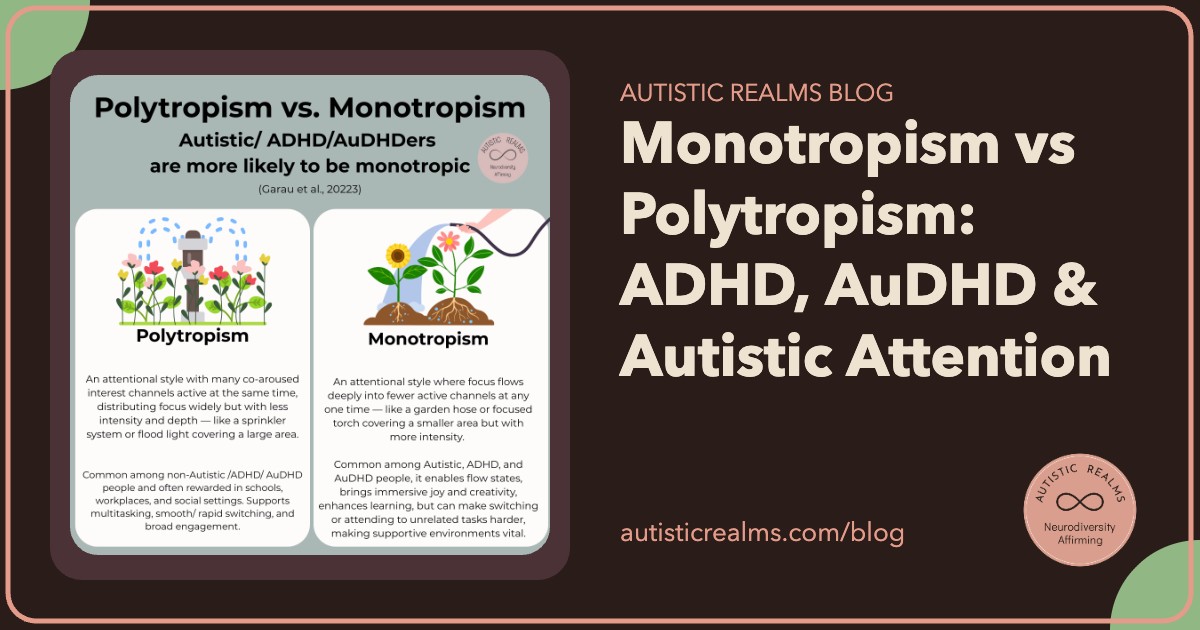
Monotropism vs Polytropism: ADHD, AuDHD & Autistic Attention
Written by Helen Edgar,
Explore how monotropism shapes Autistic, ADHD, and AuDHD attention. Dispelling myths, uncovering research and exploring why neuroaffirming support matters for our wellbeing.
-
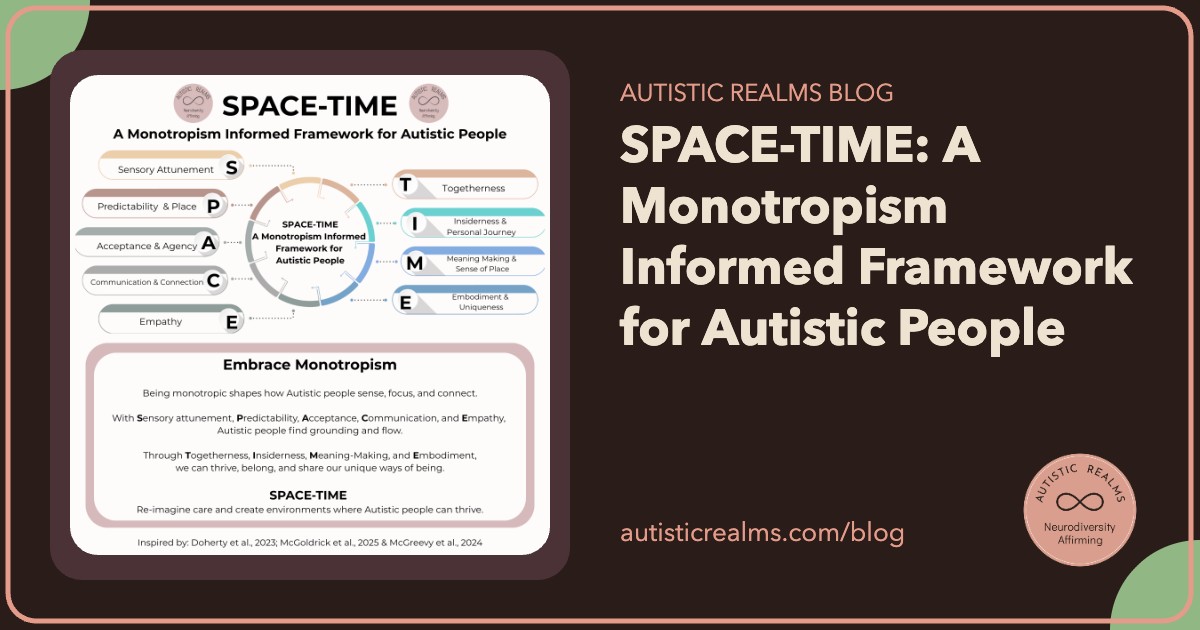
SPACE-TIME: A Monotropism Informed Framework for Autistic People
Written by Helen Edgar,
SPACE-TIME: A Monotropism-Informed Neuroaffirming Framework for Autistic People
-
Autistic Mental Health: Beyond the Pathology Paradigm
Written by Helen Edgar,
Autistic mental health is often framed through a narrow, deficit-based lens — one that focuses on pathology, risk, and what’s “wrong.” But this view leaves out the richness of autistic lives, the diversity of our needs, and the resilience in our communities. Moving beyond the pathology paradigm means centring lived experience, recognising the systemic barriers…
-
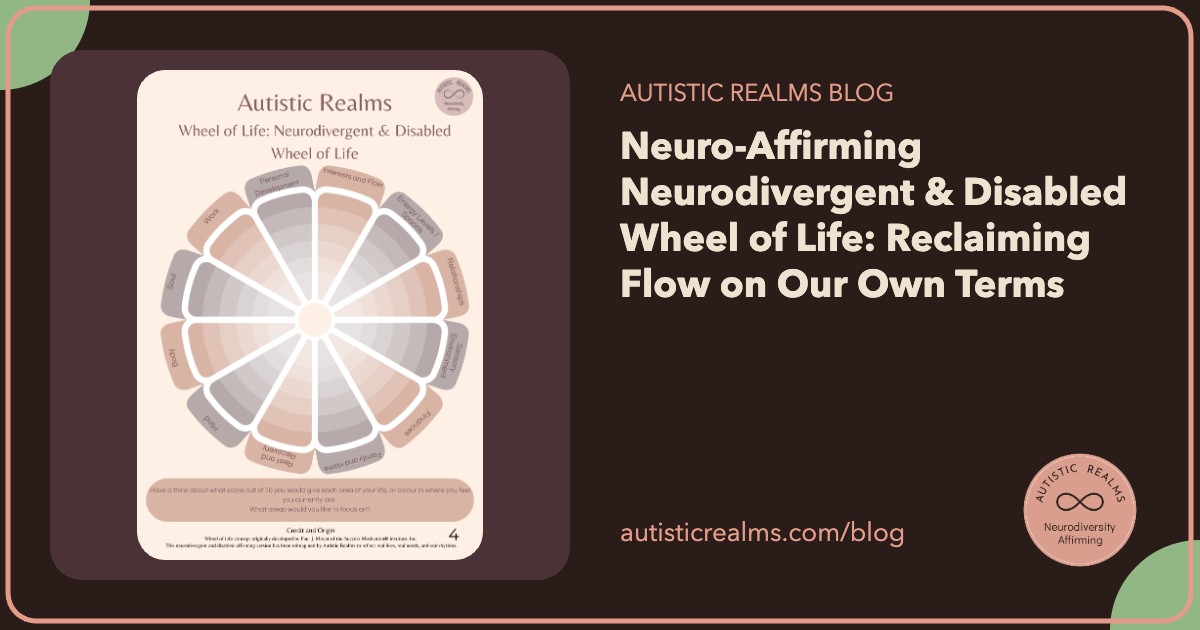
Neuro-Affirming Neurodivergent & Disabled Wheel of Life: Reclaiming Flow on Our Own Terms
Written by Helen Edgar,
Neuro-Affirming Neurodivergent & Disabled Wheel of Life: Reclaiming Flow on Our Own Terms Workbook available for instant download.
-
What does ‘neuro-affirming’ mean for Autistic young people?
Written by Helen Edgar,
This blog was written by myself, Helen Edgar of @autisticrealms for GROVE. I am delighted to work with Grove Neurodivergent Mentoring and Education as their Training, Education & Resource Specialist. This blog was edited by Jess Garner, GROVE’sFounder/Director. The blog, ‘What does ‘neuro-affirming’ mean for Autistic young people?’ is available to read on GROVE’s website, along with many other resources and information…
-
Obstacles in the way of Neuro-Affirming Practice in Educational Settings & Ways Forward
Written by Helen Edgar,
Implementing neurodiversity-affirming practices in education, healthcare, and other systems is often hindered by pervasive narratives and biases. Recognizing and addressing these obstacles is crucial for fostering inclusive and supportive environments for neurodivergent and disabled individuals. Here are some common barriers that I have been working on with Stimpunks, who have a more in-depth page with…