Tag: Monotropic time
-

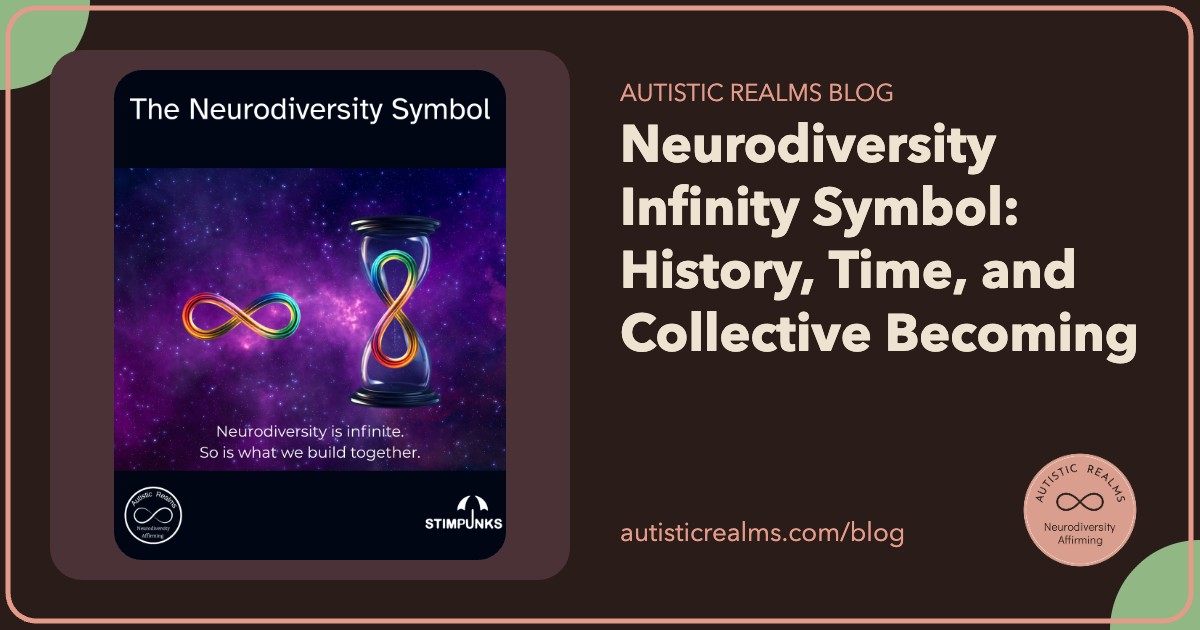
Neurodiversity Infinity Symbol: History, Time, and Collective Becoming
The neurodiversity infinity symbol has a story worth knowing. Rotate it and it becomes an hourglass holding time, community, and collective becoming.
-
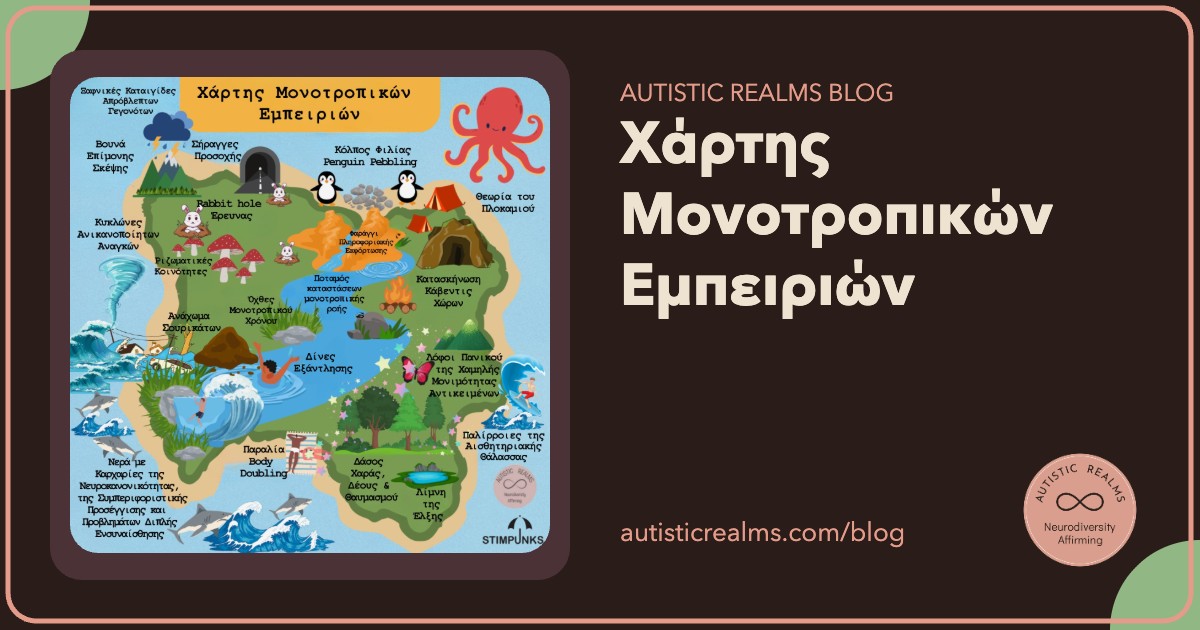
Χάρτης Μονοτροπικών Εμπειριών
ThalloMinds has kindly translated The Map of Monotropic Experiences (Χάρτης Μονοτροπικών Εμπειριών) that I created in collaboration with Stimpunks! Huge thanks for all the hard work!
-
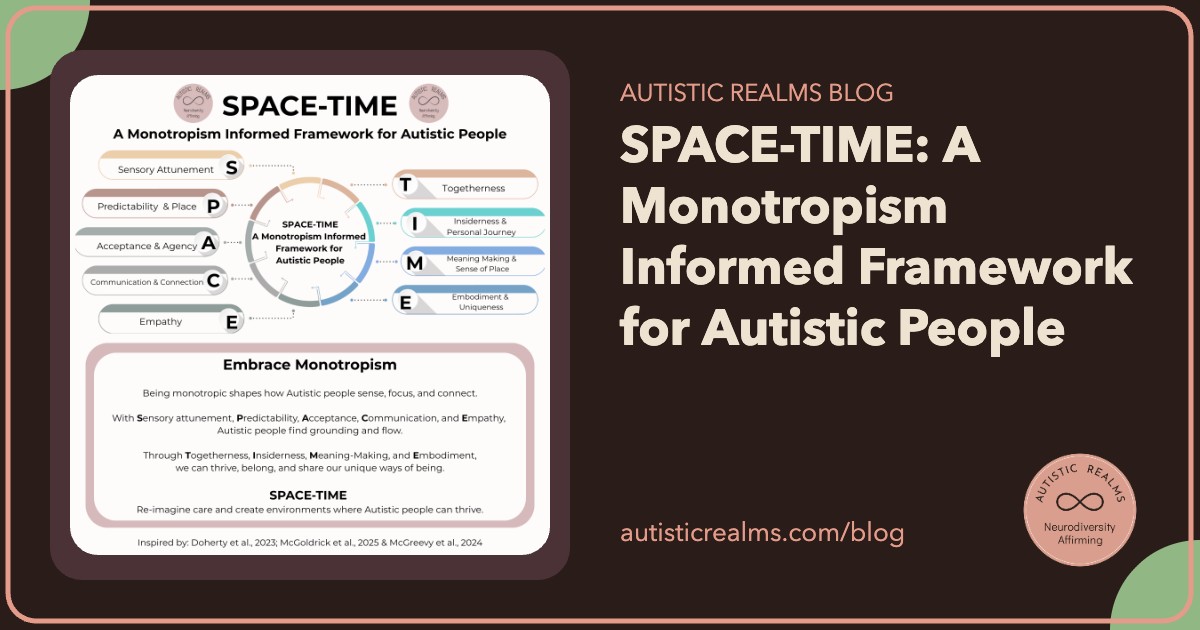
SPACE-TIME: A Monotropism Informed Framework for Autistic People
SPACE-TIME: A Monotropism-Informed Neuroaffirming Framework for Autistic People
-
Ethodivergent Hearth Building: A Relational Neuroqueering Community Practice
Explore ethodivergent hearth building as a neuroqueer, relational practice of care, kinship, and more-than-human community with Autistic Realms & Stimpunks.
-
Mossy Minds & Monotropism
An exploration of moss and monotropic ways of being. An invitation to slow down, sink in, and reconnect through sensory depth and shared presence in liminal spaces.
-
Reclaiming Rest: Autistic Burnout, Monotropism, and Resistance
Rest can become a radical act in a world that often equates our worth with productivity, especially for Autistic or otherwise neurodivergent people navigating the tides of burnout, where even our ways of resting may look different.
-
Neuroqueering Monotropic Time: A short summary
Autistic/ADHD people are more likely to be monotropic and resonate with the theory of monotropism. Dinah Murray, Wenn Lawson, and Mike Lesser developed the theory of monotropism in the late 1990s. It is typically described as a neuro-affirming theory of Autism, but I think it is also a temporal mode. I am considering whether being…
-
Neuroqueering Time: Bergson, Deleuze, and Monotropism (an exploration)
Time as a double temporality problem, exploring interest gravity for monotropic people and flow as a temporal home…..
-
Monotropic Time – A Short Blog
Monotropic Time: A Different Rhythm If you are Autistic, ADHD, or AuDHD, time may not feel like a straight line, and you may feel you are constantly battling against the time on the clock. Your internal perception of time may feel more like a spiral, looping, stretching, expanding and contracting, sometimes speeding up and other…
-
Monotropic Time & Neuroqueering Temporalities
Monotropic Time & Neuroqueering Temporalities Dwelling in Resonance: Monotropism, Monotropic Time, Spirals & Neuroqueer Temporalities
-
Monotropic Time
Each person’s experience of time is likely to be influenced by culture, age, disability and neurodivergence. For Autistic/ADHD/AuDHD people, time is anything but linear or neutral and is not a universally accepted given.
-
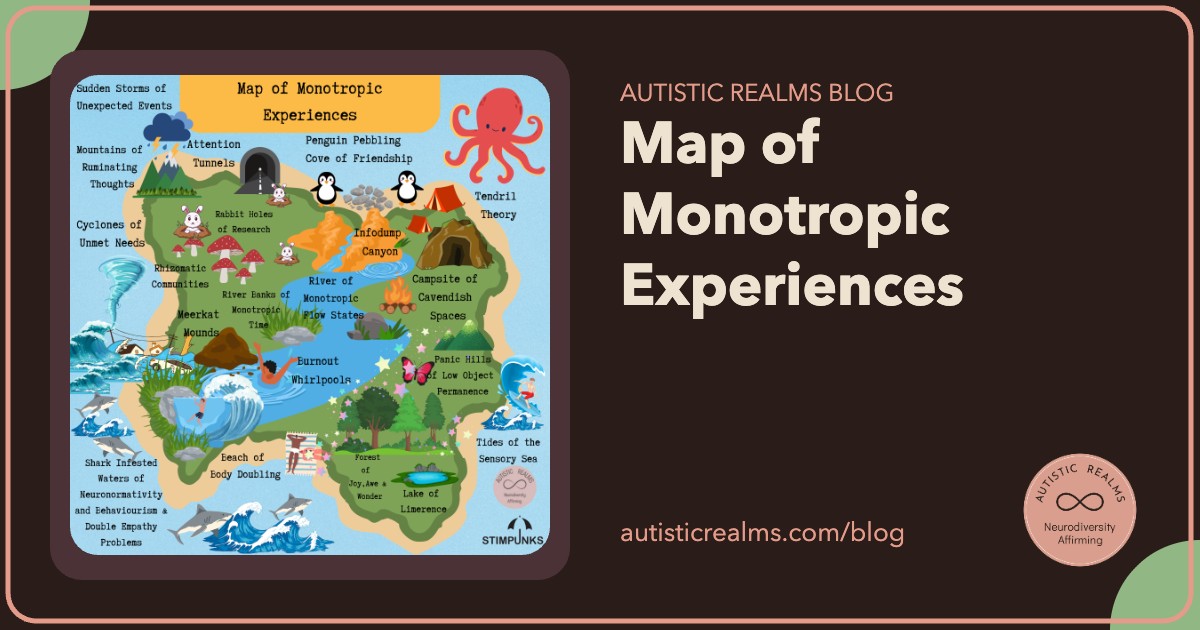
Map of Monotropic Experiences
The Map of Monotropic Experiences now has a home of its own. Visit monotropicmap.org to explore each of the twenty areas, mark your own map and find the free training. You can also find the free training and downloads further down this page. Monotropism seeks to explain Autism in terms of attention distribution and interests. …