Tag: PMLD
-

Awe, Wonder and Monotropic Attention in Neuroqueer Learning Spaces
If Helen De Cruz designed a learning space, what would it look like? Helen Edgar follows wonder and awe through monotropism, glimmers, flow and Cavendish Space.
-
Little Fluffy Clouds: An Invitation To Play
Multisensory Play Ideas: Little Fluffy Clouds Sensory Session
-
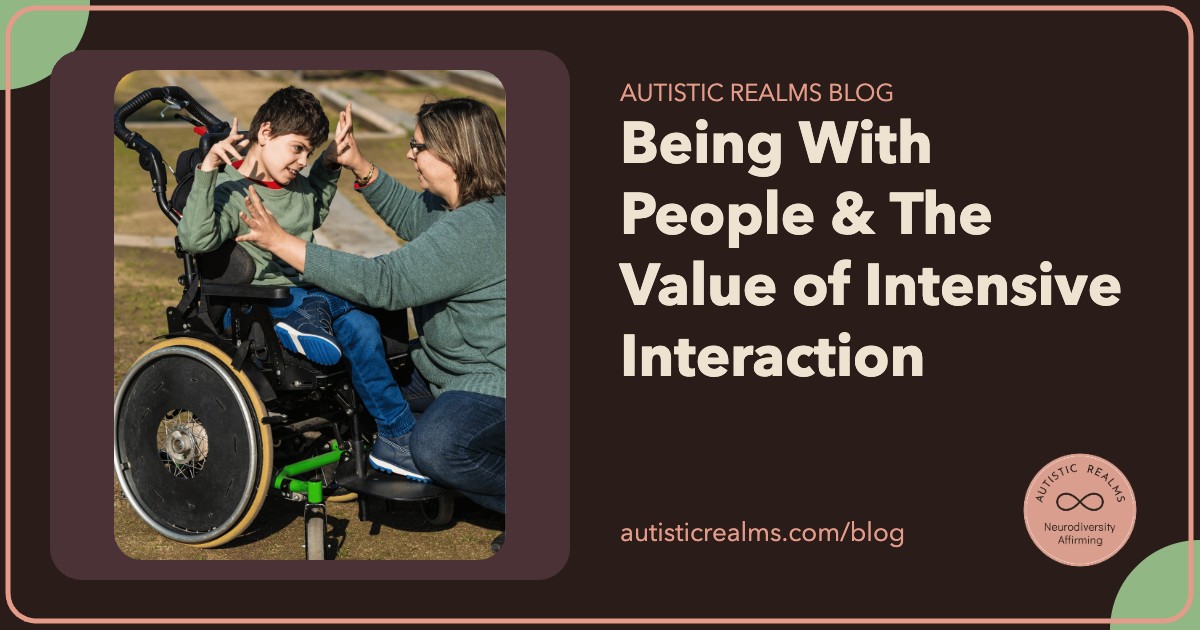
Being With People & The Value of Intensive Interaction
Helen Edgar draws on twenty years of practice alongside people with PMLD to explore why Intensive Interaction — when practised with genuine neuro-affirming care — is not just a communication approach. It is a way of being human together.
-
Neuro-Affirming Practice Is Not a Framework. It’s a Way of Being.
Neuro-affirming practice isn’t a framework or a checklist. It’s about being human — kind, compassionate, and truly present with people, just as they are.
-
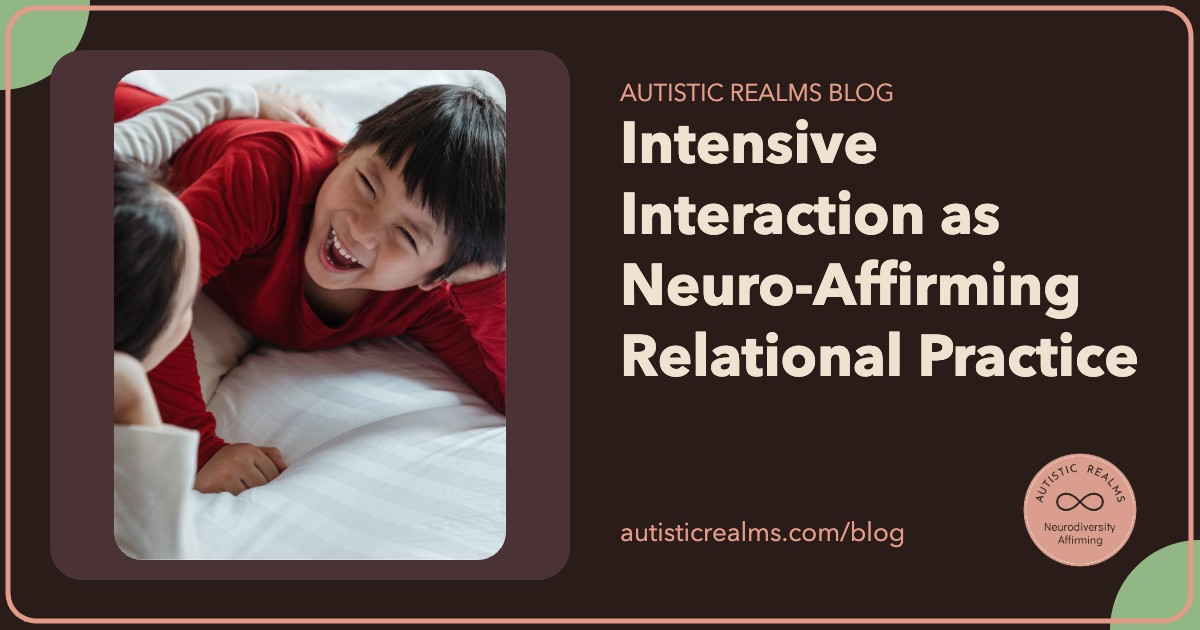
Intensive Interaction as Neuro-Affirming Relational Practice
Intensive Interaction isn’t about “fixing” or prompting communication. It’s about meeting someone where they are—through connection, attunement, and shared flow. A neuro-affirming, relational framing to support those with profound and multiple learning disabilities.
-
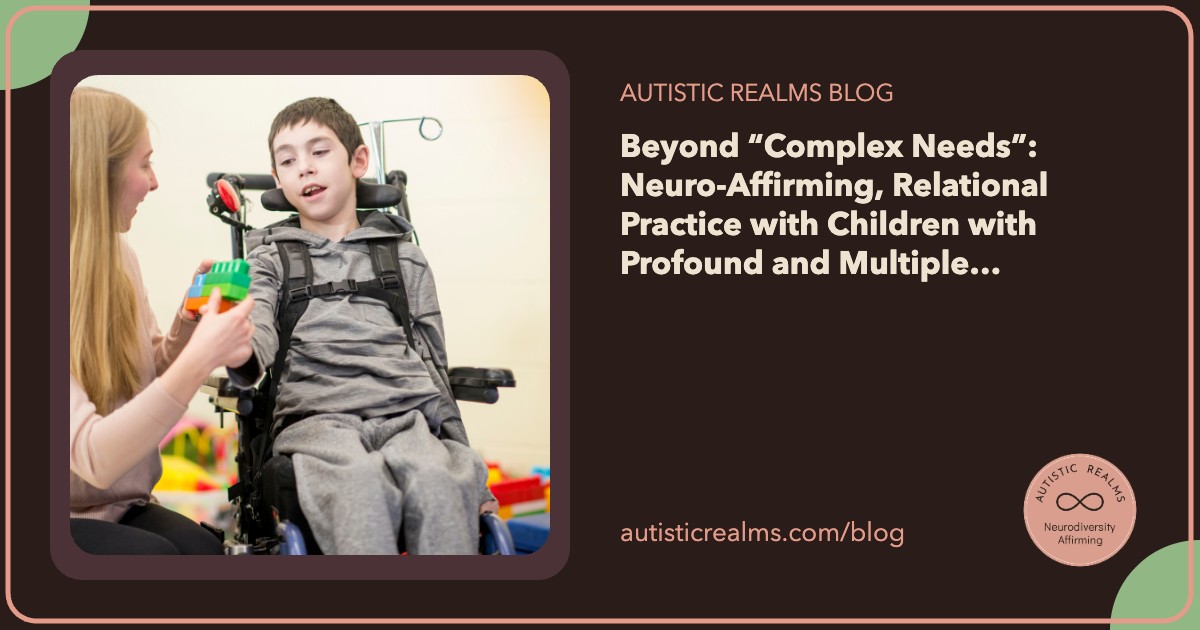
Beyond “Complex Needs”: Neuro-Affirming, Relational Practice with Children with Profound and Multiple Learning Disabilities
A neuro-affirming, relational approach to supporting children with profound and multiple learning disabilities, centred on safety, communication, and being-with.
-
Presuming Competence: A Neuro-Affirming Reframe To Support Autistic People
When “presume competence” is applied without a neuro-affirming lens, it can become a harmful, ableist expectation
-
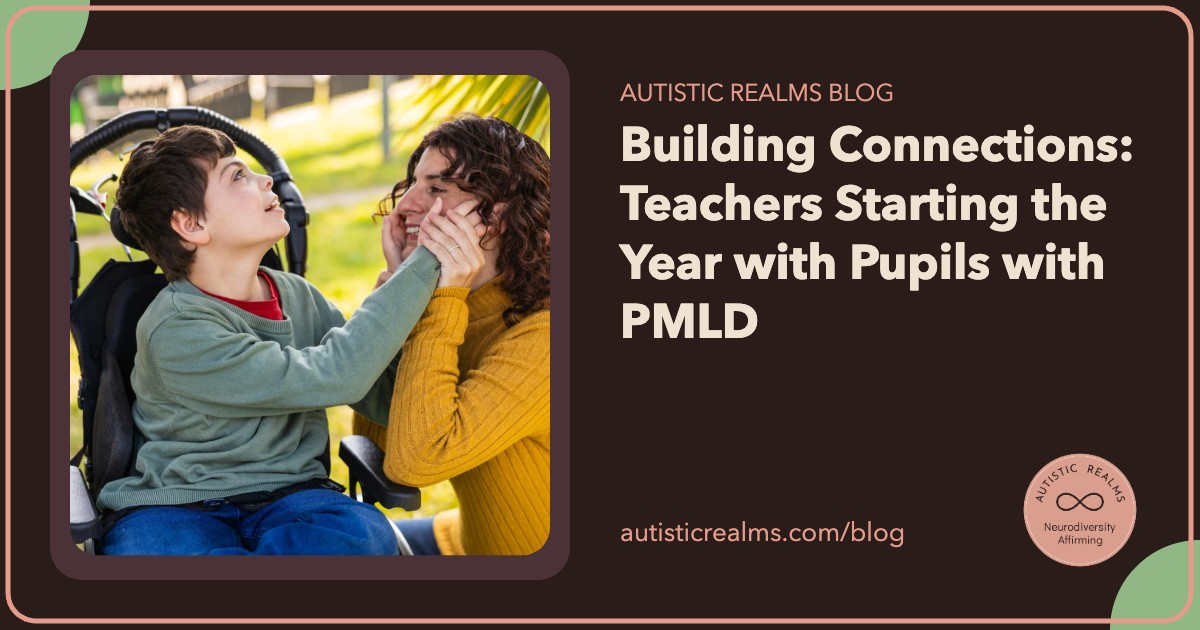
Building Connections: Teachers Starting the Year with Pupils with PMLD
Connection comes first. Relationships, trust, & small shared moments are the real foundations of learning.
-
Autistic Pride: Restorying & Unknowing Autism
Restorying is how we reclaim our Autistic voices, honour our ways of knowing, and build futures rooted in connection, not correction.
-
Being With People with Profound and Multiple Learning Disabilities Through Attunement and Shared Time
There’s something incredibly powerful in the simple idea of being with someone. Not doing to or even doing with or for, but truly being with. For people with PMLD, attunement, emotional connection, and flexible shared time can help to create more space for trust and support wellbeing.
-
Autistic Young People: Skills Regression, Burnout or a shift in Monotropic Attentional Resources?
Autistic individuals may not lose skills but instead redirect their monotropic attention toward new interests or areas of development.
-
Exploring ‘Being With’
I experience and interpret ‘Being With’ as a process of be-coming together. Deleuze’s concept of the line of flight allows us to explore and follow meaning together. This article will explore these ideas in a bit more detail. This post is a pulling together of several discussions I have had online over the past few…
-
Spaces For Multi-Sensory Learners and those with Profound and Multiple Learning Disabilities
Helen Edgar (Autistic Realms) and Ryan Boren (Stimpunks) have been exploring radically inclusive learning environments. Cavendish learning spaces are based on flexibility, interaction, movement and the role of embodied responsive experiences. We reject the boundaries of traditional classroom settings and look at how they not only restrict embodied experiences but lead to disembodied experiences and…
-
Total Communication
Total communication is not a new concept it evolved from the field of education for the deaf in the 1960s (Schow and Nerbonne 2007). Mueller (2021) defines total communication as including, ‘not only speech, signing, gestures, and written language, but also picture communication and voice output communication devices’. For those with profound and multiple…
-
Education Crisis – Neurodiversity Affirming Teacher Training Needed
Language Identity First Language: In line with preferences from the Autistic community I will be using Identity First Language (ie. Autistic person, NOT person with Autism) Neurodiversity – This relates to the biological fact that human brains and minds differ from each other. Neurodiversity aligns with the idea that all children are unique and…
-
Language matters, relationships are essential
It can be difficult and confusing to understand the language surrounding neurodiversity. It can be seen to be creating further divisions and potentially isolating some people by getting hung up on the specifics. I know I have my own anxiety about not using the ‘right’ language (despite writing this!). In response to my previous…
-
‘Profound autism’ does not exist – rather there are autistic individuals with PMLD / PIMD
‘Profound Autism?’ Language matters, but it is complicated and there are constant changes of vocabulary and what is deemed as “correct” or inline with best practise of the time, particularly in education and health care. Earlier this year Emily Ansell Elfer (Feb 2022) shared the news that the phrase ‘Profound Autism’ had been ‘officially recognised…
-
‘Profound’ in relation to those with PMLD / PIMD
PIMD / PMLD The International Association for the Scientific Study of Intellectual and Developmental Disabilities (Profound Intellectual and Multiple Disabilities – IASSIDD) supports individuals and their families who have profound intellectual and multiple disabilities (PIMD). They define this group of people by saying that ‘they are characterized by very severe cognitive, neuromotor and/or sensory…