Tag: Behaviourism and ABA
-

No Space Is Neutral: Safe Spaces, Imagined Neutrality, and the Work of Belonging
: No space is neutral. Exploring minority stress, the Double Empathy Problem, and what it really takes to build safer, neuroqueer spaces together.
-
Intensive Interaction as Neuro-Affirming Relational Practice
Intensive Interaction isn’t about “fixing” or prompting communication. It’s about meeting someone where they are—through connection, attunement, and shared flow. A neuro-affirming, relational framing to support those with profound and multiple learning disabilities.
-
The Neuronormative Paradigm: Naming The Systems That Harm
The Neuronormative Paradigm, conceptualised by Nick Walker, names the systems that define and enforce what society considers normal. This exploration piece contrasts the neuronormative paradigm with the neurodiversity paradigm, which recognises all ways of being as vital to human diversity.
-
Ethics & Values of Autistic Realms
Autistic Realms is grounded in values of authenticity, autonomy, and relational care for the human rights of Autistic or otherwise neurodivergent and disabled people. These guiding principles align closely with the ethics and principles of both the Therapist Neurodiversity Collective (TNDC) and the Autistic Self Advocacy Network (which I am a member of – ASAN),…
-
Why “Interest-Led” Isn’t Enough: Embracing Monotropism & Neuro-Affirming Practice
Many approaches claim to be “interest-led,” but true neuroaffirming practice goes deeper. Being monotropism-informed means honouring Autistic attention, autonomy, and sensory safety; not using children’s passions to shape compliance. Real inclusion celebrates authentic joy, not conformity.
-
Protecting the Meaning of Neuro-Affirming Practice
Discover what genuine neuro-affirming practice looks like — beyond tokenism and “neurodiversity-lite.” Explore how to protect the heart of the neurodiversity movement and uphold its community-led roots.
-
Beyond “Neurodiversity Lite”: Why Neurodiversity-Affirming Practice Matters
Explore the difference between true neurodiversity-affirming practice and “neurodiversity-lite,” and why justice, and lived experience matter.
-
Why PBS is Harmful for Autistic and Neurodivergent Young People
Exploring why and how Positive Behaviour Support (PBS) can harm Autistic people. #Neurodiversity #AutismAcceptance #PBS #DisabilityJustice
-
Monotropism and Autistic Play
All play is ok! There is no right way to play! All play is ok! There is no right way to play! To embrace Autistic play is to embrace the theory of monotropism. We need to enable the right environments and foster meaningful relationships so people can engage in flow and have cognitive, sensory and…
-
Challenges for Autistic & Neurodivergent Families Navigating the SEND System: We Need to Understand the Double Empathy Problem & Embrace Monotropism
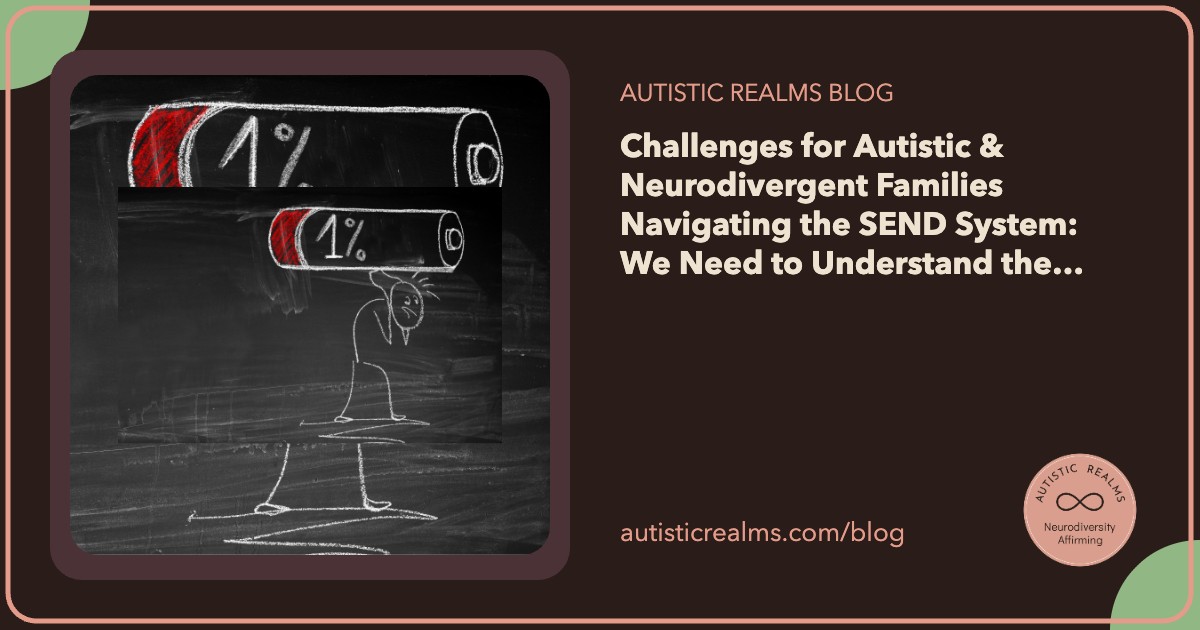
(Blog based on a presentation I delivered to London Met University 14th March 2025, updated April 24th 2025 following the research published by…. Introduction The Special Educational Needs and Disabilities (SEND) system is designed to support children with additional needs, yet for many neurodivergent families, it presents more barriers than solutions. Families navigating this system…
-
Obstacles in the way of Neuro-Affirming Practice in Educational Settings & Ways Forward
Implementing neurodiversity-affirming practices in education, healthcare, and other systems is often hindered by pervasive narratives and biases. Recognizing and addressing these obstacles is crucial for fostering inclusive and supportive environments for neurodivergent and disabled individuals. Here are some common barriers that I have been working on with Stimpunks, who have a more in-depth page with…
-
Behaviourism/PBS/ABA/PECs: There are alternative ways
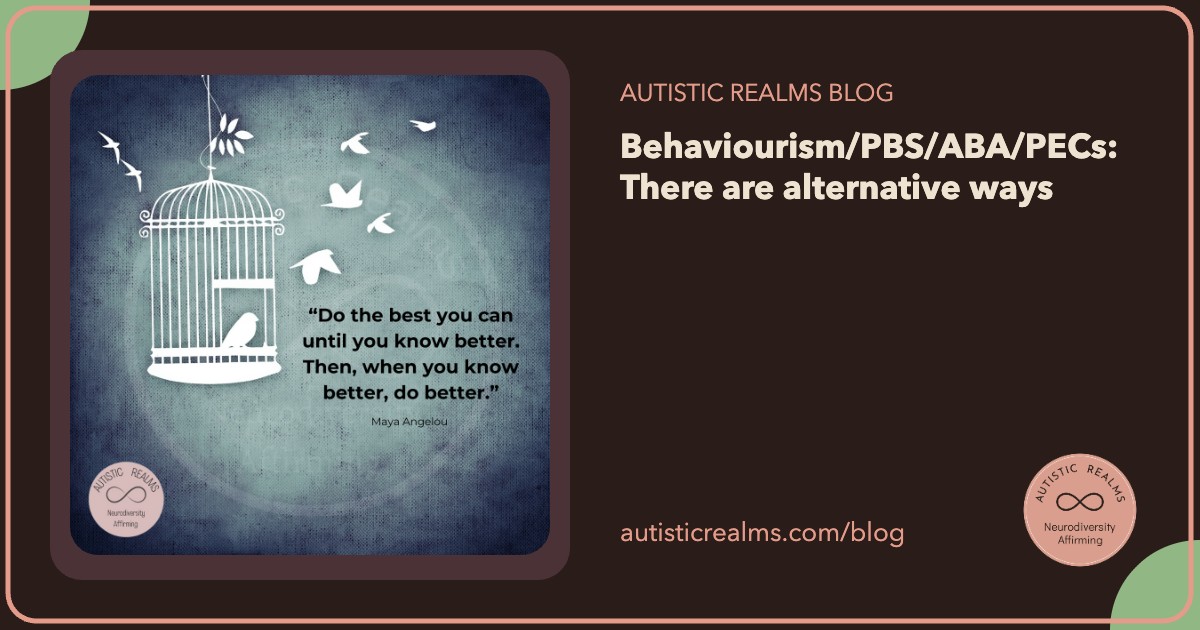
‘The path isn’t a straight line; it’s a spiral. You continually come back to things you thought you understood and see deeper truths’ – Barry H. Gillespie I love this quote by Barry Gillespie ”The path isn’t a straight line; it’s a spiral. You continually come back to things you thought you understood and see…
-
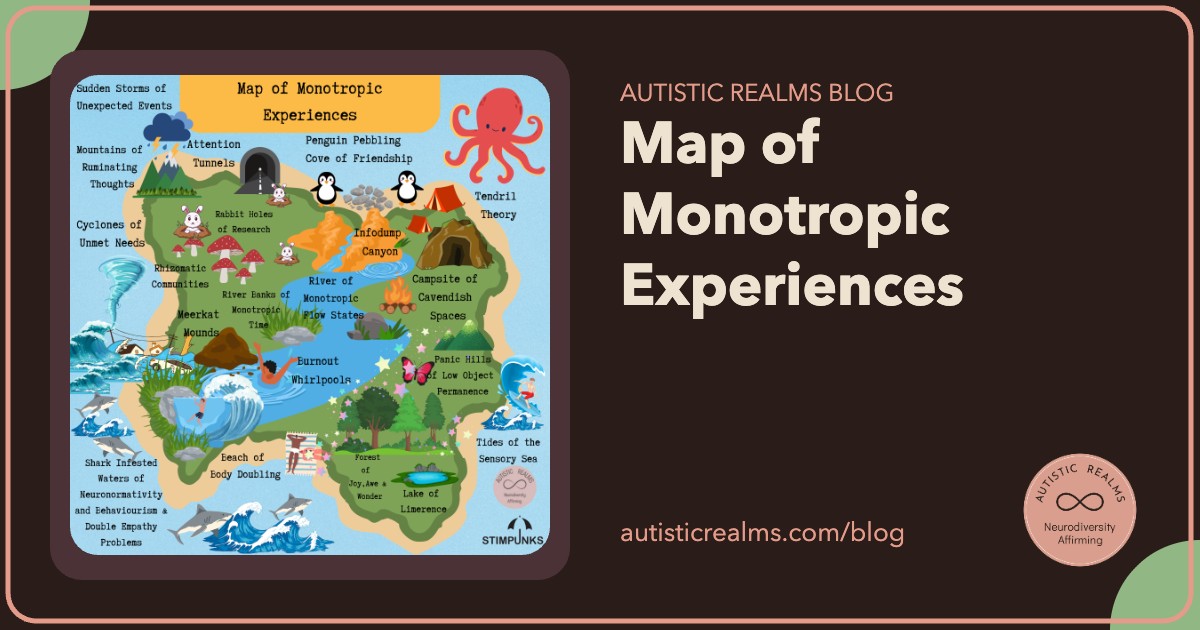
Neuronormative Domination, Monotropism & The Map of Monotropic Experiences
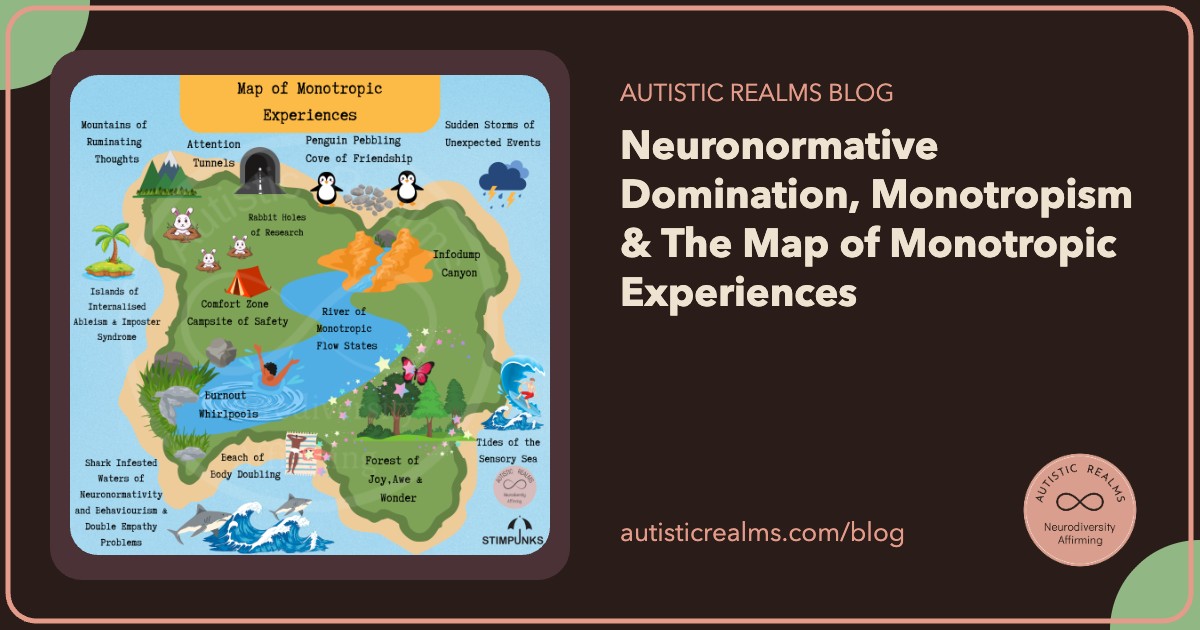
The Map of Monotropic Experiences now has a home of its own. Read more about neuronormative domination, the water the whole map sits in, at monotropicmap.org, and explore each of the twenty areas of the map there too. In collaboration with Stimpunks, I created a Map of Monotropic Experiences. This is a revised edition of…
-
Autistic Burnout – Supporting Young People At Home & School
Autistic burnout in young people is real—and recovery starts with understanding. This post offers neuroaffirming ways to spot the signs, reduce demands, and truly support. 💛 #AutisticBurnout #Neuroaffirming #Monotropism #AutisticSupport
-
Map of Monotropic Experiences
The Map of Monotropic Experiences now has a home of its own. Visit monotropicmap.org to explore each of the twenty areas, mark your own map and find the free training. You can also find the free training and downloads further down this page. Monotropism seeks to explain Autism in terms of attention distribution and interests. …
-
Top 5 Neurodivergent-Informed Strategies
Top 5 Neurodivergent-Informed Strategies By Helen Edgar, Autistic Realms, June 2024. 1. Be Kind Take time to listen and be with people in meaningful ways to help bridge the Double Empathy Problem (Milton, 2012). Be embodied and listen not only to people’s words but also to their bodies and sensory systems. Be responsive to people’s…
-
Neuroqueer Collaborative Work Flow Spaces
A behind-the-scenes look into the collaborative workflow between Helen Edgar (Autistic Realms) and Ryan Boren (Stimpunks) as we write about Neuroqueer Learning Spaces (NQLS) and continue our neuroqueering journeys, connecting with awe-inspiring people and discovering new ideas to explore along the way. Liminal Spaces Ryan Boren (Stimpunks) and I are neuroqueering ourselves and the spaces we…
-
Neuroqueer Learning Spaces — Webinar — a summary and reflection 6th May 2024
Neuroqueer Learning Spaces Webinar — A summary and reflection Neuroqueer Learning Spaces is a community project led by Ryan Boren (Stimpunks) and Helen Edgar (Autistic Realms). More information is available on Stimpunks’ website. To support this project and open up further discussions about neuroqueering education and learning spaces, David Gray-Hammond hosted a live webinar, “Explore Neuroqueer Learning…