
Many approaches in education, therapy, and parenting circles now describe themselves as being “interest-led.” It sounds positive on the surface and it can be but too often, this language is hiding something less affirming underneath. When being “interest-led” is reduced to using a child’s passions as tools to get a child to comply, to build eye contact, or to meet neurotypical goals, it stops being neuro-affirming – it becomes coercion dressed up as kindness and is no longer “child-led”.
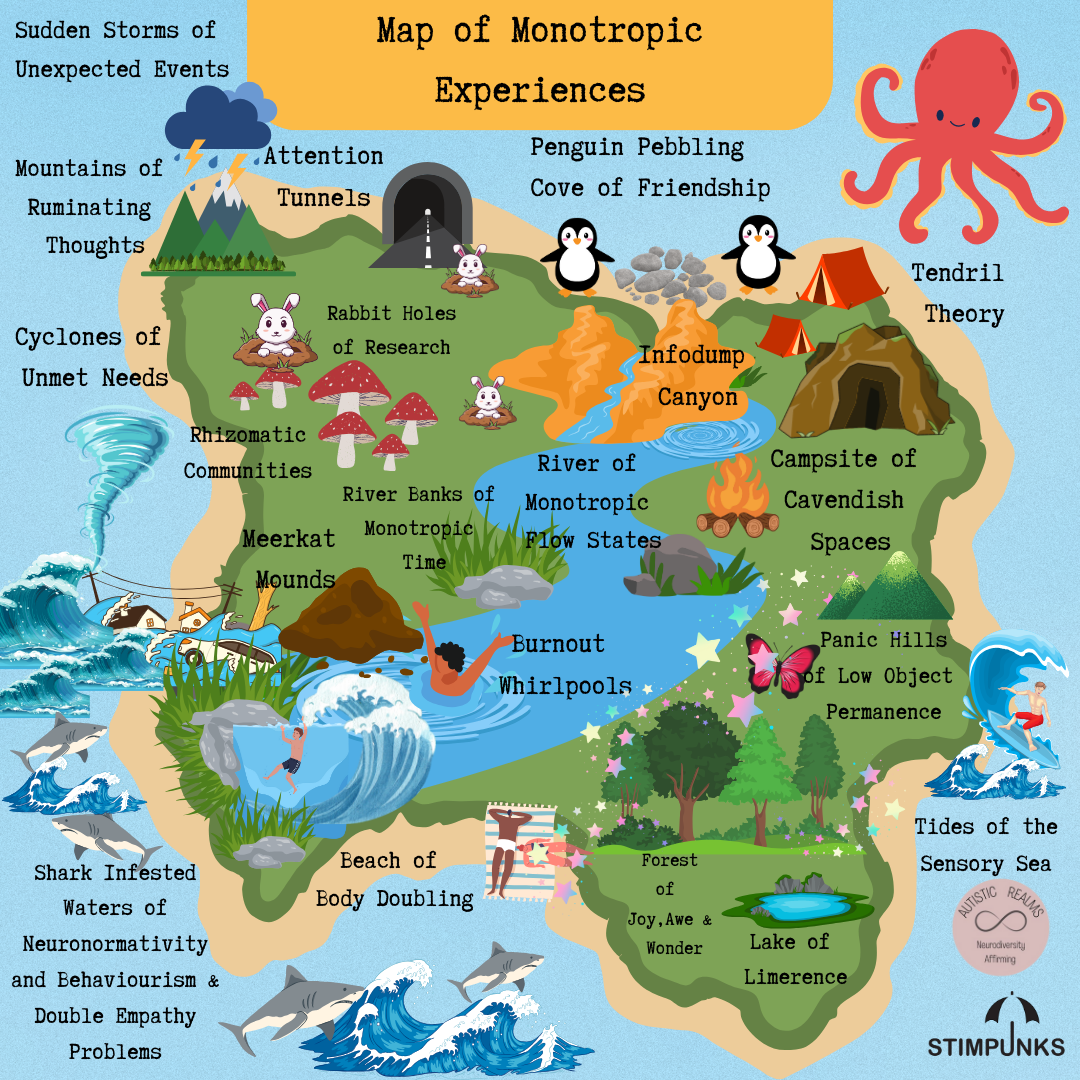
True neuro-affirming practice starts with understanding why interests matter for Autistic children and not just how to use them. For Autistic and otherwise neurodivergent children, interests are not optional extras or convenient motivators. They are the foundation of how attention, learning, and emotional regulation work and very much at the the heart of the theory of Monotropism (Murray, Lawson & Lesser 2005).
What Monotropism Really Means for Autistic Learners
The theory of Monotropism describes the deeply focused, flow-based way many Autistic and ADHD people process and engage with the world. Interests aren’t distractions from learning, they are learning, they are how connection, joy, and self-regulation happen and how relationships can be strengthened.
When we understand monotropism, we begin to see that an Autistic child’s attention system isn’t “deficit-based” or “too rigid”, instead it can be seen to be attuned to depth over breadth, flow over fragmentation, and authenticity over performance. To truly support a child, we must value their natural monotropic attention patterns and not override them.
The Problem with Neurodiversity-Lite Approaches
When programmes claim to be “interest-led” but still aim to train conformity and to “fix” Autistic people they risk weaponising a child interests. Tools like PECs, Attention Autism, and certain social stories may look supportive on the surface, but if they’re built on behaviourist roots, reinforcing compliance, performance, or neurotypically biased forms of communication and socialising they are not neuro-affirming, they are harmful.
This neurodiversity-lite approach is often a sugar-coated version of old outdated models that still centre neurotypical comfort over authentic neurodivergent wellbeing. It’s a way of maintaining control and conformity while speaking the language of inclusion. Just because a programme says it is interest-led by the child, doesn’t mean it is safe for their well-being.
When “Interest-Led” Is Harmful
These are examples of neurodiversity-lite or behaviourist practices:
- Using a child’s favourite topic or interest (e.g., dinosaurs or trains) as a reward for compliance.
- Adding a child’s interests into PECs or token boards to make them “work harder.”
- Using frameworks like Attention Autism sessions that demand joint attention or eye contact, rather than allowing parallel engagement and real bodily and psychological autonomy.
- Writing Social Stories that aim to teach “expected” (neurotypical) social behaviours instead of supporting self-understanding and enabling children to be their authentic selves.
- Using a child’s passion as a way to “pull them into” tasks they don’t want or need to do. If an Autistic child hits burnout or a mental health crisis, and their passions have been weaponised like this, they will have even less to fall back on to help recovery.
- Praising “using interests appropriately” which implies there’s an inappropriate way to love something deeply often means we are placing our own value system on certain interests over others. A child’s love of numbers might be celebrated, while another child’s love of slime, spinning, or Minecraft may be dismissed as being pointless, silly or obsessive. When we rank interests by how “productive” or “socially acceptable” they seem, we teach children that some parts of their joy are welcome and others are not. Every passion carries the opportunity for shared meaning making, co-regulation, and a deeper connection when we stop judging interests through a neuroconformist lens.
What Monotropism-Informed, Neuroaffirming Practice Looks Like
Authentic neuro-affirming practice honours autonomy, attention flow, and sensory safety:
- Creating time and space for deep engagement in interests without too much interruption or redirection.
- Joining a child within or alongside their interest (e.g., drawing trains together, scripting alongside them) without trying to shift control.
- Using shared interests as a bridge for connection, not a tool for compliance.
- Trusting that learning and communication happens through a child’s focus, not despite it.
- Supporting co-regulation through sensory alignment — letting a child stim, move, or pace as part of their natural regulation.
- Building safe flexible environments where their Autistic attention and play style is respected (e.g., allowing parallel play, time for solitude, or intense focus as and when needed).
- Encouraging autonomy and consent — the child chooses when and how to share their interests with people they feel safe with.
- If interests get weaponised and a child hits burnout it may take even longer to recover, as they will no longer be able to hook into a flow state that could help them.
Why Adopting A Neuro-Affirming Approach Matters To Interest Led Learning
An authentic neuro-affirming approach doesn’t use a child’s interests to pull them out of their flow or shape them into someone else’s expectations. It protects their autonomy, their right to be in their own attention, and their need for psychological, sensory, and cognitive safety.
Supporting a child’s interests means creating space for them to follow their attention where it naturally leads, not where we think it should go. It means trusting their rhythms, honouring their joy, and seeing their deep focus not as a barrier, but as a doorway to connection.
Being “interest-led” isn’t enough. We need to be monotropism-informed, autonomy-respecting, and authentically neuro-affirming.