“Is this Autistic burnout, or am I depressed?” is one of the questions I am asked most often, by Autistic adults and by parents watching a child disappear into themselves. From the outside the two can look identical: exhaustion, withdrawal, flatness, not coping with things that used to be fine. But they are not the same thing, they often need different support, and getting it wrong can make someone worse.
The short answer: Autistic burnout is what happens when the demands on an Autistic person exceed their resources for too long. It is driven by overload and masking, it comes with losing skills and sensory tolerance, and it tends to ease with rest, lower demands and time in flow. Depression is a mood condition that can affect anyone. It can be present with or without burnout, and it does not usually lift with rest alone. Many Autistic people experience both, and burnout that goes unrecognised can lead into depression.
This post is written from lived experience and from the Autistic community, with the research that now exists alongside it. It is not a diagnostic tool. If you are struggling, please read it with someone who can support you, and the burnout hub has crisis lines if you need help now.
What is Autistic burnout?
Autistic burnout was described by Autistic people long before research caught up. Raymaker and colleagues (2020), working with Autistic adults, defined it as a syndrome of chronic exhaustion, loss of skills and reduced tolerance to stimulus, caused by life stressors that pile up with no relief and by a mismatch between what is expected of us and what we can give. It builds over months or years, usually through masking and through homes, schools and workplaces that do not fit. You can read more on the Autistic burnout hub.
What is depression?
Depression is a persistent low mood that colours everything: a loss of pleasure and interest, feelings of worthlessness or hopelessness, changes in sleep and appetite, and sometimes thoughts of not wanting to be here. It can be triggered by events or arrive without an obvious cause, and it affects neurotypical and neurodivergent people alike. Autistic people experience depression at higher rates than the general population, and a great deal of that is linked to living in a world that does not accommodate us, to masking and to burnout that was never recognised.
Autistic burnout vs depression: how they can differ
These are patterns that Autistic people describe and that the research is beginning to confirm (Mantzalas et al., 2022; Arnold et al., 2023). Nobody fits all of them, and both can be true at once.
- What is underneath it. Burnout has a clear source: too many demands, too much masking, too little recovery. Depression may have a trigger or may not, and it can continue long after the circumstances have changed.
- Losing skills. In burnout, skills you had can go: speech, planning, cooking, driving, reading, being around people. In depression, motivation drops, but the underlying skills are usually still there once energy returns.
- Sensory tolerance. Burnout usually means far less tolerance of noise, light, touch and busy places. Depression on its own does not tend to change sensory processing in the same way.
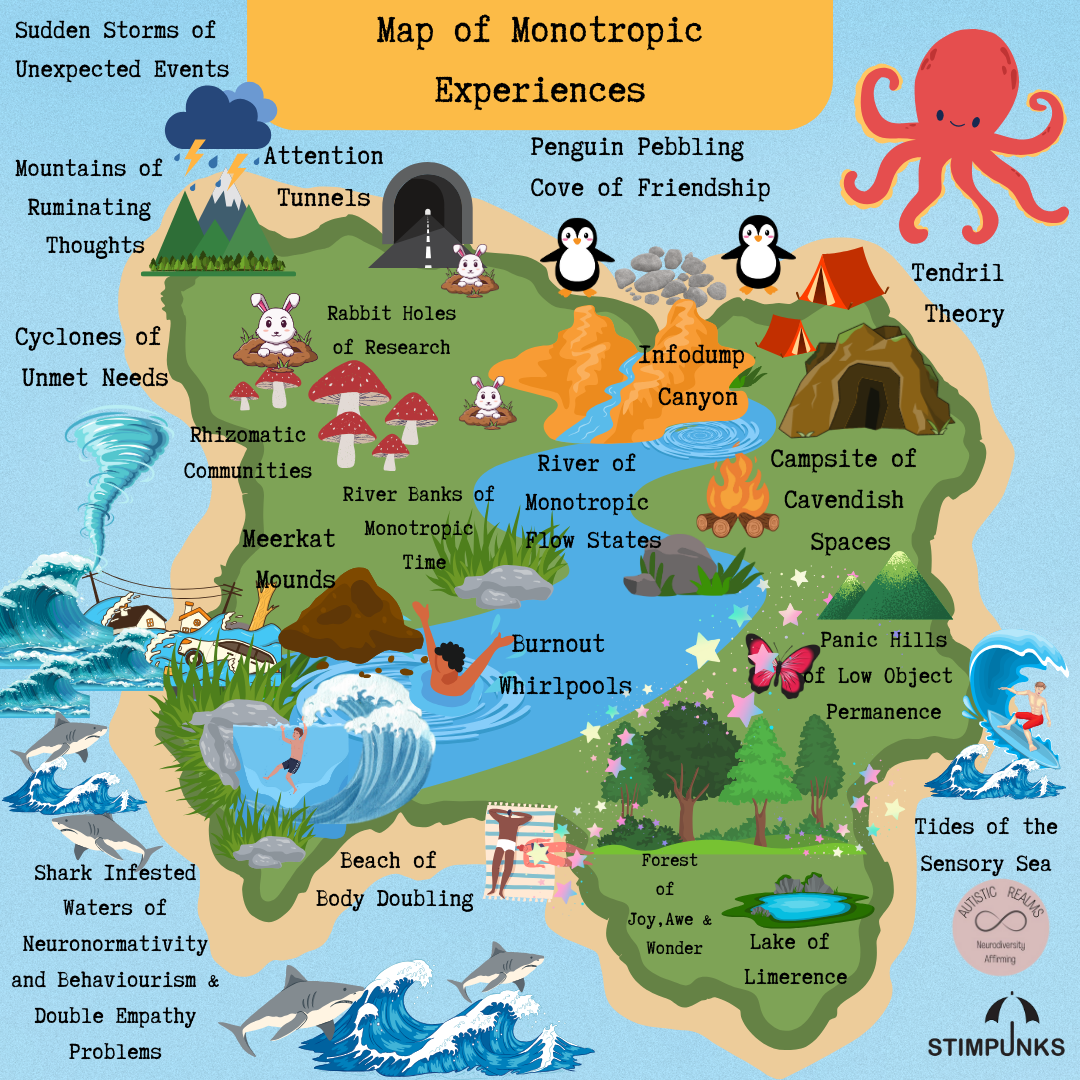
- Interests and joy. In burnout, deep interests often still bring relief and regulation when there is energy for them, and time in monotropic flow is part of recovery. In depression, interests tend to lose their colour altogether (anhedonia), and even the things you love feel pointless.
- What rest does. Burnout eases, slowly, with rest and lower demands. Depression does not usually respond to rest alone, and long periods of withdrawal can deepen it.
- How you feel about yourself. Burnout often comes with grief and frustration at not being able to do what you could, but your sense of self stays intact underneath. Depression more often brings worthlessness and hopelessness that attach to who you are, not just what you can do.
- Masking. People in burnout usually describe being unable to mask any more. That is not a symptom of depression, though a lifetime of masking is a risk factor for both.

Why the difference matters
The standard advice for depression is to do more: get out, keep a routine, see people, start talking therapy, try behavioural activation. For someone in Autistic burnout that is the opposite of what they need, and being pushed to do more, or praised only when they manage to, is often what caused the burnout in the first place. Equally, treating depression as if it were burnout, with rest and withdrawal alone, can leave someone sinking for a long time without the support that would help.
There is a further problem: the questionnaires used to screen for depression were not written with Autistic people in mind. Exhaustion, withdrawal and loss of interest score as depression whatever is causing them, so Autistic people in burnout are regularly given a depression diagnosis and the wrong plan. If you are seeing a GP or a therapist, it is worth saying plainly that you are Autistic, that you think this may be burnout, and asking for someone who understands the difference.
What helps with Autistic burnout
- Rest without guilt, for longer than feels reasonable
- Fewer demands and fewer expectations, at home, at school and at work: a low-demand approach
- Meeting sensory needs every day, not as a treat
- Time in monotropic flow with the things you love
- Dropping the mask around people who are safe
- Patience: recovery is slow and uneven, and for many people burnout returns if the demands do
What may help with depression
- Telling someone, and asking for Autistic-informed support rather than a standard pathway
- Gentle routine and connection, at a pace that does not tip you into overload
- Therapy adapted for Autistic people, where it is wanted, and medication where it helps; neither is a failure
- Treating any burnout underneath at the same time, otherwise the depression keeps being refilled
If you need help now
If you are having thoughts of ending your life, please reach out today. In the UK you can call Samaritans free on 116 123 at any time, or text SHOUT to 85258. More crisis lines, including Autistic-led ones, are listed on the burnout hub.
Where to go next
- Autistic Burnout: Signs, Recovery and Resources: the hub for everything on this site about burnout
- Autistic Burnout, Bodymind and Soul: what it feels like from the inside
- Autistic Burnout in Children: Signs and a Parent Guide
- Burnout vs Depression visual and the Autistic Burnout Family Guide in the shop, pay what you can
- Re-Storying Autism course: for families and professionals who want to prevent burnout rather than manage it
References
- Raymaker, D. M., Teo, A. R., Steckler, N. A., et al. (2020). “Having all of your internal resources exhausted beyond measure and being left with no clean-up crew”: Defining autistic burnout. Autism in Adulthood, 2(2), 132–143.
- Mantzalas, J., Richdale, A. L. and Dissanayake, C. (2022). A conceptual model of risk and protective factors for autistic burnout. Autism Research, 15(6), 976–987.
- Arnold, S. R. C., Higgins, J. M., Weise, J., Desai, A., Pellicano, E. and Trollor, J. N. (2023). Confirming the nature of autistic burnout. Autism, 27(7), 1906–1918.
- Endow, J. (2015). Autistic burnout: the demands of life exceeding a person’s resources (blog).

Resources on Autistic burnout
If this post was useful, these might help too. Everything in the shop is pay what you can, and many resources are free.
- Autistic Burnout: A Family Guide: an e-book for parents and carers on recognising and supporting burnout.
- Embracing Monotropism and Preventing Burnout: my book on monotropism and preventing Autistic burnout in young people.
- Embracing Monotropism (paperback): the same book in print.
- Autistic burnout resources and signposting: guides, research and support in one place.
- Burnout resources in the shop: posters, cards and guides, pay what you can.
- Re-Storying Autism course: a video course and workbook with David Gray-Hammond.