Tag: Neuro-affirming
-

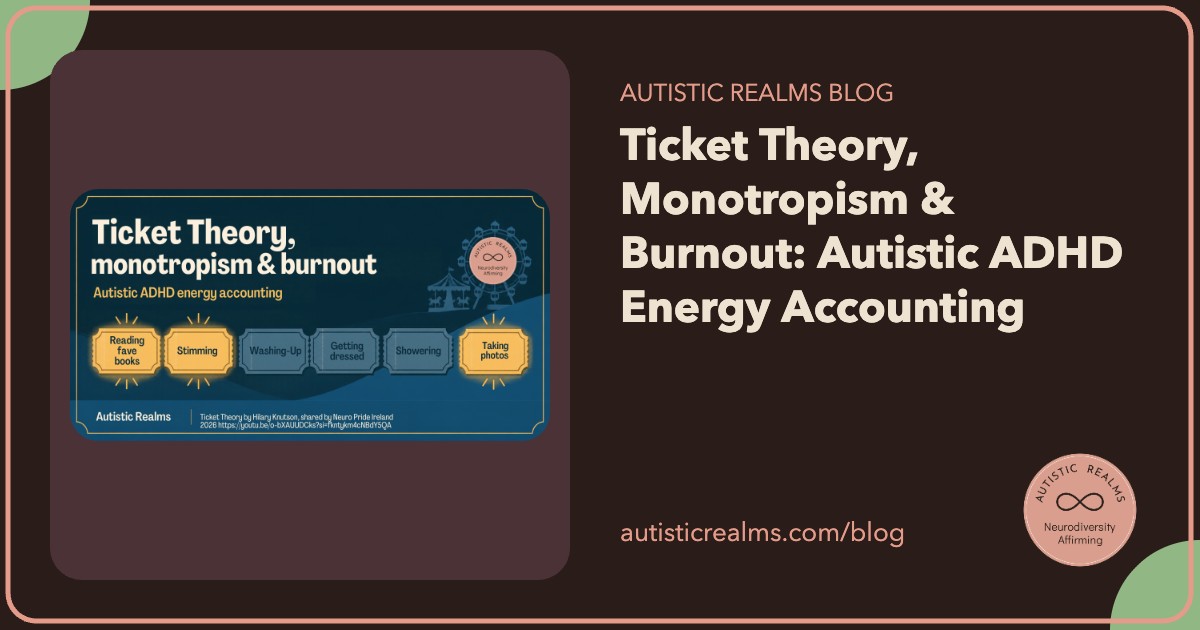
Ticket Theory, Monotropism & Burnout: Autistic ADHD Energy Accounting
Ticket Theory by Hilary Knutson, shared by Neuro Pride Ireland, offers an Autistic ADHD-friendly way to understand monotropism, spiky profiles, inertia and burnout. Some tasks simply never get a ticket.
-
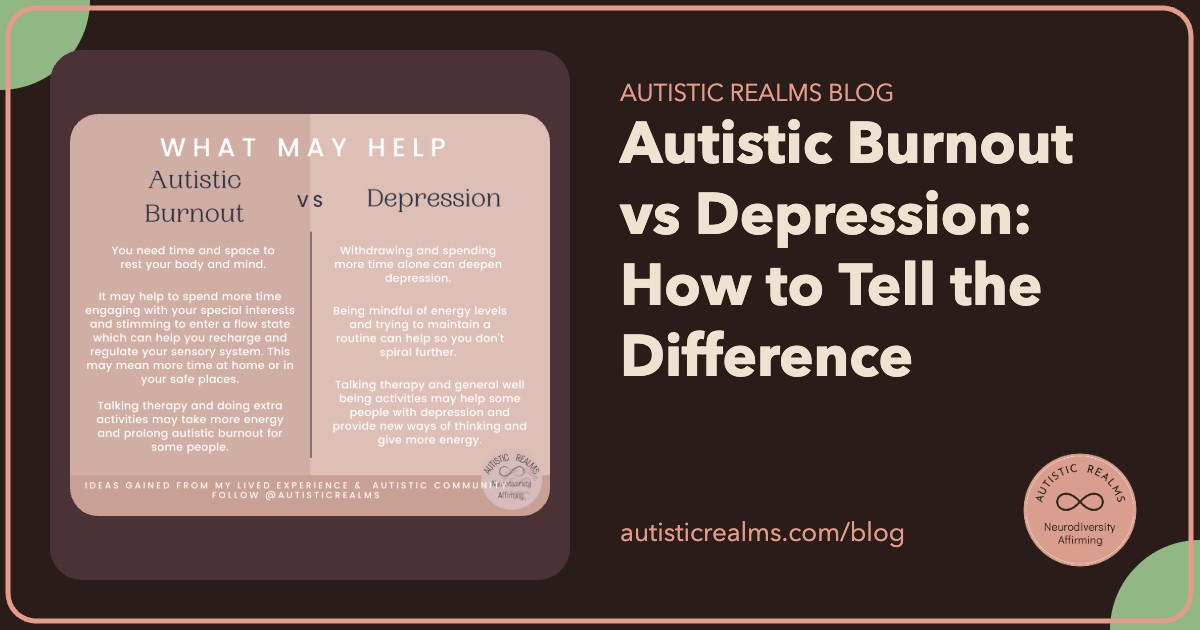
Autistic Burnout vs Depression: How to Tell the Difference
Autistic burnout and depression can look the same from the outside but need different support. The differences, where they overlap, and what helps each.
-
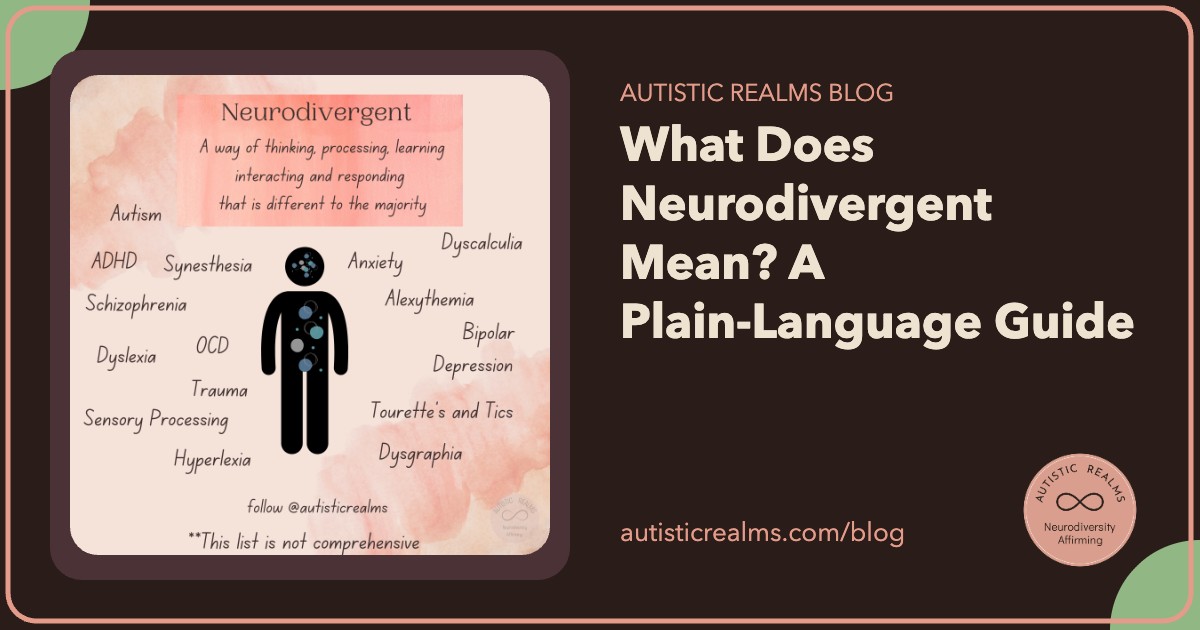
What Does Neurodivergent Mean? A Plain-Language Guide
Neurodivergent means thinking, processing, learning and responding in ways that differ from the majority. A plain-language guide to what the word means, who it includes and what it is not.
-
Awe, Wonder and Monotropic Attention in Neuroqueer Learning Spaces
If Helen De Cruz designed a learning space, what would it look like? Helen Edgar follows wonder and awe through monotropism, glimmers, flow and Cavendish Space.
-
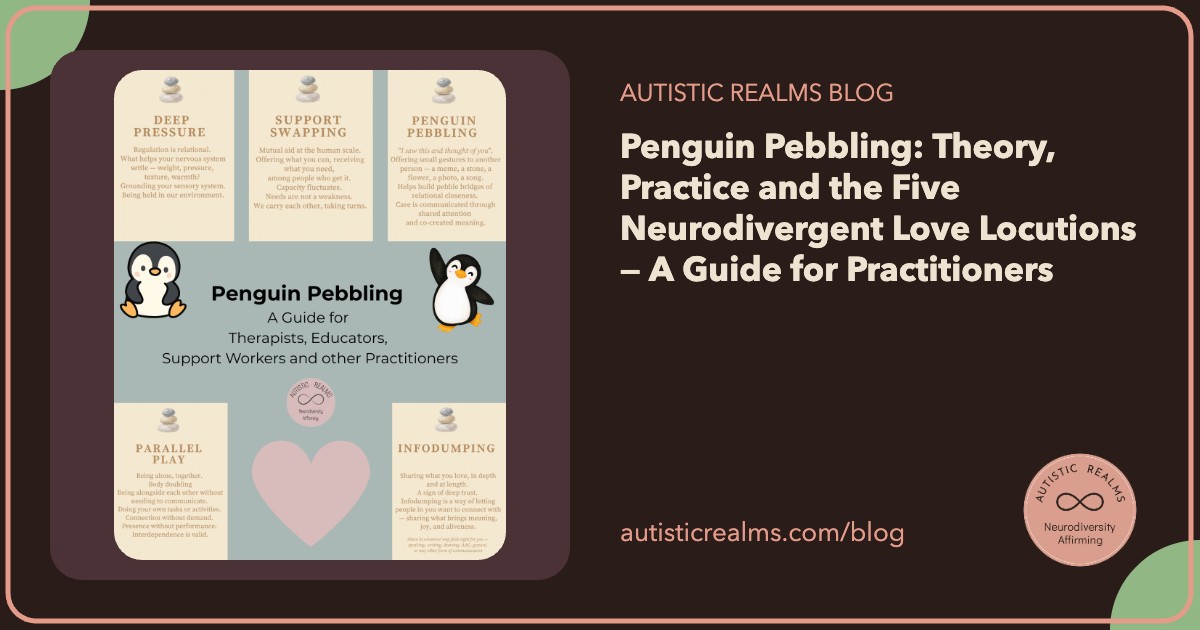
Penguin Pebbling: Theory, Practice and the Five Neurodivergent Love Locutions — A Guide for Practitioners
Penguin Pebbling is a low-demand, neurodiversity-affirming card game built around the Five Neurodivergent Love Locutions — five relational modes natural to many Autistic and neurodivergent people: infodumping, parallel play, support swapping, penguin pebbling, and deep pressure
-
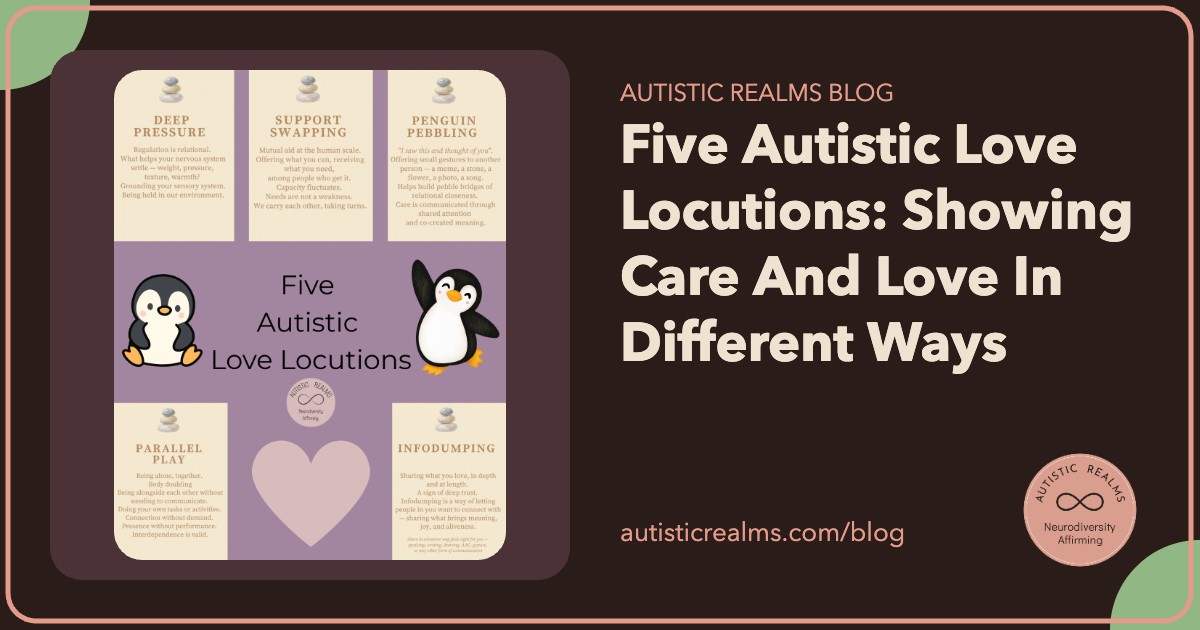
Five Autistic Love Locutions: Showing Care And Love In Different Ways
Autistic people have always had our own ways of showing love. Discover the five Autistic love locutions — infodumping, parallel play, support swapping, penguin pebbling and deep pressure.
-
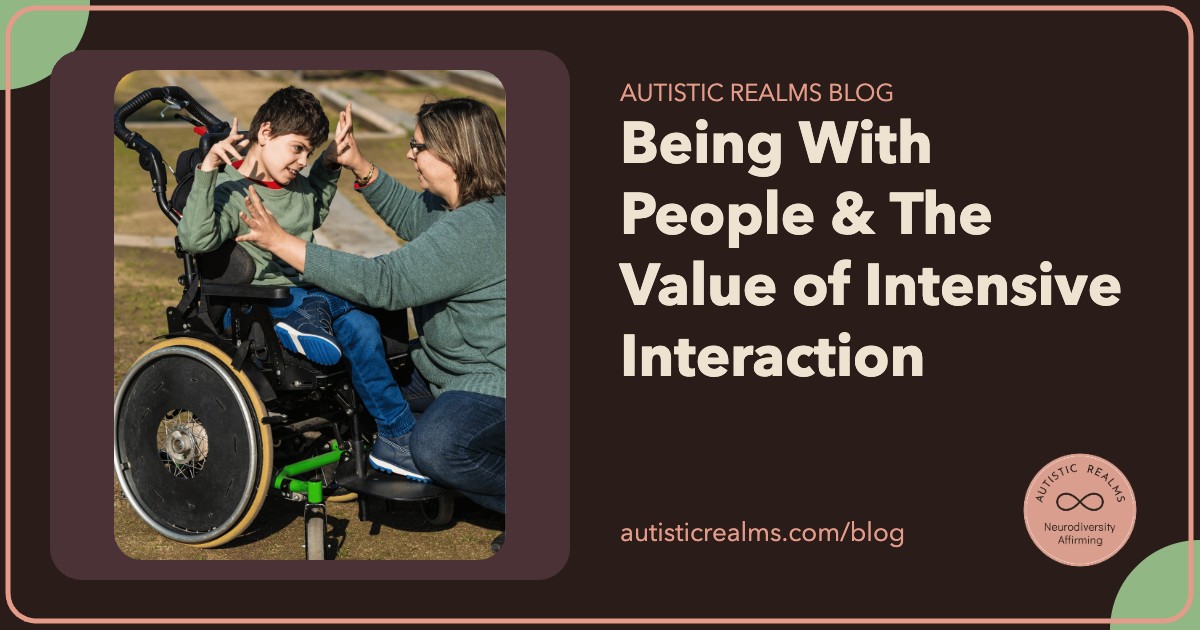
Being With People & The Value of Intensive Interaction
Helen Edgar draws on twenty years of practice alongside people with PMLD to explore why Intensive Interaction — when practised with genuine neuro-affirming care — is not just a communication approach. It is a way of being human together.
-
Neuro-Affirming Practice Is Not a Framework. It’s a Way of Being.
Neuro-affirming practice isn’t a framework or a checklist. It’s about being human — kind, compassionate, and truly present with people, just as they are.
-
Intensive Interaction as Neuro-Affirming Relational Practice
Intensive Interaction isn’t about “fixing” or prompting communication. It’s about meeting someone where they are—through connection, attunement, and shared flow. A neuro-affirming, relational framing to support those with profound and multiple learning disabilities.
-
Monotropism, Limerence And Autistic ADHD Experiences
Limerence in Autistic and ADHD people may be shaped by monotropism, a natural tendency toward deep focus and emotional intensity. Rather than being unhealthy or excessive, this pattern reflects how monotropic people engage deeply with relationships, meaning, and how they form connections.
-
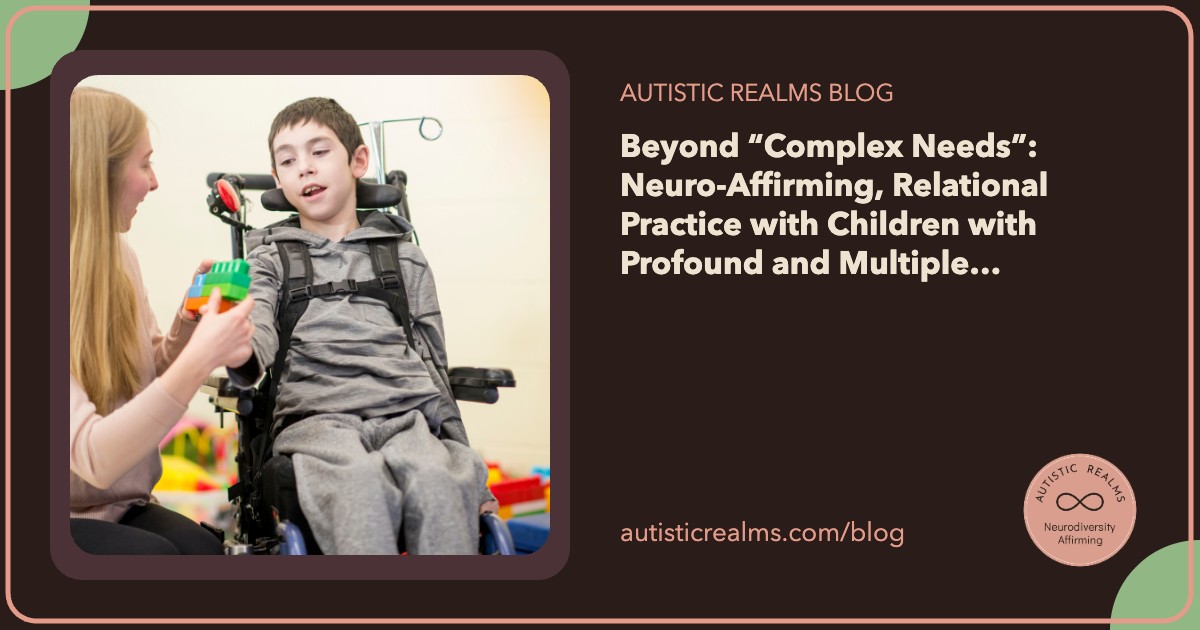
Beyond “Complex Needs”: Neuro-Affirming, Relational Practice with Children with Profound and Multiple Learning Disabilities
A neuro-affirming, relational approach to supporting children with profound and multiple learning disabilities, centred on safety, communication, and being-with.
-
Free 2025 Advent Calendar & Neuro-Affirming Autism Resources
Free 2025 Advent Calendar & Neuro-Affirming Autism Resources
-
The Neuronormative Paradigm: Naming The Systems That Harm
The Neuronormative Paradigm, conceptualised by Nick Walker, names the systems that define and enforce what society considers normal. This exploration piece contrasts the neuronormative paradigm with the neurodiversity paradigm, which recognises all ways of being as vital to human diversity.
-
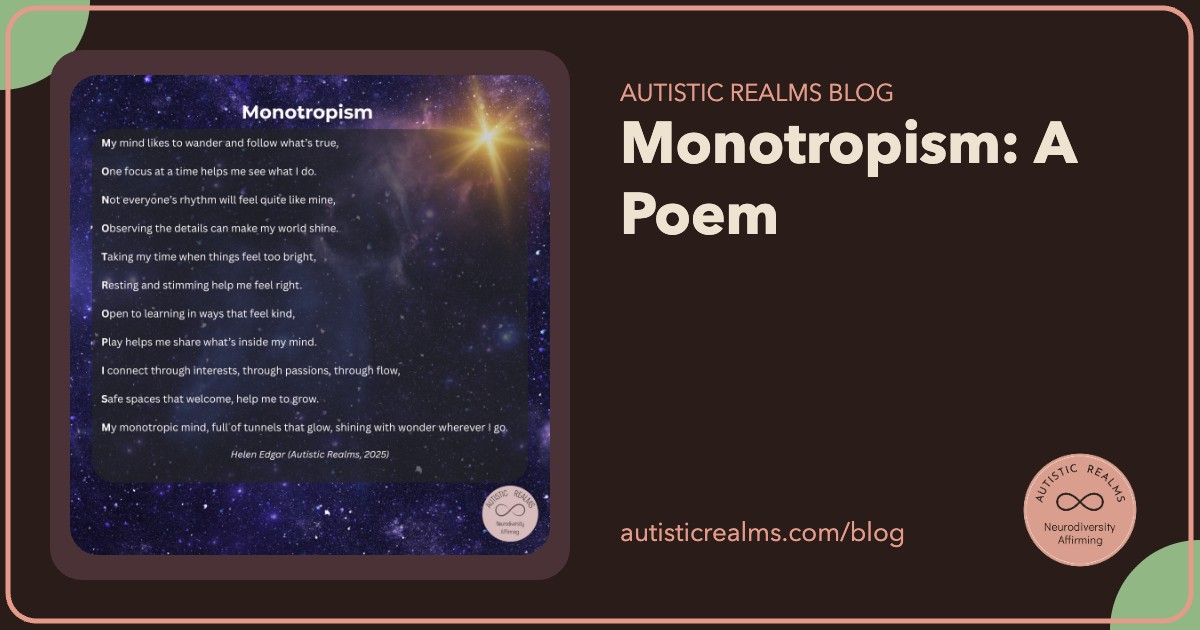
Monotropism: A Poem
A poem about monotropism for children, young people, families and educators to open conversations about Autistic & ADHD experiences.
-
Understanding the Double Empathy Problem: A Guide For Autistic People & Families
FREE Neuro-Affirming Communication & Sensory Passport + Training Support Autistic people through better understanding of communication, sensory needs & double empathy.
-
Presuming Competence: A Neuro-Affirming Reframe To Support Autistic People
When “presume competence” is applied without a neuro-affirming lens, it can become a harmful, ableist expectation
-
Inclusion Needs Recognition, Not Erasure: A Neurodiversity-Affirming Approach
When headlines claim that autism and ADHD are “invented labels,” it’s more than rhetoric, it’s erasure. A explores why removing neurodiversity from education would harm the very children inclusion is meant to protect.
-
Why “Interest-Led” Isn’t Enough: Embracing Monotropism & Neuro-Affirming Practice
Many approaches claim to be “interest-led,” but true neuroaffirming practice goes deeper. Being monotropism-informed means honouring Autistic attention, autonomy, and sensory safety; not using children’s passions to shape compliance. Real inclusion celebrates authentic joy, not conformity.
-
Protecting the Meaning of Neuro-Affirming Practice
Discover what genuine neuro-affirming practice looks like — beyond tokenism and “neurodiversity-lite.” Explore how to protect the heart of the neurodiversity movement and uphold its community-led roots.
-
Discovering Belonging: Creating Neuro-Affirming Animations with Thriving Autistic
Discovering Belonging: Neuro-Affirming Animations with Thriving Autistic. Celebrate Autistic identity through the Discovery Programme and new animations that explore belonging, strengths, and community.
-
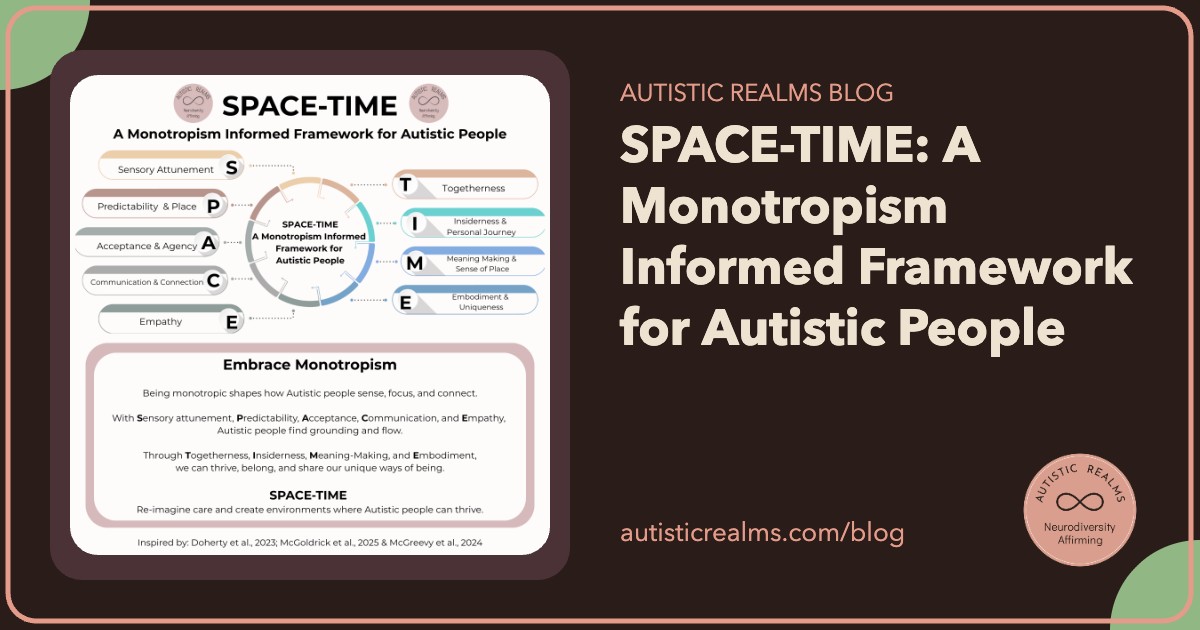
SPACE-TIME: A Monotropism Informed Framework for Autistic People
SPACE-TIME: A Monotropism-Informed Neuroaffirming Framework for Autistic People
-
Creating Autistic Safety and Belonging: 10 Ideas for Neurodivergent Competency
10 Principles of Neuro-Affirming Practice: Building Neurodivergent Competency Together
-
Beyond “Neurodiversity Lite”: Why Neurodiversity-Affirming Practice Matters
Explore the difference between true neurodiversity-affirming practice and “neurodiversity-lite,” and why justice, and lived experience matter.
-
Why PBS is Harmful for Autistic and Neurodivergent Young People
Exploring why and how Positive Behaviour Support (PBS) can harm Autistic people. #Neurodiversity #AutismAcceptance #PBS #DisabilityJustice
-
From Autistic Realms to More Realms: Exploring Other Ways of Being
Journey from Autistic Realms into More Realms—where neuro-affirming support meets creative, sensory, and neuroqueer explorations of other ways of being.
-
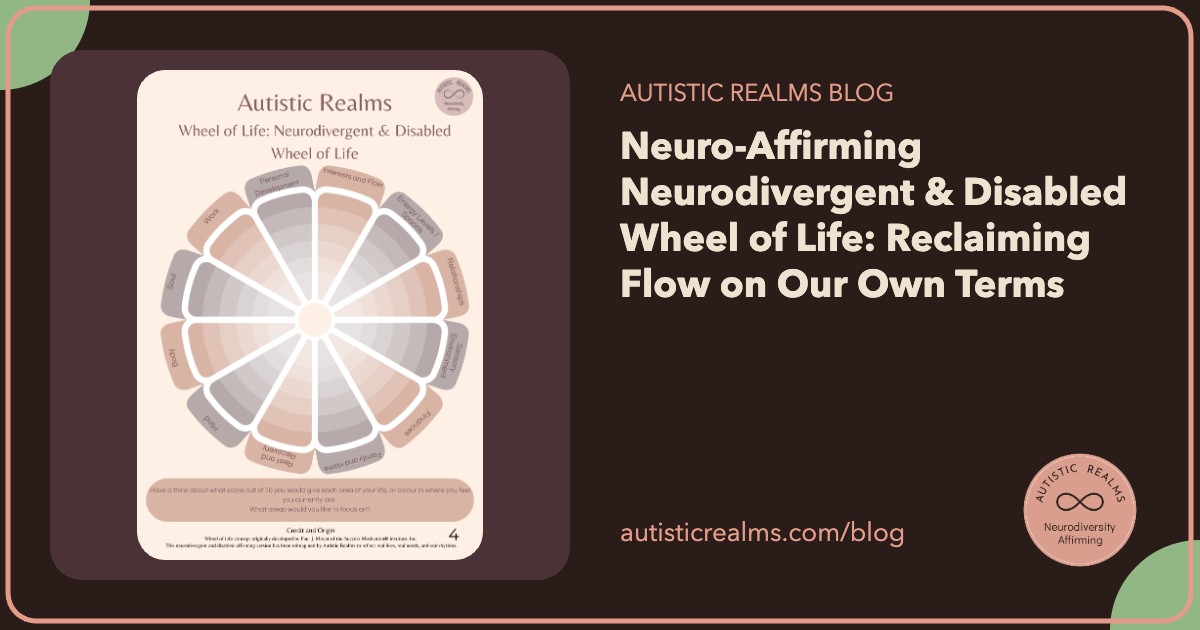
Neuro-Affirming Neurodivergent & Disabled Wheel of Life: Reclaiming Flow on Our Own Terms
Neuro-Affirming Neurodivergent & Disabled Wheel of Life: Reclaiming Flow on Our Own Terms Workbook available for instant download.
-
Autistic Pride: Restorying & Unknowing Autism
Restorying is how we reclaim our Autistic voices, honour our ways of knowing, and build futures rooted in connection, not correction.
-
Empowering Advocacy: Neuro-Affirming Support for Your Autistic Young Person at School
By Helen Edgar (Autistic Realms), with David Gray-Hammond & Tanya Adkin Navigating the education system as the parent or carer of an Autistic child can often feel like steering a tiny boat through stormy seas, it can feel impossibly hard and be exhausting. For many families, the challenge isn’t just the school system; it’s the…
-
Toileting: A Neuroaffirming Approach to Support your Autistic Child
Toileting is not a race. For many Autistic children, the journey may look different. Respecting a child’s pace, sensory needs, and body signals can make all the difference.
-
Neurodiversity Affirming Reading Recommendations
Looking for neurodiversity-affirming reads? I’ve have a growing collection of books listed by autistic authors, advocates, and researchers. Perfect for parents, professionals, and curious minds alike. Explore stories that affirm, not fix. Neurodivergent voices centred. From education to identity, burnout to belonging.
-
Autistic Young People: Skills Regression, Burnout or a shift in Monotropic Attentional Resources?
Autistic individuals may not lose skills but instead redirect their monotropic attention toward new interests or areas of development.
-
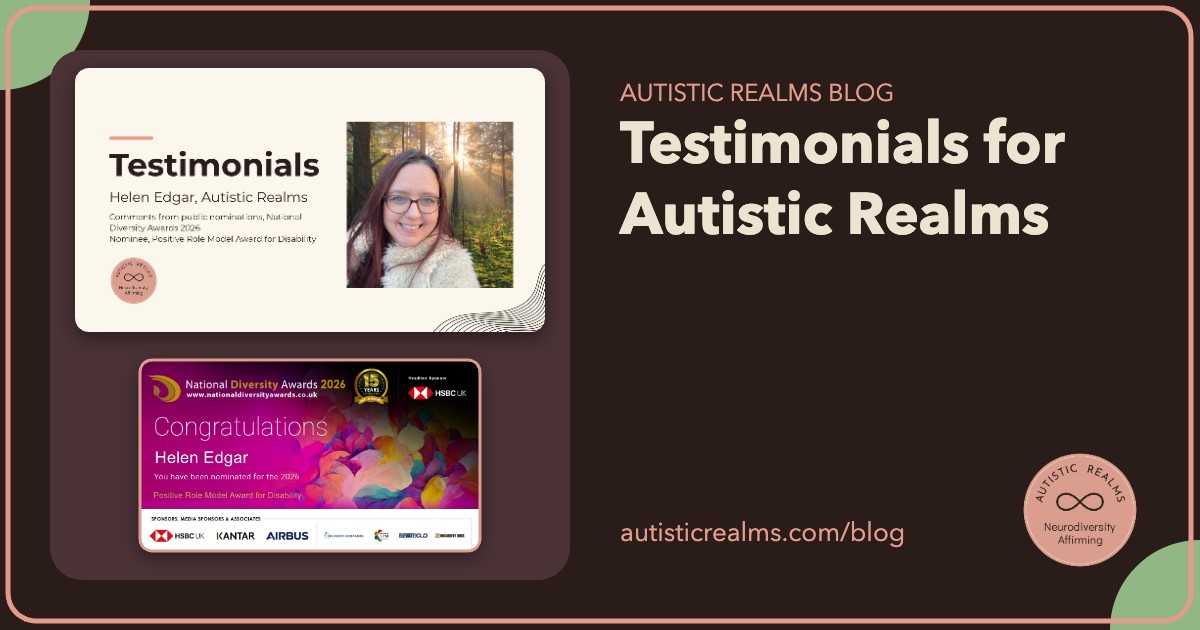
Testimonials for Autistic Realms
Testimonials gathered from National Diversity Awards nomination feedback 2026. Feel free to vote for me and others here: Download the Testimonials pack (PDF, 9 pages)Anonymous comments from people who nominated Helen for the Positive Role Model Award for Disability, National Diversity Awards 2026. National Diversity Awards 2026 Comments from public nominations for the Positive Role…
-
Neuro-Affirming Research in Practice: Supporting Autistic Students, Embracing Monotropism In The Classroom And Beyond
Written by Tanya Adkin and Helen Edgar, based on the presentation we delivered to the National Autistic Society Professionals’ Conference in March, 2025. Shared with permission from NAS. We will explore the importance of the theory of monotropism and the significance of flow states and suggest some practical strategies educators can implement to create more…
-
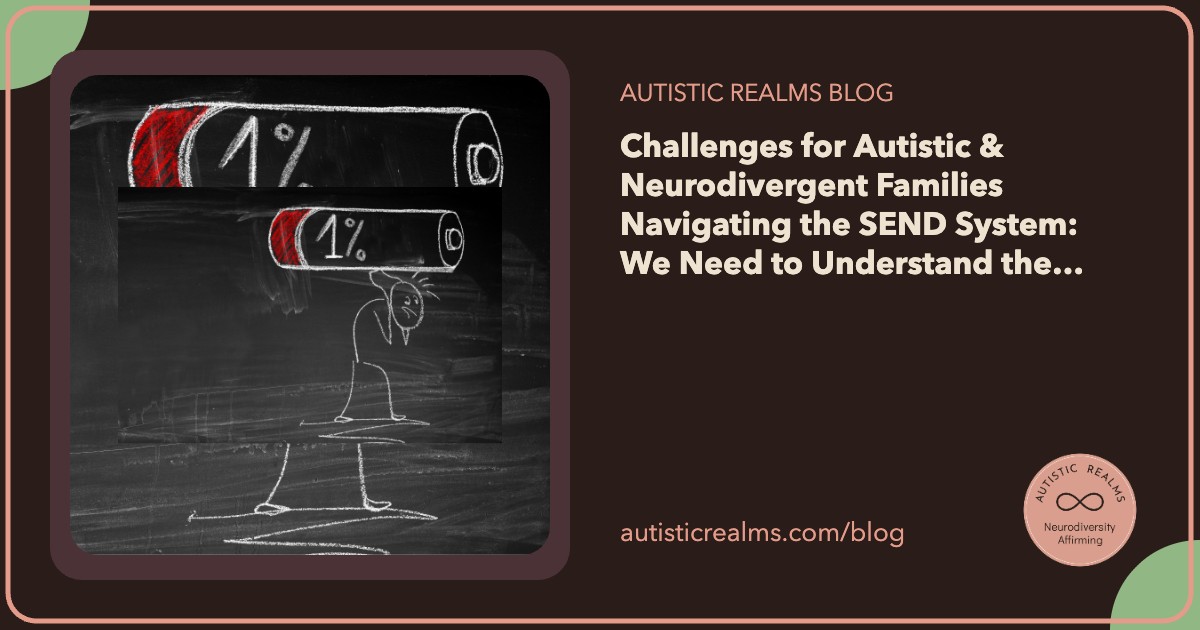
Challenges for Autistic & Neurodivergent Families Navigating the SEND System: We Need to Understand the Double Empathy Problem & Embrace Monotropism
(Blog based on a presentation I delivered to London Met University 14th March 2025, updated April 24th 2025 following the research published by…. Introduction The Special Educational Needs and Disabilities (SEND) system is designed to support children with additional needs, yet for many neurodivergent families, it presents more barriers than solutions. Families navigating this system…
-
What does ‘neuro-affirming’ mean for Autistic young people?
This blog was written by myself, Helen Edgar of @autisticrealms for GROVE. I am delighted to work with Grove Neurodivergent Mentoring and Education as their Training, Education & Resource Specialist. This blog was edited by Jess Garner, GROVE’sFounder/Director. The blog, ‘What does ‘neuro-affirming’ mean for Autistic young people?’ is available to read on GROVE’s website, along with many other resources and information…
-
Autistic Young People & Friendships
Discover how Autistic young people experience and build friendships in a way that honors their unique communication styles and interests.
-
Obstacles in the way of Neuro-Affirming Practice in Educational Settings & Ways Forward
Implementing neurodiversity-affirming practices in education, healthcare, and other systems is often hindered by pervasive narratives and biases. Recognizing and addressing these obstacles is crucial for fostering inclusive and supportive environments for neurodivergent and disabled individuals. Here are some common barriers that I have been working on with Stimpunks, who have a more in-depth page with…
-
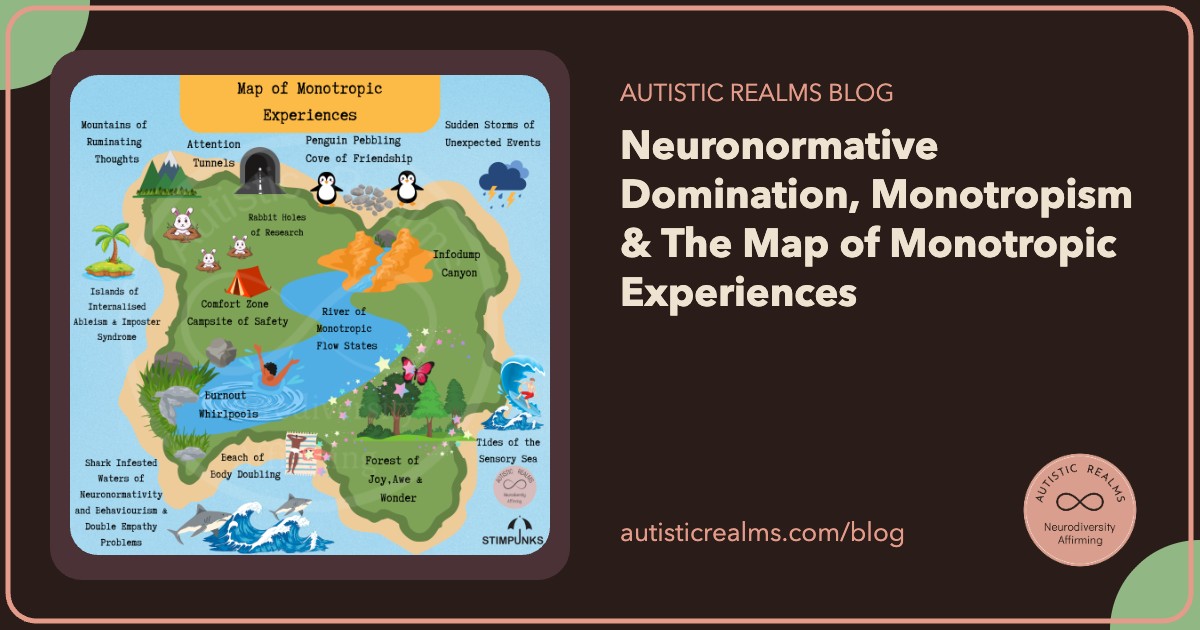
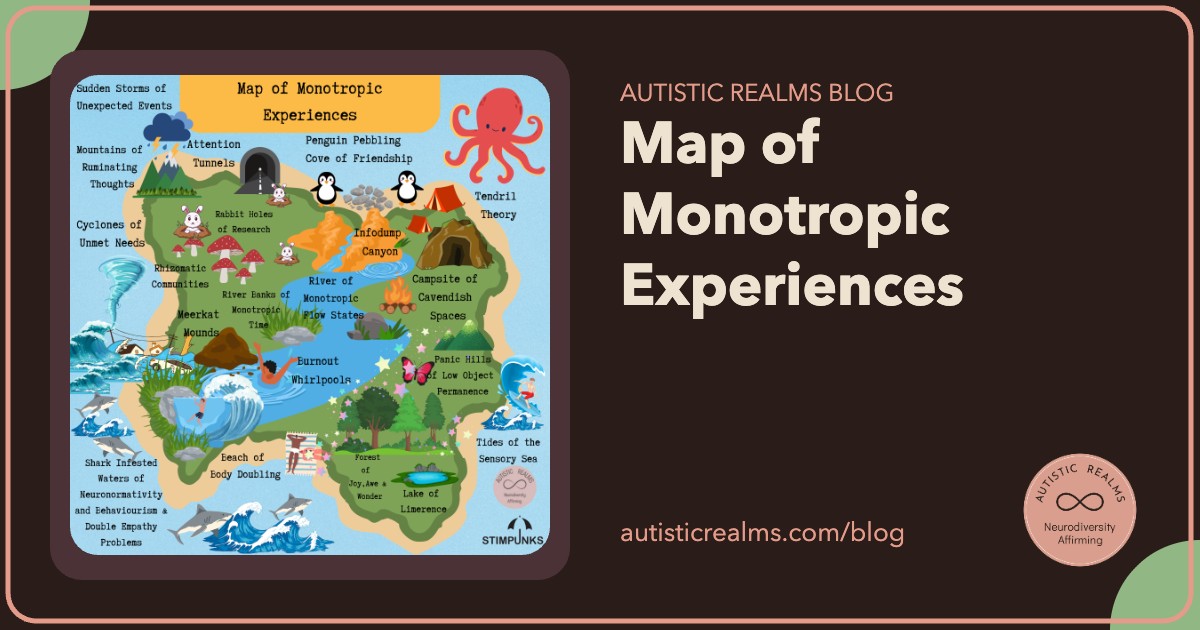
Neuronormative Domination, Monotropism & The Map of Monotropic Experiences
The Map of Monotropic Experiences now has a home of its own. Read more about neuronormative domination, the water the whole map sits in, at monotropicmap.org, and explore each of the twenty areas of the map there too. In collaboration with Stimpunks, I created a Map of Monotropic Experiences. This is a revised edition of…
-
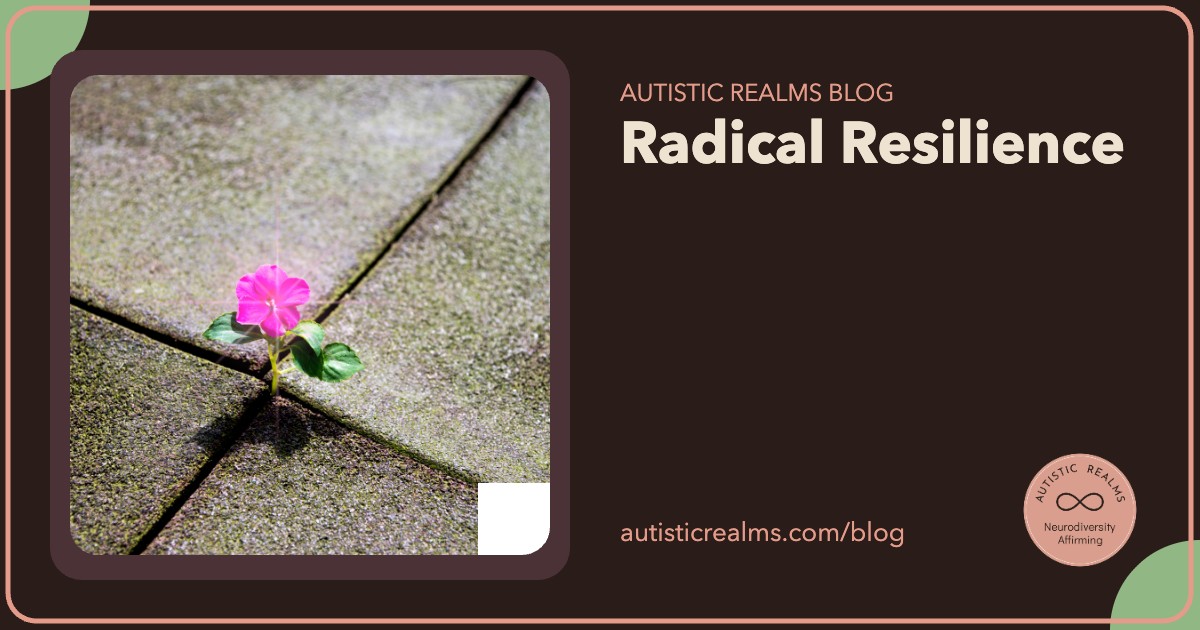
Radical Resilience
Image of pink flower growing between gaps in pavement. Text:Wild flowers offer hope. Be radically resilient. Find possibilities in-between hard spaces. Be authentic and flourish in adversity. Transform the landscape. Be a wild flower.
-
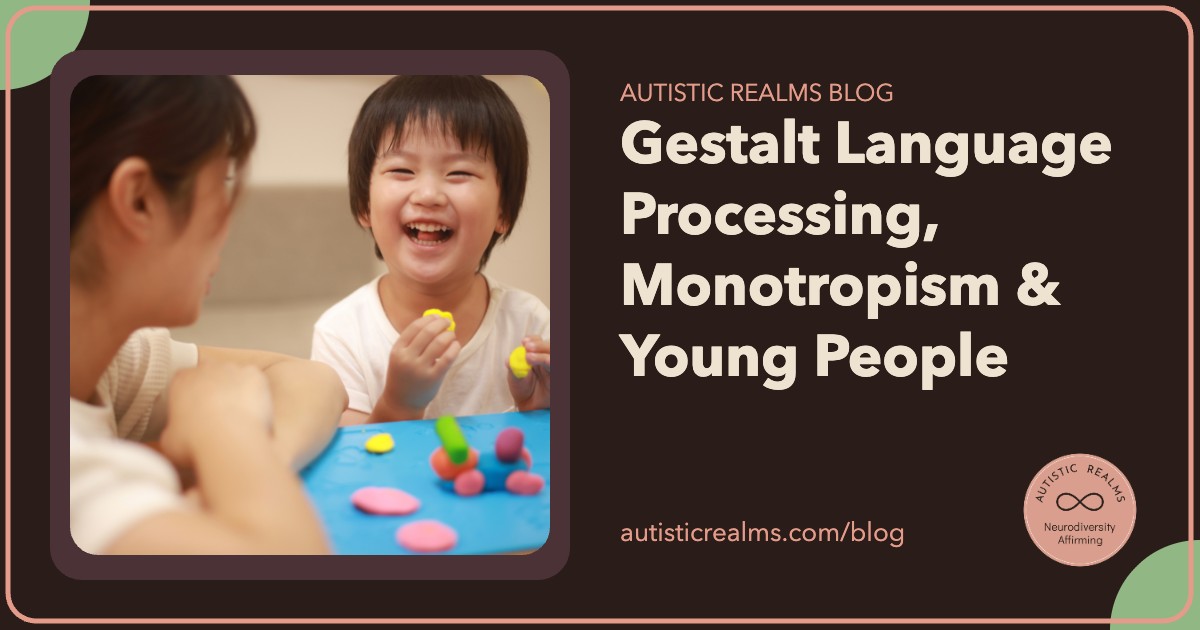
Gestalt Language Processing, Monotropism & Young People
Monotropic (Autistic/ ADHD) people have fewer tunnels of interest to process and use their energy than polytropic people (non-Autistic/ADHD). Polytropic people can more easily split their processing and energy resources across multiple channels than monotropic people, this may explain some key differences in communication people experience. It may initially sound a bit conflicting to discuss…
-
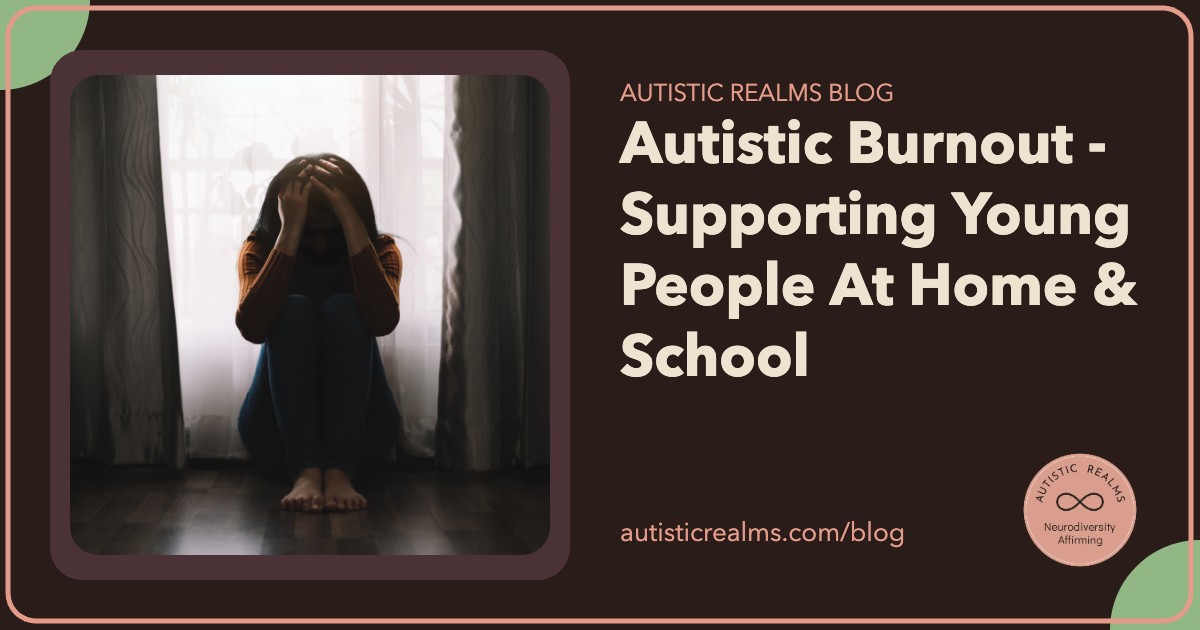
Autistic Burnout – Supporting Young People At Home & School
Autistic burnout in young people is real—and recovery starts with understanding. This post offers neuroaffirming ways to spot the signs, reduce demands, and truly support. 💛 #AutisticBurnout #Neuroaffirming #Monotropism #AutisticSupport
-
Map of Monotropic Experiences
The Map of Monotropic Experiences now has a home of its own. Visit monotropicmap.org to explore each of the twenty areas, mark your own map and find the free training. You can also find the free training and downloads further down this page. Monotropism seeks to explain Autism in terms of attention distribution and interests. …
-
Monotropism and Collective Flow
In Milan Kundera’s novel, ‘The Unbearable Lightness of Being’ (1981), he described the heaviness of life, the restrictive oppression and boundaries that can tie us all down, yet there is freedom in the possibilities the mind can bring and in the choices we can make. We can subvert the restrictions of neuronormative society; we can,…
-
Top 5 Neurodivergent-Informed Strategies
Top 5 Neurodivergent-Informed Strategies By Helen Edgar, Autistic Realms, June 2024. 1. Be Kind Take time to listen and be with people in meaningful ways to help bridge the Double Empathy Problem (Milton, 2012). Be embodied and listen not only to people’s words but also to their bodies and sensory systems. Be responsive to people’s…
-
An unlearing and relearning journey.
Hello! I have never done an introduction post for Autistic Realms, so after 18 months and some one kindly nominating me for the Positive Role Model Award as part of the National Diversity Awards and receiving so much lovely feedback, I thought I would share a bit about myself! I am Helen Edgar, late identified…
-
Autistic Community: Connections and Becoming
Everyone seeks connection in some way or another. Connections may look different for autistic people. In line with the motto from Anna Freud’s National Autism Trainer Programme (Acceptance, Belonging and Connection), creating a sense of acceptance and belonging is likely to be more meaningful for autistic people than putting pressure on them to try and…
-
Neurodiversity Affirming Glossary of Key Words – for families and professionals
For the words of theory and philosophy that More Realms is written in, from neuroqueer and rhizome to Ma, monotropic time and bodymind, see the companion glossary Key Words: A Glossary of Neuroqueer Theory and Philosophy, and the Stimpunks glossary I helped to build. (Glossary written & and originally published for THE PDA SPACE…
-
Monotropism, Autism & OCD
Exploring similarities and differences between Autistic and OCD monotropic flow states. Can attention tunnels freeze, and thoughts get stuck?
-
Autism & OCD – What Could Help
Updated October 2026. Autism and OCD overlap in ways that are easy to mistake for one another, and getting that wrong leads to the wrong support. This post sets out the differences and what could help; for the attention side of the story, Monotropism, autism and OCD explains why thoughts can loop, and the monotropism…
-
Neurodivergent Friendly Classrooms
Updated October 2026. I wrote this for Twinkl in 2023, and the attendance crisis it describes has only deepened. The classroom ideas still apply. Since then I have written about why behaviour-based approaches such as PBS do harm, and about the monotropism that underlies so much of what teachers see; both are worth reading alongside…
-
Supporting pupils through Autistic Burnout (Neuro-Affirming Teacher Guide)
Supporting pupils through Autistic Burnout (Neuro-Affirming Teacher Guide)
-
Supporting autistic students experiencing OCD in a school setting
Updated October 2026. More pupils are living with OCD alongside being Autistic than most schools realise, and the support that works is rarely the standard behaviour plan. This guide is still my starting point for teachers; read it with Autism and OCD: what could help and, where burnout is part of the picture, the Autistic…
-
Autism, OCD, Alexithymia & Interoception
Updated October 2026. Alexithymia and interoception are two of the least understood pieces of the autism and OCD picture, and I still get messages about this post every week. Since writing it I have explored the same territory through monotropism, which helps explain why anxious thoughts loop, and gathered the support side in Autism and…
-
Education Crisis – Neurodiversity Affirming Teacher Training Needed
Language Identity First Language: In line with preferences from the Autistic community I will be using Identity First Language (ie. Autistic person, NOT person with Autism) Neurodiversity – This relates to the biological fact that human brains and minds differ from each other. Neurodiversity aligns with the idea that all children are unique and…
-
Language matters, relationships are essential
It can be difficult and confusing to understand the language surrounding neurodiversity. It can be seen to be creating further divisions and potentially isolating some people by getting hung up on the specifics. I know I have my own anxiety about not using the ‘right’ language (despite writing this!). In response to my previous…