In a recent Thriving Autistic Monthly Community Meet-Up someone shared Ticket Theory, explained by Hilary Knutson in a talk shared by Neuro Pride Ireland (Knutson, 2021), and it was a real “oh, that’s it!” lightbulb moment!
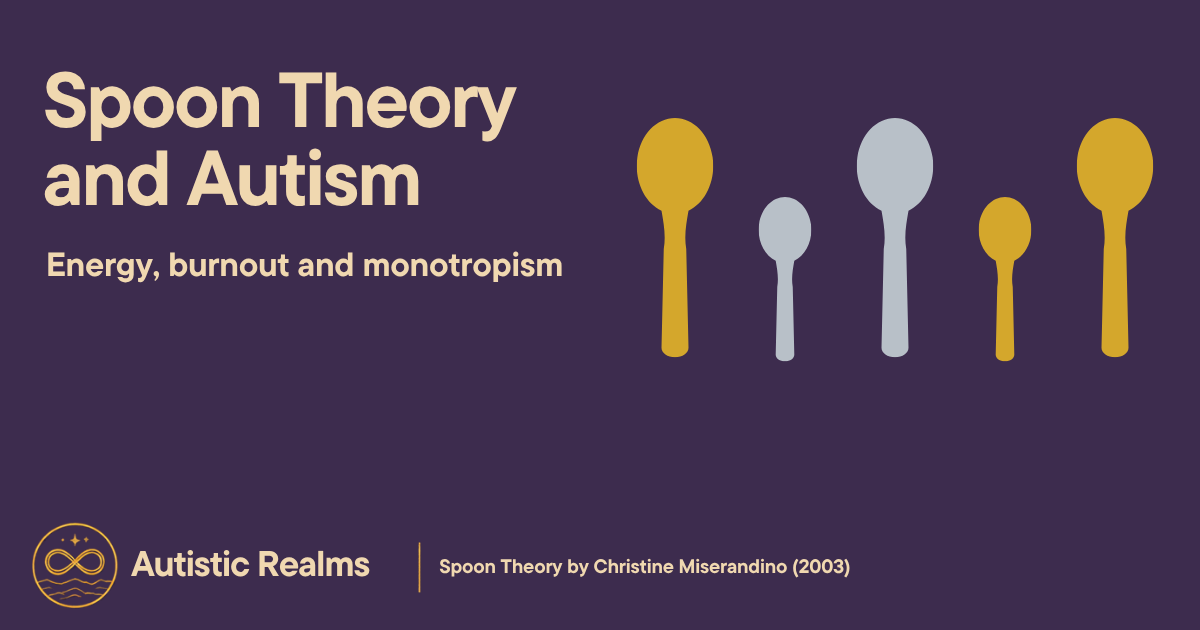
Many of us already know Spoon Theory, where Christine Miserandino (2003) used a handful of spoons to show how chronic illness limits the energy available each day. Spoons are a shared pool, though. Spend them on a shower and there are fewer left for cooking. Ticket Theory describes something slightly different, and for me it feels deeply monotropic and even more valuable for me as an AuDHer and you may really like it too!
Ticket Theory and the Funfair
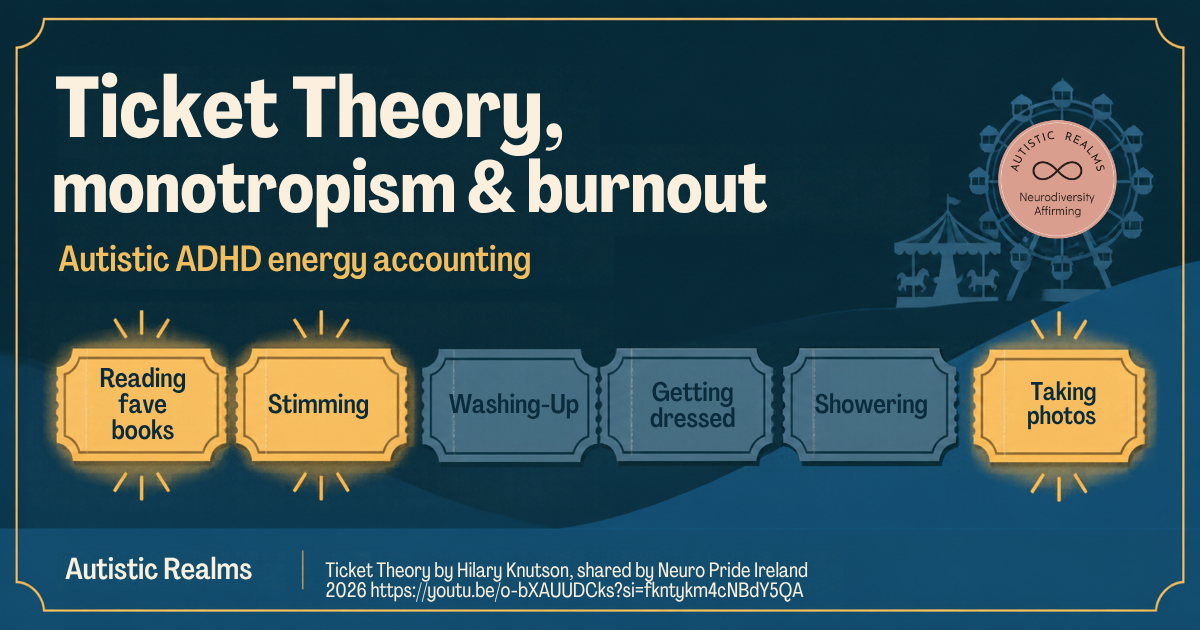
Knutson invites us to imagine a funfair. Imagine every ride is a task, and to get on a ride you need a ticket for that particular ride. A ticket for brushing your teeth will not get you onto the washing-up ride, and a ticket for homework will not get you onto a phone call ride. Tickets cannot be swapped or traded, and they expire, so if you miss the moment you may have to wait a long time for another one to arrive. There is also a lovely “bring a buddy” offer, where someone else’s presence can help you onto a ride you could not manage alone (Knutson, 2021) which is where I think body doubling can be a really helpful strategy.
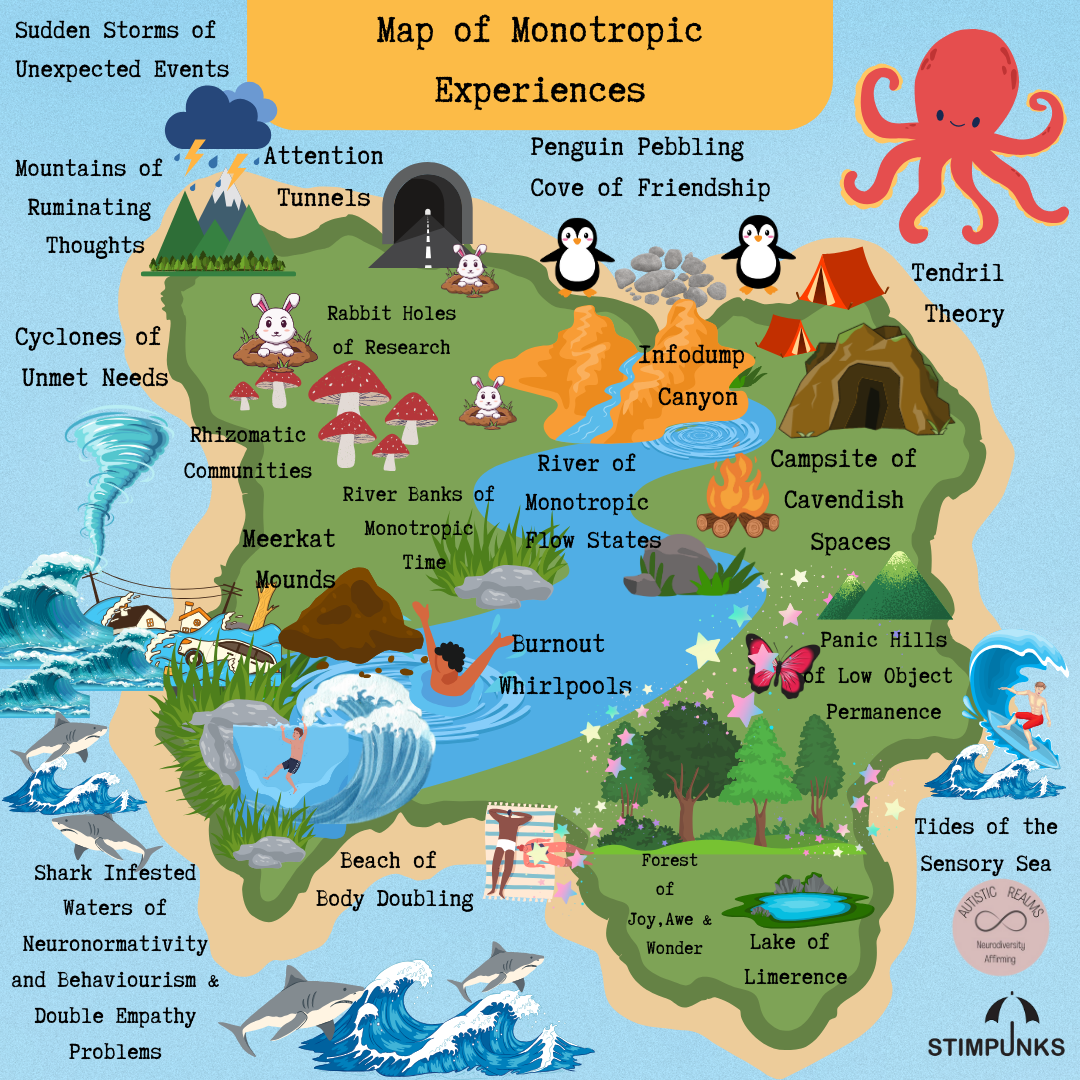
Monotropism, first described by Murray, Lesser and Lawson (2005), suggests that Autistic people tend to focus attention intensely on a smaller number of interests at any one time, with those interests pulling in most of our available resources. Read alongside Ticket Theory, this makes a great deal of sense of my own ways of trying to juggle life demands!
Monotropic Split And Interoception: How They Impact Tickets
For me, every ride at the funfair feels completely different. The waltzer spins me round, the ghost train drops me into the dark, the carousel fills me with music and lights, and each one changes how my body feels and how I feel inside. Because I am monotropic, I often exeprience things really intensely (not just fairground rides – everything!). I go all the way in, with my whole attention, my senses and my emotions, and I always emerge out of an attention tunnel a bit different: sometimes buzzing, sometimes drained, and sometimes still carrying the feeling of it all long after the event has finished in reality.
Tanya Adkin (2022) gave a name to what happens when a monotropic mind is pushed to spread itself across too many demands at once. She calls it monotropic split: our attention is pulled in several directions and we end up giving more mental energy than we actually have, which she links to meltdown, shutdown and, over time, burnout (Adkin, 2022).
That is exactly how a busy day can feel for me, as if I am being asked to get round the whole fairground of life, hopping from ride to ride and feeling all of it at once, with no time to recover in between. Every switch costs me something, because I cannot leave the last ride behind as I climb onto the next one, and the noise, the lights, the crowds and the queues are all asking for my attention too. By the end of the day I feel scattered and fragmented as well as tired, as though little pieces of me have been left behind on every ride. A day with one or two rides I love, and quiet time to rest in between, feels like a completely different fairground.
Interoception is part of this too, and Kelly Mahler describes interoception as the body’s internal sense, the way we notice signals such as hunger, thirst, temperature, heartbeat, muscle tension and tiredness, and she connects it closely with monotropism (Mahler, 2025). When I am deep in an attention tunnel (ride) I love, those signals can fade right into the background, so I might not notice I am hungry, thirsty or needing the toilet until it suddenly feels urgent. When I am pulled from event to event and attention tunnel to attention tunnel so much of my energy is being used up getting round that there is very little left over for my actual body and mind to function.
I might not notice a racing heart, tight shoulders or a churned-up feeling in my stomach until hours later, once I am finally home and still, and sometimes I do not notice them at all until they show up as a shutdown or meltdown, sometimes days of exhaustion after I have done something that cost me too much. Mahler links this to monotropic split as well, and for me it explains why the fairground analogy can affect me so deeply without my realising it at the time. My attentional resources are being reallocated to the rides, the noise and the crowds, so the messages from my body get pushed to the back of the queue, and I often have no words for what I felt until much later.
Spiky Profiles and a Constellation of Intensities
Ticket Theory also sits well alongside the idea of a spiky profile, a way of picturing real peaks and real troughs in what we can do, rather than one flat line. Damian Milton chose the term because he did not want our differences framed as scattered “islets of ability” (Stimpunks Foundation, 2022). In ticket terms, the peaks are the rides where we may have lots of tickets the troughs are the rides where we may not have the right ones. Being able to do one thing whilst unable to do another is neither laziness nor a contradiction, it may be we just don’t have that ticket right now and that the whole of a person’s neurodivergent profile needs to be taken into account, may be OCD, Dyslexia, or many other differences will all impact tickets!
In The Constellation of Intensities (Edgar, 2026), I suggest we go further, because even the most affirming looking spiky profile is still a chart that measures us against a norm. I recognise myself more as a constellation of intensities, an ever-shifting monotropic galaxy of sensory, cognitive and relational ways of being. Tickets fit this picture beautifully. They are never fixed, and they arrive and fade with our environments, our relationships, our bodies and our burnout, which is why a ride that was open to me yesterday can be closed today.
Plenty of Tickets for Autistic Passions
I seem to receive tickets for my interests in generous bundles. I have tickets for deep dives into Autism research, for writing blogs, for poetry and am writing this at 5am as I have the ticket now. Those rides I can go on again and again, and the flow I find there is restorative, despite my lack of sleep! I know if I don’t use this ticket now I won’t be able to rest anyway!
Other rides never seem to issue me a ticket at all, however hard I try. The washing basket, the pile of post, booking an appointment, tidying the kitchen, filling in a form that would take ten minutes, the light in our bathroom that has needed fixing since 2025. I can stand at the gate of these rides all day, wanting to go on, knowing it matters, and still not be let through the magical door. From the outside this can look like laziness, defiance, being self-absorbed, selfish and many other awful words that perhaps many of us have been called with the exasperating cries of ‘just do it, it’s not hard!’ Those words describe a choice, and what is happening here is closer to what I feel is a turnstile that will not turn and is stuck.
Autistic Inertia & Expiring Tickets
This is where I think Autistic inertia comes in. Buckle et al. (2021) describe inertia as real difficulty starting, stopping or switching activities, even when the person really wants to. In ticket terms, inertia is the long wait at the gate, or the ticket that expires just as you finally reach the front of the queue. It can also work the other way. Once I am on a ride I love, it can be just as hard to get off it to eat, drink or go to bed, because the next ride needs a ticket I have not yet been given. It can be intensely frustrating!
Burnout and Lost Tickets
Burnout changes the whole funfair. Raymaker et al. (2020) describe Autistic burnout as long-term exhaustion, a loss of skills and functioning, and reduced tolerance to stimulation, caused by the chronic stress of living in a world not built for us. In my experience, burnout means far fewer tickets are printed overall, and the first to disappear are often the ones for tasks that were already hard to reach. Self-care and hygiene, cooking, laundry, admin and social planning tickets can vanish completely. Interest tickets often last longest, and they can be what keeps us connected to ourselves, although in deep burnout even those can run out or feel like they have got lost. Seeing someone still working or engaged in their passions while the house falls apart can lead others to conclude they are choosing not to cope. A more accurate reflection is that perhaps the only tickets left are the ones linked to their interests to keep them going because they are monotropic.
What Helps?
Body Doubling
So what helps? The buddy offer is one of the most useful parts of the theory. Body doubling, where someone simply works alongside you, can turn an impossible ride into a possible one, which is exactly why online sessions like Gather and Write exist which I am part of, and Stimpunks free body doubling sessions on Discord where I often hang out to get the work done I only have a few tickets for.
Borrowed Tickets
Linking a task to an interest can sometimes borrow a ticket from somewhere else, such as listening to a favourite podcast while washing up, or tidying the bookshelf because the poetry needs reorganising. Lowering the height of the ride helps too, with paper plates, a basket instead of folding, or a two-minute version of a task instead of the whole thing.
Most of all, it helps to stop measuring worth by which rides we manage. For parents and educators, a young person who cannot start their homework but can talk for an hour about trains is showing you where their tickets are, and needs to be honoured and you can gently work through strategies together to help them or yourself by sharing Ticket Theory.
Ticket Theory gave me a kinder language for something I have struggled with my whole life as a monotropic person. I have tickets for Autism research, for discovering new words, for taking photos of mushrooms and re-arranging my faery den and crystals. Thanks to Hilary Knutson, I am learning to stop blaming myself for the rides that never let me on and learn how my tickets work.
With thanks to Hilary Knutson for Ticket Theory, and to Neuro Pride Ireland for sharing this wonderful theory! Thank you also to my friend Bex for the great idea of bringing monotropic split into the fairground.
How to Use Your Tickets
To go with this post I have made a pack of 40 blue and gold tickets, eight to an A4 page, and a two-page how-to-use guide. Print them, cut them out and write a task on each one, or hand them to someone you support so they can choose which rides to go on today. Here are some ideas for using them.
Ideas for individuals
Write one task on each ticket and see how many you can find the energy for today, then keep the rest for another day without judgement. You might sort your tickets into piles for interest rides, tricky rides and rides that need a buddy. Some people keep a few blank tickets to borrow against an interest, such as pairing a task with a podcast or a favourite playlist. The tickets can also work as a gentle burnout check-in, as noticing which piles are growing and which are shrinking can show you what your nervous system is telling you.
Ideas for families, parents and carers
Sit alongside your young person and let them write or draw the rides on their own tickets, so the choice stays with them. A family can have a shared jar of tickets and use a buddy ticket whenever someone would like company for a task, such as tidying a bedroom together or sitting nearby during homework. If a task never seems to get a ticket, try making the ride smaller or changing the setting before asking for more effort. For carers supporting someone with high support needs, the tickets can be used as pictures, objects or symbols so that a person can show you which rides feel possible today.
Ideas for therapists and practitioners
The tickets give a client a concrete and shame-free way to talk about capacity, monotropic interests, their spiky profile and burnout without anyone having to defend why a task is hard. You can invite someone to lay out the tickets they have for the week, or to sort them into the rides that nourish them and the rides that drain them. They can also open a conversation about accommodations, pacing and body doubling. As with any neuro-affirming practice, the person decides what goes on each ticket and what happens next.
Ideas for educators and workplaces
In a classroom, a team meeting or a supervision session, tickets can help people say what they need to be able to start something, whether that is a buddy, a smaller step or more time. Staff and students can add tickets for the rides that are going well, which makes the strengths just as visible as the struggles. Used this way the tickets support planning and kindness rather than monitoring, and they work best when everyone has access to the same tickets.
Free Downloads
Free guide: download the Ticket Theory how-to-use guide (PDF, 2 pages).
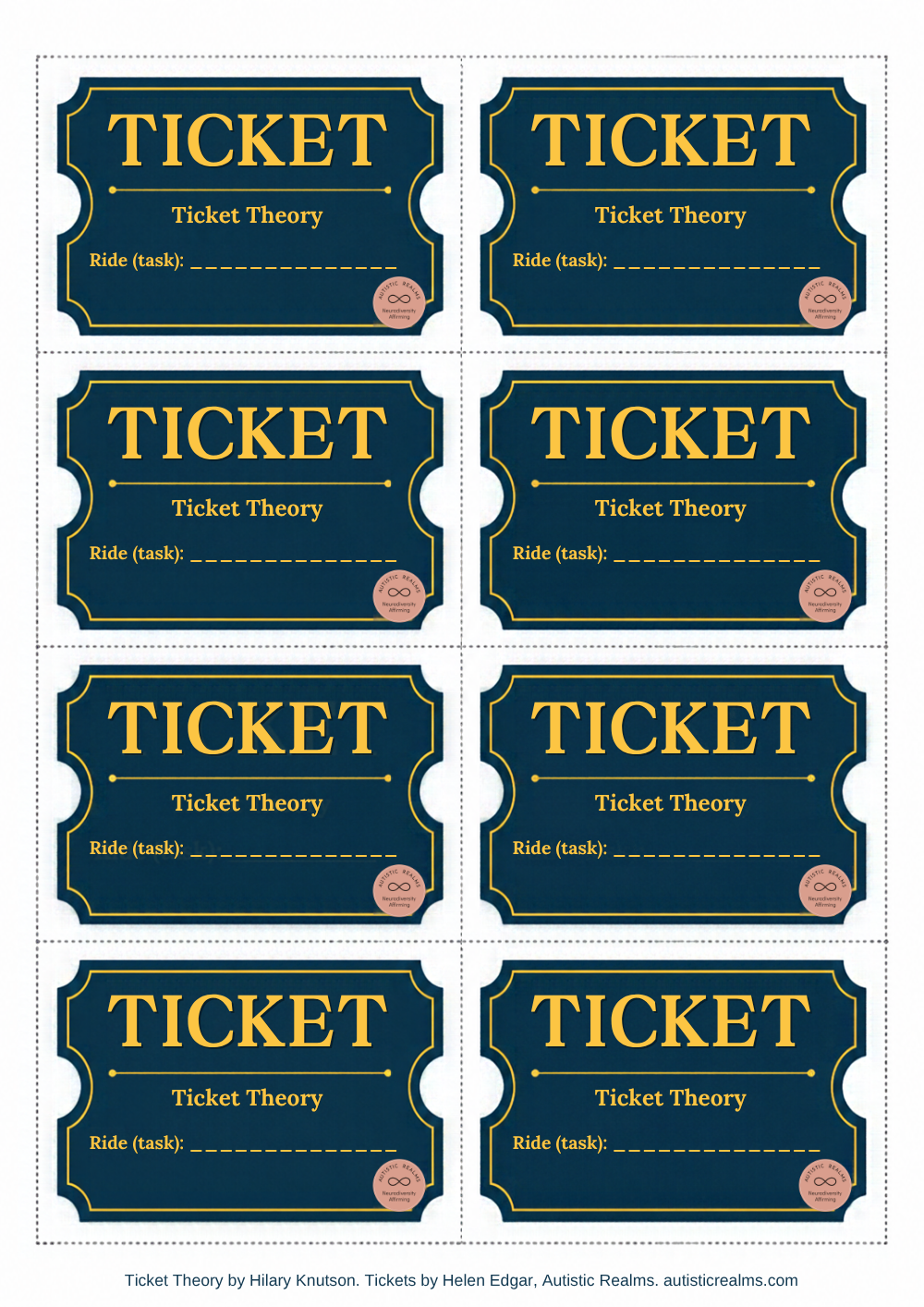
Printable tickets: the full pack of 40 tickets plus the guide is in the shop as pay what you can, with a suggested donation of £2. If money is tight, change the amount to £0 and it is yours for free.
Licence: CC BY-NC-ND 4.0. Please credit Helen Edgar (Autistic Realms) and Hilary Knutson, and share unadapted and for non-commercial use only.
With thanks to Hilary Knutson for Ticket Theory, and to Neuro Pride Ireland for sharing this wonderful theory! Thank you also to my friend Bex Milgate for the great idea of bringing Tanya Adkin’s idea of monotropic split into the fairground!
Watch Ticket Theory
References
Adkin, T. (2022, July 14). Guest post: What is monotropic split? NeuroHub Community. https://neurohubcommunity.org/2022/07/14/guest-post-what-is-monotropic-split/
Buckle, K. L., Leadbitter, K., Poliakoff, E., & Gowen, E. (2021). “No way out except from external intervention”: First-hand accounts of autistic inertia. Frontiers in Psychology, 12, Article 631596. https://doi.org/10.3389/fpsyg.2021.631596
Edgar, H. (2026, July 18). The constellation of intensities: Neuroqueering the spiky profile. Autistic Realms. https://autisticrealms.com/the-constellation-of-intensities-neuroqueering-the-spiky-profile/
Knutson, H. (2021, August 8). Ticket theory [Video]. Neuro Pride Ireland, YouTube. https://www.youtube.com/watch?v=o-bXAUUDCks
Mahler, K. (2025, February 18). What is monotropism and its connection to interoception? Kelly Mahler. https://www.kelly-mahler.com/what-is-interoception/interoception-and-monotropism/
Miserandino, C. (2003). The spoon theory. But You Don’t Look Sick. https://butyoudontlooksick.com/articles/written-by-christine/the-spoon-theory/
Murray, D., Lesser, M., & Lawson, W. (2005). Attention, monotropism and the diagnostic criteria for autism. Autism, 9(2), 139–156. https://doi.org/10.1177/1362361305051398
Raymaker, D. M., Teo, A. R., Steckler, N. A., Lentz, B., Scharer, M., Delos Santos, A., Kapp, S. K., Hunter, M., Joyce, A., & Nicolaidis, C. (2020). “Having all of your internal resources exhausted beyond measure and being left with no clean-up crew”: Defining autistic burnout. Autism in Adulthood, 2(2), 132–143. https://doi.org/10.1089/aut.2019.0079
Stimpunks Foundation. (2022, July 26). Spiky profile. https://stimpunks.org/glossary/spiky-profile/