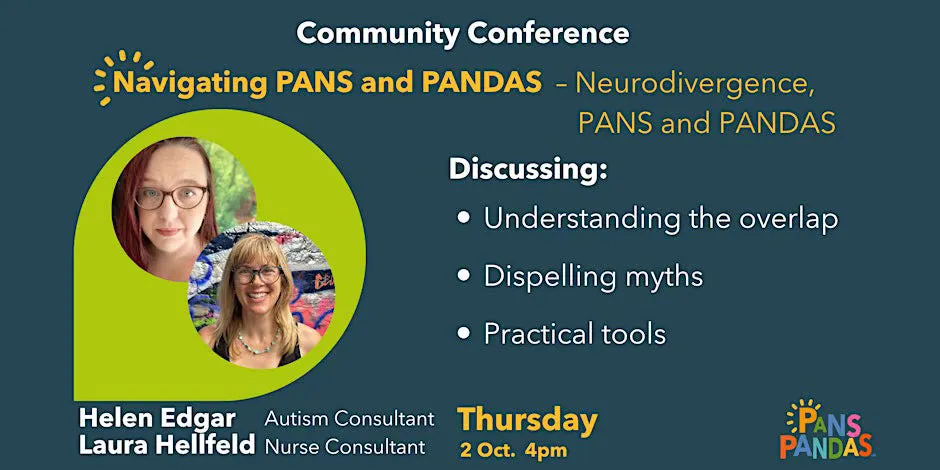
Laura Hellfeld and I spoke at the October 2025 PANS/PANDAS UK Conference, hosted by the PANS/PANDAS UK charity. Our session, Neurodivergence, PANS & PANDAS, explored what PANS and PANDAS are, what neurodivergence means in this context, and the overlaps between them. We highlighted the risks of diagnostic overshadowing and shared practical strategies and tools that parents, carers, and educators can use straight away to create more supportive environments for children and young people.
Our webinar will be hosted on the PANS/PANDAS Conference webpage for future listening/watching.
As part of our preparation, Laura developed three information-gathering templates which I supported. These are designed to help parents, carers, and education staff track symptoms, spot patterns, and build a clearer picture of a young person’s needs. These templates can also strengthen advocacy in healthcare settings by making the realities of day-to-day experiences more visible.
Important Note
These are information gathering templates intended for use in the home or school setting. They are not a diagnostic tool and should not be used to confirm a diagnosis of PANS or PANDAS (or any other health or mental health condition). These conditions are diagnosed by exclusion and require assessment by a qualified medical professional.
The templates may be helpful to identify traits or concerns that could be consistent with PANS or PANDAS, but it must be considered alongside a broader range of clinical, and contextual information. The purpose of the templates are to support awareness and guide further investigation, not to provide a diagnosis.
Parents, Carers & Families, Health & Behaviour Journal
Purpose
This tool helps you track and organise concerns about your young person’s health and daily functioning. PANS and PANDAS can involve changes across many areas of life from mood and behaviour to sleep, learning, eating, toileting and fine and gross motor skills. Recording these changes can help you notice patterns, give clearer information to health professionals, and support ongoing care.
Key words to keep in mind when recording are spikes, intensity, and changes to baseline. These highlight when symptoms appear suddenly, how strong they are, and how they differ from what is typical for the young person.
Education Staff, Health & Behaviour Journal
Purpose
This tool helps staff track and organise concerns about a student’s health, learning, and daily functioning in the school environment. PANS and PANDAS can involve sudden changes across many areas of life, including mood, behaviour, sleep, learning, eating, toileting, motor skills, and social participation.
Recording these changes in school can:
- Provide clearer information to parents/carers and health professionals.
- Support planning reasonable adjustments.
- Help staff notice patterns or flares that may impact learning and wellbeing.Keep in mind the keywords spikes, intensity, and changes to baseline. These highlight when symptoms appear suddenly, how strong they are, and how they differ from what is typical for the student.
Individual & Family Health Organiser
Purpose
This tool helps you collect and organise key family health information that may be relevant to your or your young person’s wellbeing. Many conditions (e.g., autoimmune issues, allergies, digestive concerns) can run in families, and sharing this context with health professionals can make it easier to get the right support. We also recognise that families are diverse, and it may feel complicated to gather or share this information. Please include what feels possible for you while respecting the privacy and wishes of relatives.
Watch the webinar training from
PANS PANDAS UK Charity Conference 2025
Laura Hellfeld (RN, MSN, PHN, CNL) wrote this article and created the resources. I edited the article for Autistic Realms in October 2025 and supported the development of Laura’s resources.
Connect with Laura on social media:
LinkedIn, Instagram, Facebook and BlueSky
Disclaimer: The information shared in this blog is for informational purposes only and is not intended to replace medical advice, diagnosis, or treatment. Please consult a licensed healthcare provider for personalised support and care tailored to your specific needs.
Check out the book:
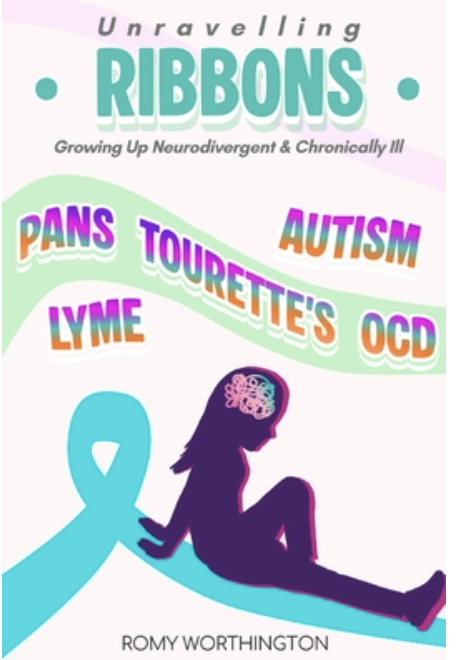
Unravelling Ribbons: Growing Up With Tourette’s, OCD, PANDAS/PANS & More by Romy Worthington
Signposting and Resources
- PANS/PANDAS UK
- PANS/PANDAS frequently asked questions
- PANS Life Facebook page
- PANS Australia and PANS Australia Facebook page
- PANS PANDAS Foundation Ireland
- PANS PANDAS Education with Shara Virlan
The following list was collated and shared by Romy Worthington
- Romy’s PANDAS/PANS and OCD Youtube Playlist: https://www.youtube.com/playlist?list=PL39925jJXko0mAIEKiO9k9TwOdKl9tJ4M
- Romy’s Instagram page with a lot of PANDAS/PANS posts: https://www.instagram.com/chronic.advocate?utm_source=ig_web_button_share_sheet&igsh=ZDNlZDc0MzIxNw==
- Information on antibiotics for PANDAS/PANS: https://www.pandasppn.org/antibiotics/
- Royal College of Nursing PANDAS/PANS information: https://www.rcn.org.uk/news-and-events/Blogs/pans-pandas-a-mysterious-and-debilitating-paediatric-disorder-180523
- When specific foods trigger brain inflammation in children: https://www.lymedisease.org/members/lyme-times/2023-summer-news/foods-trigger-brain-inflammation/
- Patient stories of brain inflammation: https://braininflammation.org/patient-stories/
- A parent talking about the importance of antiviral treatment when antibiotics don’t work: https://www.linkedin.com/posts/emiliametzel_weeklypans-activity-7192897265559097344-fDqn?utm_source=share&utm_medium=member_desktop
- Food Sensitivities: https://theconversation.com/people-can-have-food-sensitivities-without-noticeable-symptoms-long-term-consumption-of-food-allergens-may-lead-to-behavior-and-mood-changes-192570
- Finding a doctor:
- The Children’s E-hospital, Dr Ubhi: https://drtimubhi.com
- PANS PANDAS UK Facebook group: https://aspire.care/treating-pans/medications/
- Information on false FII allegations: https://panspandasuk.org/support-resources/safeguarding-and-fii/
- Stanford medicine PANS PANDAS Q&A: https://med.stanford.edu/pans/about/Q-and-A.html
- A Q&A with an expert on PANS and Lyme: https://neuroimmune.org/dr-shannon-delaney-interview/
- Info on Lyme testing: https://arminlabs.com/en/diseases/bacteria/lyme-borreliosis
- PANS PANDAS UK facebook group: https://www.facebook.com/groups/189721514954497
Find out more about Neurodivergence and PANS/PANDAS
Dr Tim Ubhi, Clinical Director at The London PANS Clinic & Children’s e-Hospital, is pleased to announce the launch of Plaito, a dedicated PANS/PANDAS AI specialist now available at e-hospital.co.uk.
Plaito has been trained on the questions and concerns most commonly raised by parents of children with PANS/PANDAS and by health professionals working in the field — making it a knowledgeable, accessible first point of support for the community.
Dr Ubhi and his team welcome everyone to ask Plaito anything related to PANS/PANDAS. Plaito will continue to develop and learn over time, and human oversight will be maintained on its responses to ensure quality and safety.
One of Plaito’s most exciting features is that it speaks all languages — a significant step toward bringing the global PANS/PANDAS community together for the very first time.
To access Plaito, simply go to the messages bubble in the top right of the screen, select Agents, and choose Plaito.