Tag: Education
-

Spoon Theory and Autism: Energy, Burnout and Monotropism
What spoon theory means for Autistic people: how everyday tasks use up limited energy, why spoons run out faster, and how monotropism and burnout fit in. Includes a free how-to-use guide and printable gold and silver spoons.
-
Awe, Wonder and Monotropic Attention in Neuroqueer Learning Spaces
If Helen De Cruz designed a learning space, what would it look like? Helen Edgar follows wonder and awe through monotropism, glimmers, flow and Cavendish Space.
-
Plain Language:
A plain-language guide to monotropism, wonder and awe — what happens when Autistic and ADHD attention is given space to notice, and stay
-
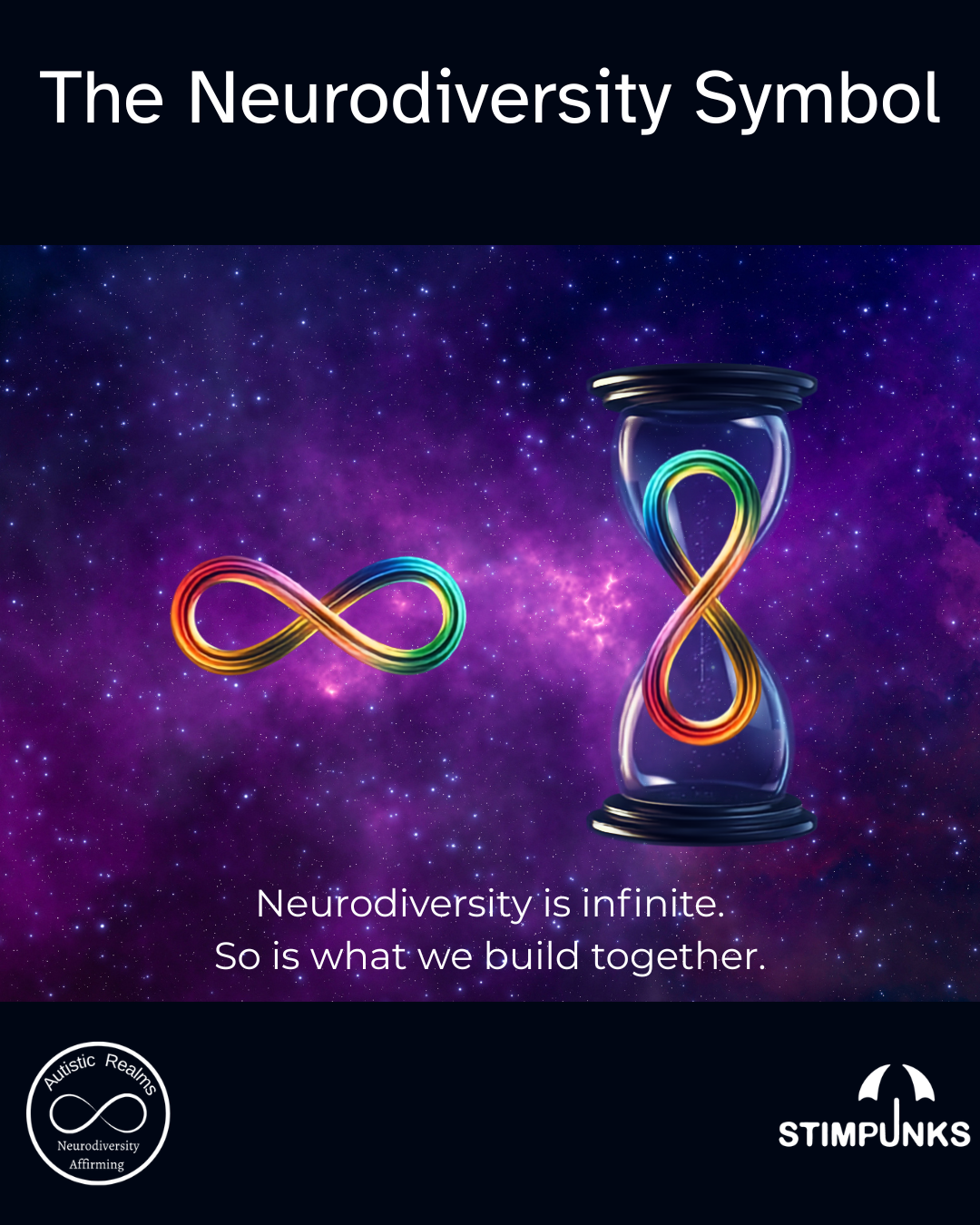
Neurodiversity Infinity Symbol: History, Time, and Collective Becoming
The neurodiversity infinity symbol has a story worth knowing. Rotate it and it becomes an hourglass holding time, community, and collective becoming.
-
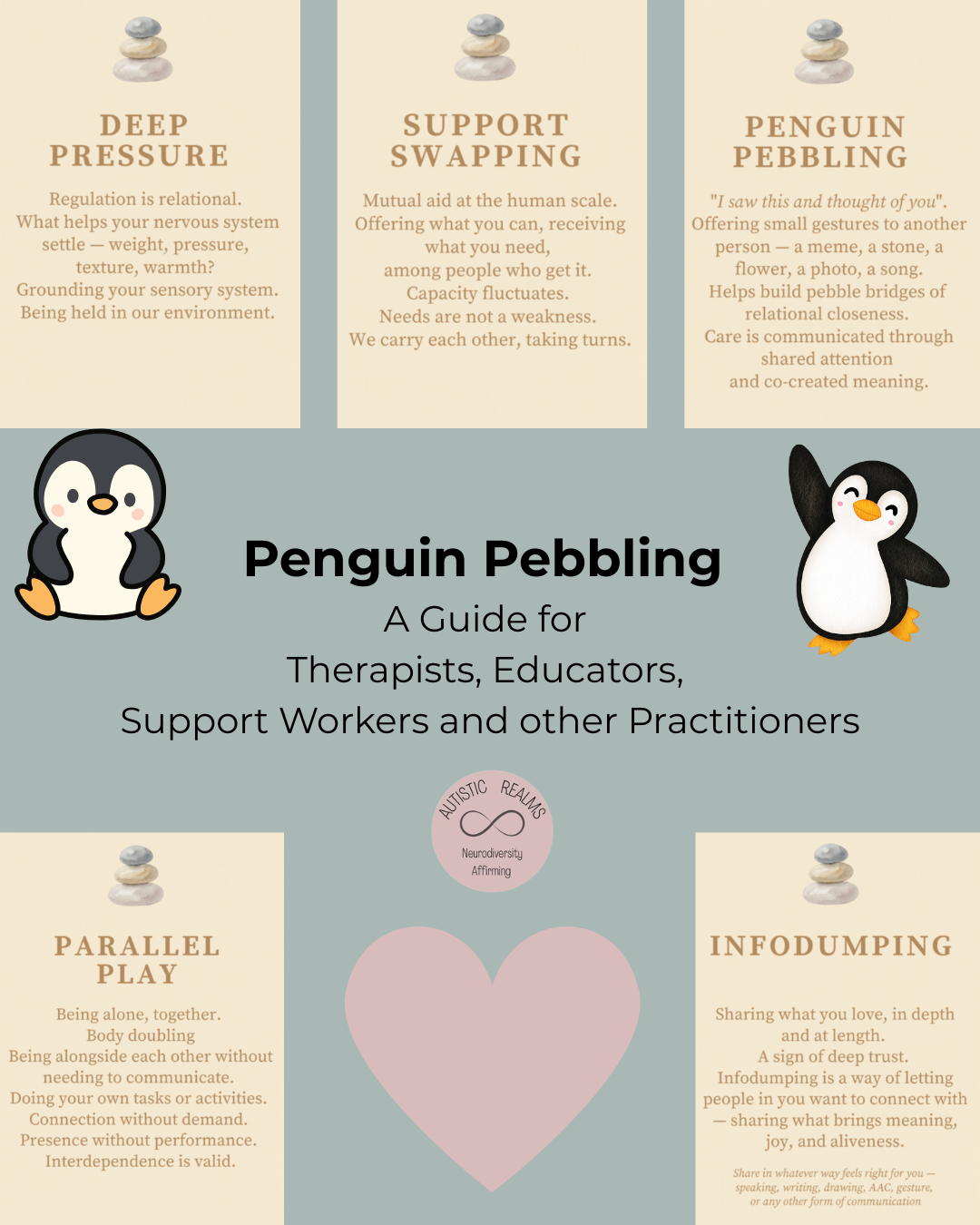
Penguin Pebbling: Theory, Practice and the Five Neurodivergent Love Locutions — A Guide for Practitioners
Penguin Pebbling is a low-demand, neurodiversity-affirming card game built around the Five Neurodivergent Love Locutions — five relational modes natural to many Autistic and neurodivergent people: infodumping, parallel play, support swapping, penguin pebbling, and deep pressure
-
Why Attachment Theory Fails Autistic People, and What Might Work Instead
If you have spent any time navigating schools, social care, or therapy as an Autistic person or supporting a loved one, you have likely encountered attachment theory. You may have been blamed for your children’s difficulties and said they were due to attachment disorders and perhaps your parenting issues, or you may have been told…
-
Building Neurodivergent-Affirming Cultures of Regulation: Reflections from a Cavendish Space Workshop
What does regulation really mean for neurodivergent people? Helen Edgar reflects on Cavendish Space, co-regulation, and building cultures where our nervous systems can thrive.
-
No Space Is Neutral: Safe Spaces, Imagined Neutrality, and the Work of Belonging
: No space is neutral. Exploring minority stress, the Double Empathy Problem, and what it really takes to build safer, neuroqueer spaces together.
-
Neuro-Affirming Practice Is Not a Framework. It’s a Way of Being.
Neuro-affirming practice isn’t a framework or a checklist. It’s about being human — kind, compassionate, and truly present with people, just as they are.
-
What Would A Neuroqueer Pedagogy Be?
“What would a neuroqueer pedagogy be?” By Ombre Tarragnat (English translation with permission from Genre en Cours article Feb 2026)
-
Intensive Interaction as Neuro-Affirming Relational Practice
Intensive Interaction isn’t about “fixing” or prompting communication. It’s about meeting someone where they are—through connection, attunement, and shared flow. A neuro-affirming, relational framing to support those with profound and multiple learning disabilities.
-
Re-Storying Autism
Re-Storying Autism A Framework For Families, Parents, And Carers: Reimagining Support For Autistic People. #1 Amazon Bestseller
-
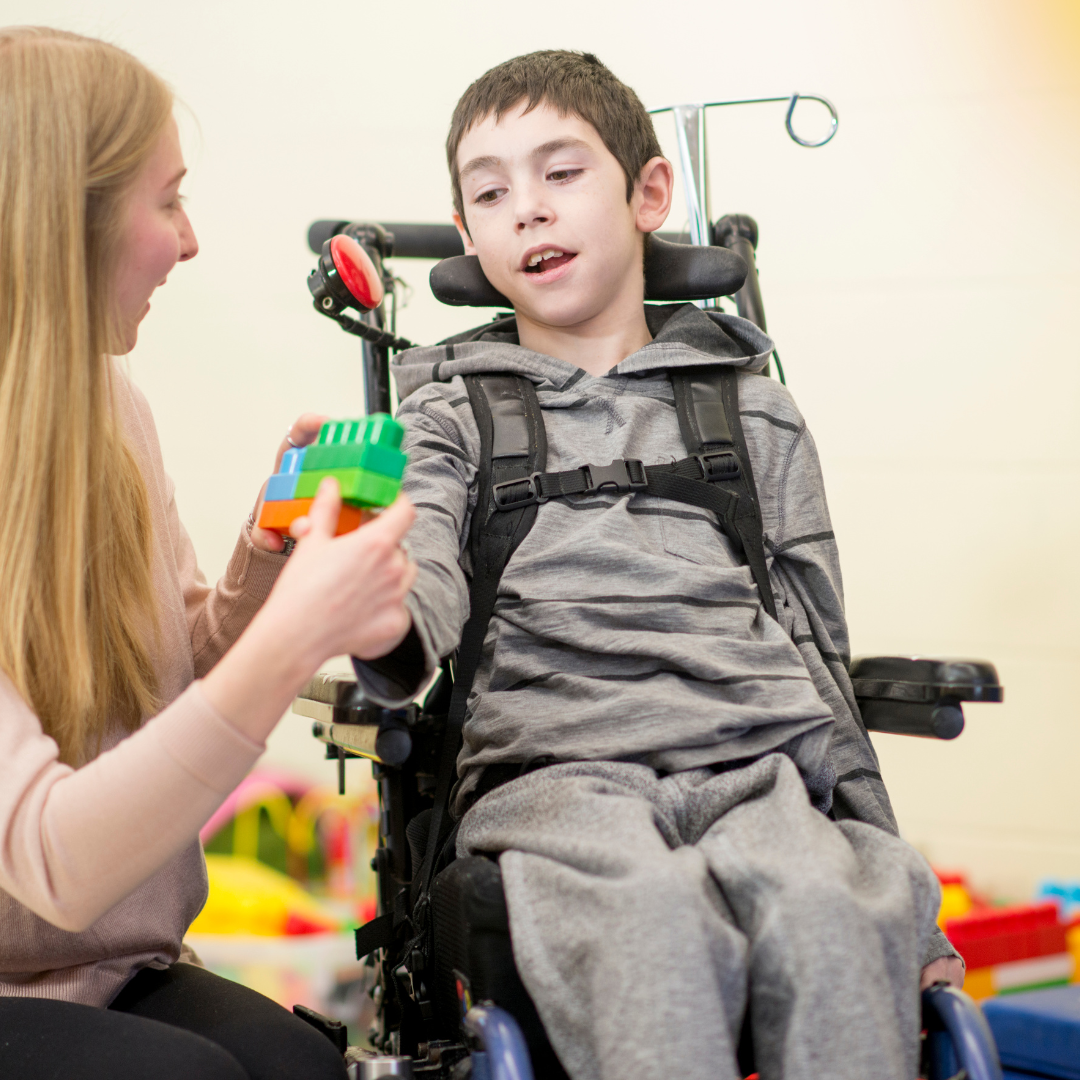
Beyond “Complex Needs”: Neuro-Affirming, Relational Practice with Children with Profound and Multiple Learning Disabilities
A neuro-affirming, relational approach to supporting children with profound and multiple learning disabilities, centred on safety, communication, and being-with.
-
What schools and parents need to understand about supporting Autistic and neurodivergent children
What schools and parents need to understand about supporting Autistic and neurodivergent children
-
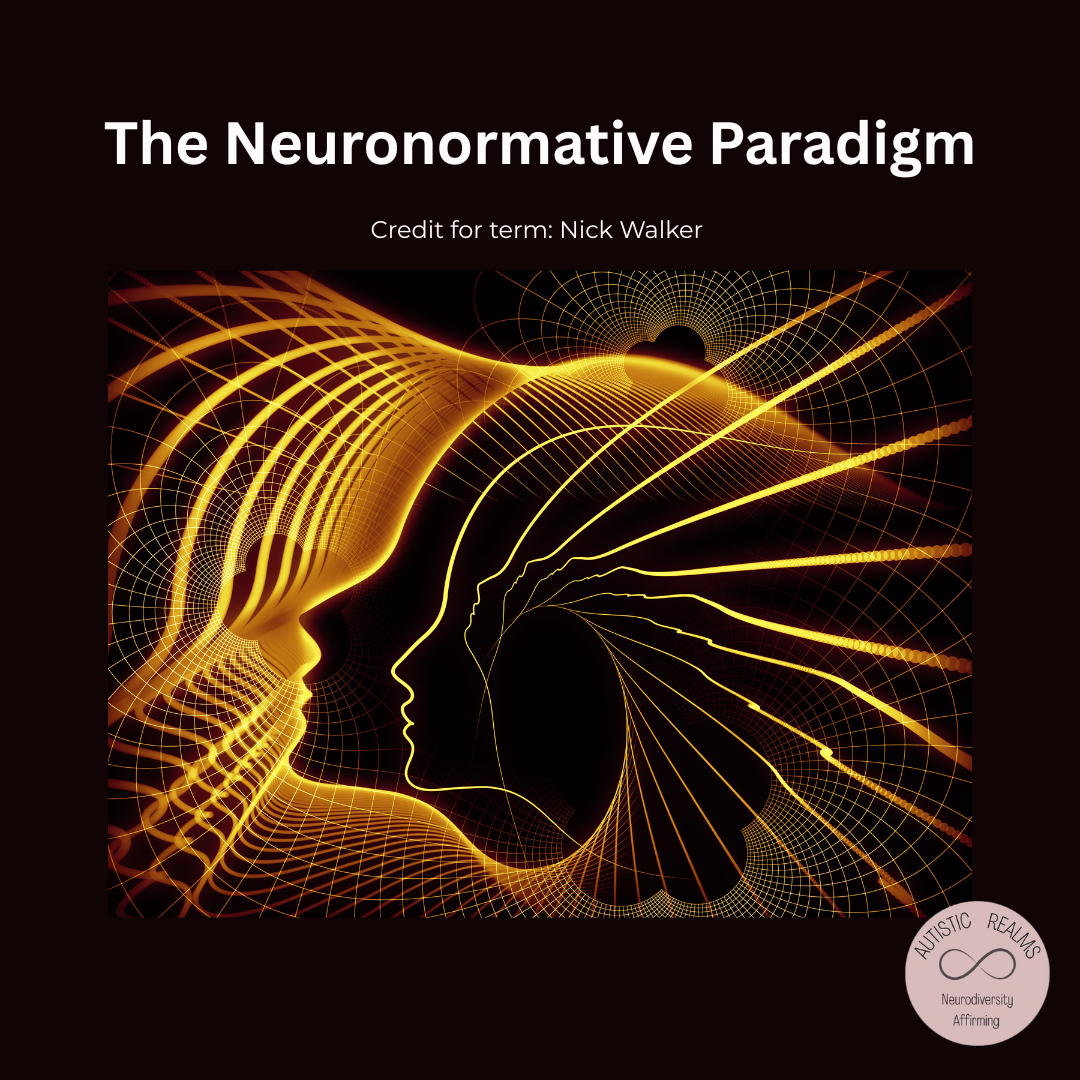
The Neuronormative Paradigm: Naming The Systems That Harm
The Neuronormative Paradigm, conceptualised by Nick Walker, names the systems that define and enforce what society considers normal. This exploration piece contrasts the neuronormative paradigm with the neurodiversity paradigm, which recognises all ways of being as vital to human diversity.
-
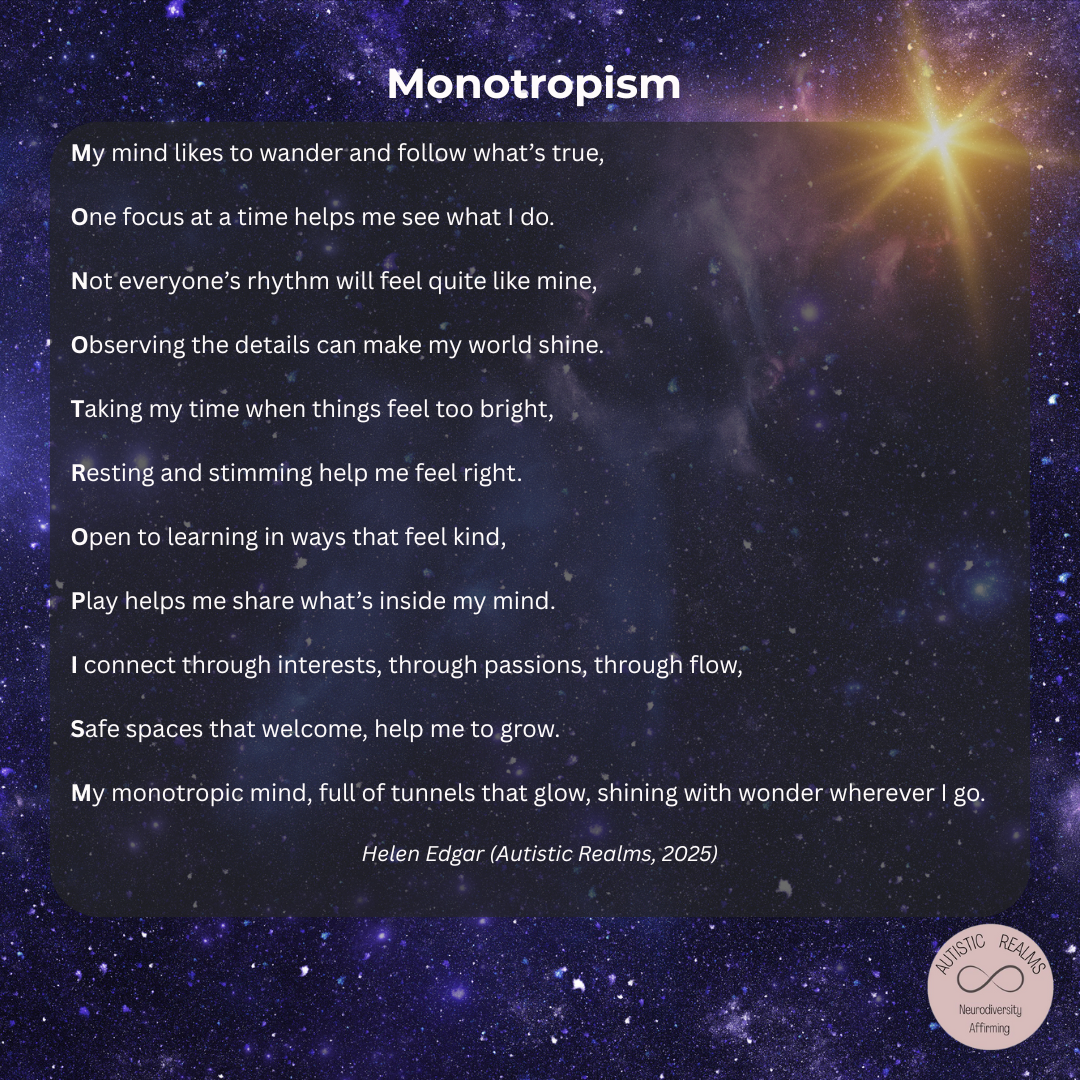
Monotropism: A Poem
A poem about monotropism for children, young people, families and educators to open conversations about Autistic & ADHD experiences.
-
Understanding the Double Empathy Problem: A Guide For Autistic People & Families
FREE Neuro-Affirming Communication & Sensory Passport + Training Support Autistic people through better understanding of communication, sensory needs & double empathy.
-
Inclusion Needs Recognition, Not Erasure: A Neurodiversity-Affirming Approach
When headlines claim that autism and ADHD are “invented labels,” it’s more than rhetoric, it’s erasure. A explores why removing neurodiversity from education would harm the very children inclusion is meant to protect.
-
Navigating PANS/PANDAS & Neurodivergence
Our new PANS/PANDAS info-gathering templates help families, schools & clinicians understand the overlap between neurodivergence and PANS/PANDAS.
-
SPACE-TIME: A Monotropism Informed Framework for Autistic People
SPACE-TIME: A Monotropism-Informed Neuroaffirming Framework for Autistic People
-
Building Connections: Teachers Starting the Year with Pupils with PMLD
Connection comes first. Relationships, trust, & small shared moments are the real foundations of learning.
-
Why PBS is Harmful for Autistic and Neurodivergent Young People
Exploring why and how Positive Behaviour Support (PBS) can harm Autistic people. #Neurodiversity #AutismAcceptance #PBS #DisabilityJustice
-
Neuroqueer Learning Spaces: Free Training for Reimagining Education
Neuroqueer Learning Spaces: Free Training for Reimagining Education By Autistic Realms & Stimpunks Foundation
-
Autistic Pride: Rest, Resistance & Monotropism
Written for Autistic Pride Day 2025: what Autistic Pride means to me, from monotropism and the cost of masking to reclaiming rest and finding belonging in community.
-
Autistic Pride: Restorying & Unknowing Autism
Restorying is how we reclaim our Autistic voices, honour our ways of knowing, and build futures rooted in connection, not correction.
-
Being With People with Profound and Multiple Learning Disabilities Through Attunement and Shared Time
There’s something incredibly powerful in the simple idea of being with someone. Not doing to or even doing with or for, but truly being with. For people with PMLD, attunement, emotional connection, and flexible shared time can help to create more space for trust and support wellbeing.
-
Empowering Advocacy: Neuro-Affirming Support for Your Autistic Young Person at School
By Helen Edgar (Autistic Realms), with David Gray-Hammond & Tanya Adkin Navigating the education system as the parent or carer of an Autistic child can often feel like steering a tiny boat through stormy seas, it can feel impossibly hard and be exhausting. For many families, the challenge isn’t just the school system; it’s the…
-
Neurodiversity Affirming Reading Recommendations
Looking for neurodiversity-affirming reads? I’ve have a growing collection of books listed by autistic authors, advocates, and researchers. Perfect for parents, professionals, and curious minds alike. Explore stories that affirm, not fix. Neurodivergent voices centred. From education to identity, burnout to belonging.
-
Autistic Young People: Skills Regression, Burnout or a shift in Monotropic Attentional Resources?
Autistic individuals may not lose skills but instead redirect their monotropic attention toward new interests or areas of development.
-
Testimonials for Autistic Realms
Testimonials gathered from National Diversity Awards nomination feedback 2024 and 2025. Feel free to vote for me and others here: Helen is breaking new ground in the dismantling of neuronormativity while working tirelessly to grow and deliver her practice as an Autistic Advocate. I have known of Helen’s work for over 20 years and she…
-
Neuro-Affirming Research in Practice: Supporting Autistic Students, Embracing Monotropism In The Classroom And Beyond
Written by Tanya Adkin and Helen Edgar, based on the presentation we delivered to the National Autistic Society Professionals’ Conference in March, 2025. Shared with permission from NAS. We will explore the importance of the theory of monotropism and the significance of flow states and suggest some practical strategies educators can implement to create more…
-
Challenges for Autistic & Neurodivergent Families Navigating the SEND System: We Need to Understand the Double Empathy Problem & Embrace Monotropism
(Blog based on a presentation I delivered to London Met University 14th March 2025, updated April 24th 2025 following the research published by…. Introduction The Special Educational Needs and Disabilities (SEND) system is designed to support children with additional needs, yet for many neurodivergent families, it presents more barriers than solutions. Families navigating this system…
-
Obstacles in the way of Neuro-Affirming Practice in Educational Settings & Ways Forward
Implementing neurodiversity-affirming practices in education, healthcare, and other systems is often hindered by pervasive narratives and biases. Recognizing and addressing these obstacles is crucial for fostering inclusive and supportive environments for neurodivergent and disabled individuals. Here are some common barriers that I have been working on with Stimpunks, who have a more in-depth page with…
-
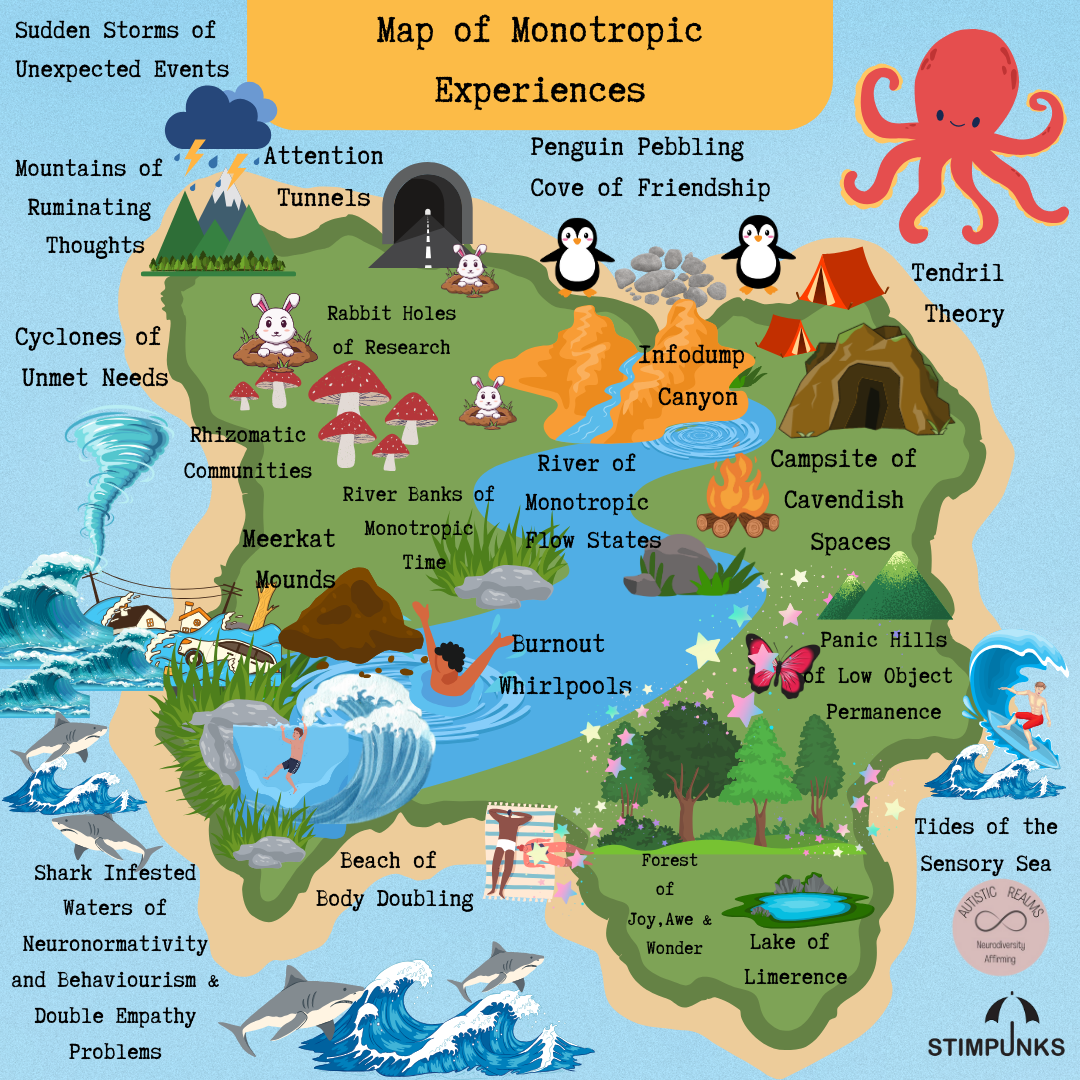
Neuronormative Domination, Monotropism & The Map of Monotropic Experiences
The Map of Monotropic Experiences now has a home of its own. Read more about neuronormative domination, the water the whole map sits in, at monotropicmap.org, and explore each of the twenty areas of the map there too. In collaboration with Stimpunks, I created a Map of Monotropic Experiences. This is a revised edition of…
-
Radical Resilience
Image of pink flower growing between gaps in pavement. Text:Wild flowers offer hope. Be radically resilient. Find possibilities in-between hard spaces. Be authentic and flourish in adversity. Transform the landscape. Be a wild flower.
-
Gestalt Language Processing, Monotropism & Young People
Monotropic (Autistic/ ADHD) people have fewer tunnels of interest to process and use their energy than polytropic people (non-Autistic/ADHD). Polytropic people can more easily split their processing and energy resources across multiple channels than monotropic people, this may explain some key differences in communication people experience. It may initially sound a bit conflicting to discuss…
-
Autistic Burnout – Supporting Young People At Home & School
Autistic burnout in young people is real—and recovery starts with understanding. This post offers neuroaffirming ways to spot the signs, reduce demands, and truly support. 💛 #AutisticBurnout #Neuroaffirming #Monotropism #AutisticSupport
-
Monotropic Interests and Looping Thoughts
The theory of monotropism was developed by Murray, Lawson and Lesser in their article, Attention, monotropism and the diagnostic criteria for autism (2005). Monotropism is increasingly considered to be the underlying principle behind autism and is becoming more widely recognised, especially within autistic and neurodivergent communities. Fergus Murray, in their article Me and Monotropism:…
-
Map of Monotropic Experiences
The Map of Monotropic Experiences now has a home of its own. Visit monotropicmap.org to explore each of the twenty areas, mark your own map and find the free training. You can also find the free training and downloads further down this page. Monotropism seeks to explain Autism in terms of attention distribution and interests. …
-
Exploring ‘Being With’
I experience and interpret ‘Being With’ as a process of be-coming together. Deleuze’s concept of the line of flight allows us to explore and follow meaning together. This article will explore these ideas in a bit more detail. This post is a pulling together of several discussions I have had online over the past few…
-
Spaces For Multi-Sensory Learners and those with Profound and Multiple Learning Disabilities
Helen Edgar (Autistic Realms) and Ryan Boren (Stimpunks) have been exploring radically inclusive learning environments. Cavendish learning spaces are based on flexibility, interaction, movement and the role of embodied responsive experiences. We reject the boundaries of traditional classroom settings and look at how they not only restrict embodied experiences but lead to disembodied experiences and…
-
Neurodivergent Co-Regulation
Being neurodivergent can be really hard work in a world that is mostly still lacking in an understanding of the differences in sensory, social, and communication needs of autistic/ADHD and other neurodivergent people. Different lived experiences can create a double empathy gap (Milton, 2012). This means that people’s needs are often not adequately met, and…
-
Neuro-Holographic Thoughts
I believe that the DEEP (Double Empathy Extreme Problem) is at the heart of all the systemic ableist issues we have in our education, social and healthcare systems. The lack of an embodied presence and connection between people being together as humans is causing harm. It is leaving marginalised people further on the edges and…
-
Neuroqueer Collaborative Work Flow Spaces
A behind-the-scenes look into the collaborative workflow between Helen Edgar (Autistic Realms) and Ryan Boren (Stimpunks) as we write about Neuroqueer Learning Spaces (NQLS) and continue our neuroqueering journeys, connecting with awe-inspiring people and discovering new ideas to explore along the way. Liminal Spaces Ryan Boren (Stimpunks) and I are neuroqueering ourselves and the spaces we…
-
An unlearing and relearning journey.
Hello! I have never done an introduction post for Autistic Realms, so after 18 months and some one kindly nominating me for the Positive Role Model Award as part of the National Diversity Awards and receiving so much lovely feedback, I thought I would share a bit about myself! I am Helen Edgar, late identified…
-
Neuroqueer Learning Spaces — Webinar — a summary and reflection 6th May 2024
Neuroqueer Learning Spaces Webinar — A summary and reflection Neuroqueer Learning Spaces is a community project led by Ryan Boren (Stimpunks) and Helen Edgar (Autistic Realms). More information is available on Stimpunks’ website. To support this project and open up further discussions about neuroqueering education and learning spaces, David Gray-Hammond hosted a live webinar, “Explore Neuroqueer Learning…
-
Embracing Autistic Children’s Monotropic Flow States
Article originally written and published for Neurodiverse Connection (Sept 2023) Autistic and ADHD people are more likely to be monotropic than the rest of the population (Garau, V. et al., June 2023). This means they focus more energy and resources on fewer interests/tasks/ sensory input at any one time compared to non-autistic polytropic people. Developing a…
-
Monotropism, Autism & OCD
Exploring similarities and differences between Autistic and OCD monotropic flow states. Can attention tunnels freeze, and thoughts get stuck?
-
Building a Family Sensory Toolkit
Tigger Pritchard delivered a great workshop with The PDA Space where they discussed ‘The Sensory Impact of School Holidays’, which is available to watch here in The PDA Space Portal. I have also created a FREE E-BOOK ‘Building a Family Toolkit’ which is availablein my shop. https://autisticrealms.com/shop/ Sensory Systems Everyone has a sensory system;…
-
Monotropism Questionnaire: Take It and Understand Your Results
Post first published 28th July 2023 Over the past few weeks, there has been a sudden surge of interest in the Monotropism Questionnaire (MQ), pre-print released in June 2023 in the research paper ‘Development and Validation of a Novel Self-Report Measure of Monotropism in Autistic and Non-Autistic People: The Monotropism Questionnaire.‘ by Garau, V., Murray,…
-
Transitions – Supporting young people throughout the day
Updated October 2026. Transitions are one of the biggest hidden demands in a young person’s day, and understanding why they cost so much comes back to monotropism: every switch pulls attention out of a tunnel and costs energy. The ideas below still hold. For the theory in plain language see the monotropism guide; for the…
-
Monotropism and Experiences of being Monotropic
The theory of Monotropism was developed by Dr Dinah Murray, Wenn Lawson and Mike Lesser (2005) in their article, Attention, monotropism and the diagnostic criteria for autism. Monotropism is increasingly considered to be the underlying principle behind autism and is becoming more widely recognised, especially within autistic and neurodivergent communities. Fergus Murray,(2018), describes montropism as:…
-
Book review – Autistic Burnout, Children /Young People in Education by Viv Dawes
I am excited to announce that Viv Dawes (autistic advocate, writer, and trainer, www.autisticadvocate.co.uk) has just published her new book, Autistic Burnout, Children /Young People in Education, a book aimed at parents of autistic (or other neurodivergent) children. I have revised my preface here as a short review so everyone gets a chance to find…
-
Autism & OCD – What Could Help
Updated October 2026. Autism and OCD overlap in ways that are easy to mistake for one another, and getting that wrong leads to the wrong support. This post sets out the differences and what could help; for the attention side of the story, Monotropism, autism and OCD explains why thoughts can loop, and the monotropism…
-
Monotropism = Happy Flow State
Updated October 2026. This was my first attempt to explain monotropic flow to parents, and I still believe its central point: deep interests are not a problem to be managed but the place where Autistic, ADHD and PDA young people regulate and recover. I have written a fuller plain-language monotropism guide since, and glimmers and…
-
Autism is fluid
Updated October 2026. “Being Autistic” is one of the searches that brings most people here, so a word on where this post sits now. It is a short statement of the neurodiversity paradigm: autism is a way of being, not a disorder to fix, and Autistic needs are fluid. If you want the vocabulary behind…
-
Neurodivergent Friendly Classrooms
Updated October 2026. I wrote this for Twinkl in 2023, and the attendance crisis it describes has only deepened. The classroom ideas still apply. Since then I have written about why behaviour-based approaches such as PBS do harm, and about the monotropism that underlies so much of what teachers see; both are worth reading alongside…
-
Supporting neurodivergent students who are struggling to attend school
Updated October 2026. School attendance remains the question I am asked about most by families and schools, and the reasons have not changed: unmet needs, sensory overload, masking and burnout. This post sets out what schools can do. For the burnout side read the Autistic burnout hub and the teacher guide; for parents, Parent ideas…
-
Supporting pupils through Autistic Burnout (Neuro-Affirming Teacher Guide)
Supporting pupils through Autistic Burnout (Neuro-Affirming Teacher Guide)
-
Book Review -Square Pegs, Inclusivity, Compassion & Fitting in (A guide for Schools)
Square Pegs: Inclusivity, compassion and fitting in – a guide for schools. Fran Morgan with Elllie Costello, edited by Ian Gilbert. Independent Thinking Press (2023) The knowledge and ideas in the new book, Square Pegs (2023) has the potential to transform our education system and support those working with young people in schools to make…
-
Supporting autistic students experiencing OCD in a school setting
Updated October 2026. More pupils are living with OCD alongside being Autistic than most schools realise, and the support that works is rarely the standard behaviour plan. This guide is still my starting point for teachers; read it with Autism and OCD: what could help and, where burnout is part of the picture, the Autistic…
-
Autism, OCD, Alexithymia & Interoception
Updated October 2026. Alexithymia and interoception are two of the least understood pieces of the autism and OCD picture, and I still get messages about this post every week. Since writing it I have explored the same territory through monotropism, which helps explain why anxious thoughts loop, and gathered the support side in Autism and…
-
Total Communication
Total communication is not a new concept it evolved from the field of education for the deaf in the 1960s (Schow and Nerbonne 2007). Mueller (2021) defines total communication as including, ‘not only speech, signing, gestures, and written language, but also picture communication and voice output communication devices’. For those with profound and multiple…
-
Education Crisis – Neurodiversity Affirming Teacher Training Needed
Language Identity First Language: In line with preferences from the Autistic community I will be using Identity First Language (ie. Autistic person, NOT person with Autism) Neurodiversity – This relates to the biological fact that human brains and minds differ from each other. Neurodiversity aligns with the idea that all children are unique and…
-
Supporting Children through Autistic Burnout (Parent/Carer Guide)
Updated October 2026. This guide was one of the first things I wrote for Autistic Realms, and it is still the page most parents arrive at. Since then I have gathered everything on burnout into one place, the Autistic burnout hub, and written about how burnout differs from depression and about spoon theory and energy.…
-
Language matters, relationships are essential
It can be difficult and confusing to understand the language surrounding neurodiversity. It can be seen to be creating further divisions and potentially isolating some people by getting hung up on the specifics. I know I have my own anxiety about not using the ‘right’ language (despite writing this!). In response to my previous…
-
Parent ideas for autistic children struggling with school attendance
Updated October 2026. If your child cannot face school, there is always a reason, and the ideas here are about finding it rather than forcing attendance. Since I wrote this I have added a parent guide to Autistic burnout, which is behind a great deal of school distress, and a short explainer on spoon theory…
-
‘Profound autism’ does not exist – rather there are autistic individuals with PMLD / PIMD
‘Profound Autism?’ Language matters, but it is complicated and there are constant changes of vocabulary and what is deemed as “correct” or inline with best practise of the time, particularly in education and health care. Earlier this year Emily Ansell Elfer (Feb 2022) shared the news that the phrase ‘Profound Autism’ had been ‘officially recognised…
-
‘Profound’ in relation to those with PMLD / PIMD
PIMD / PMLD The International Association for the Scientific Study of Intellectual and Developmental Disabilities (Profound Intellectual and Multiple Disabilities – IASSIDD) supports individuals and their families who have profound intellectual and multiple disabilities (PIMD). They define this group of people by saying that ‘they are characterized by very severe cognitive, neuromotor and/or sensory…
-
Ideas for Autistic Children who are Struggling at School
Updated October 2026. This was among the first posts on Autistic Realms and it is still the one I send to parents who sense something is wrong before anyone else does. The signs below hold. For what to do next, Parent ideas for Autistic children struggling with school attendance follows on, and the Autistic burnout…