
By Autistic Realms & Stimpunks Foundation
“The place where we belong does not exist.
James Baldwin
We will build it.”
In mainstream classrooms across the globe, neurodivergent children and their families are continually navigating and battling through systems not designed with them in mind. Our Neuroqueer Learning Spaces (NQLS) project, a collaboration between Autistic Realms and Stimpunks Foundation, emerges as a response to this exclusion. It is an invitation to educators, families, and communities to challenge neuronormativity and build something radically different.
Free training: download the slides
The Neuroqueer Learning Spaces training pack is free to download, use and adapt with your own communities. It includes the slides with and without presenter notes, a PowerPoint version and the Reflective Notebook for educators.
If your organisation is able to, you are warmly invited to choose a donation in the price box in the shop (we suggest £75). It helps keep this training free for individuals and anyone with limited funds.
What Is A Neuroqueer Learning Space?
Rooted in Nick Walker’s Neuroqueer Theory, NQLS calls on us to subvert, defy, and liberate ourselves from neuronormativity: the assumption that there is only one correct way to think, learn, behave, or be. Neuroqueering is a verb, it is an act and a practice, it means reshaping the world and ourselves in ways that affirm fluidity, embodiment, and cognitive, sensory and somatic liberty.
In education, this means unlearning compliance-driven models and reimagining learning built on trusting relationships, and radical inclusion. We need to center the bodyminds of those most often excluded from traditional classrooms and create new environments for learning to take place – not limited to school buildings.
Cavendish Space: Learning in Flow, Not Control
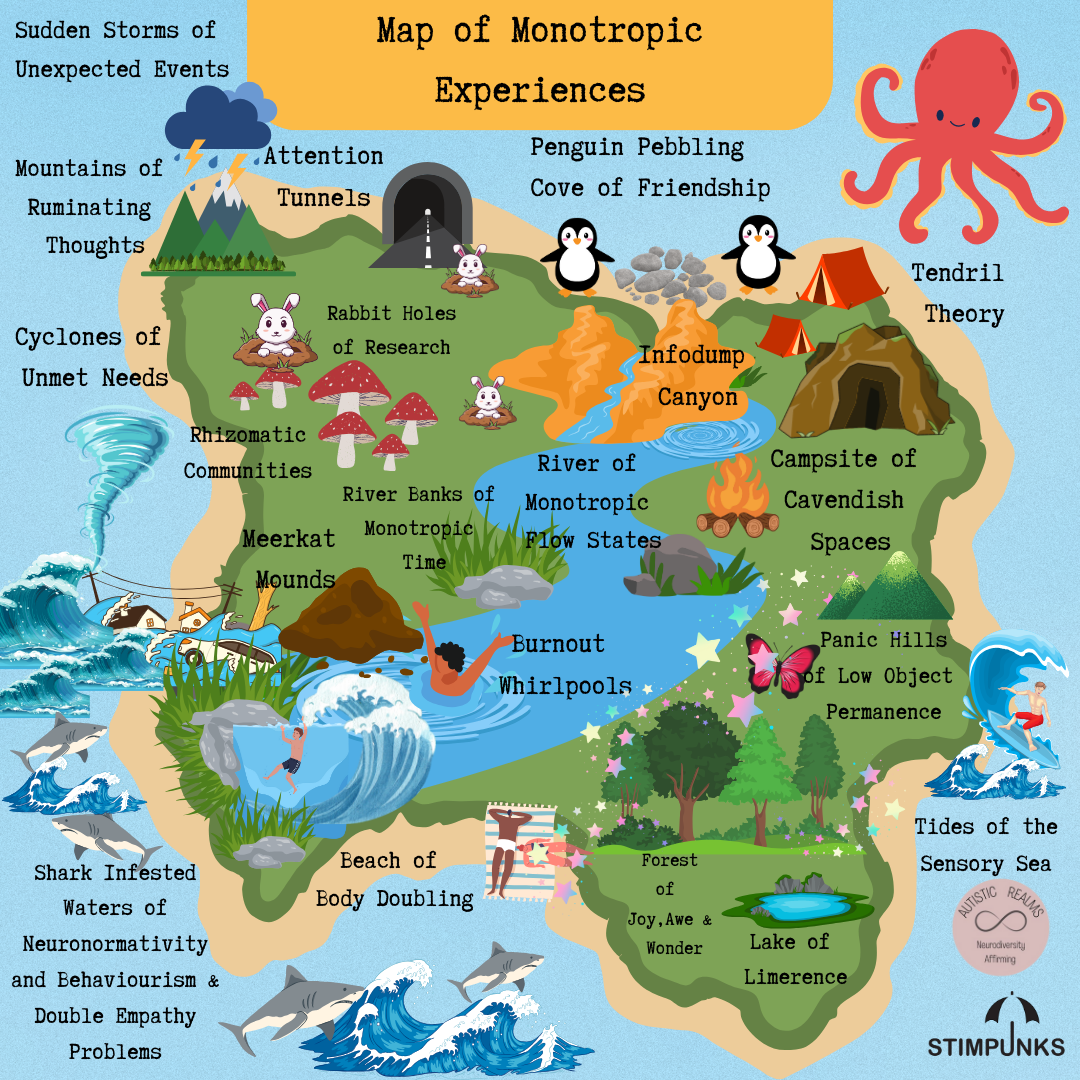
Inspired by the story of Henry Cavendish (as shared in Steve Silberman’s NeuroTribes, 2015), Stimpunks developed the concept of Cavendish Space: psychologically and sensory safe spaces suited to deep focus, intermittent collaboration, and self-direction. Cavendish Space is not just for Autistic learners, it benefits everyone by honoring diversity in how we engage, process, flow, play, work and grow as individuals and together as a community.
Within Cavendish Space, we draw on futurist David Thornburg’s “Primordial Learning Spaces” as written about in their book From the Campfire to the Holodeck: Creating Engaging and Powerful 21st Century Learning Environments (2013):
- Caves: spaces for quiet reflection and self-directed learning
- Campfires: spaces for storytelling, mentoring, and shared cultural knowledge
- Watering Holes: spaces for peer-to-peer exchange and community flow
These elemental spaces offer timeless pathways for learning that resonate deeply with neurodivergent needs.
Why We Must Change Education
Behaviourism, enforces compliance and punishes difference. Chris McNutt of the Human Restoration Project who works closely with us, calls this out for what it is: dehumanizing, ableist, and racist.
The alternative? Progressive education that affirms each student’s intrinsic worth and encourages hands-on, interest-driven exploration, going beyond that is neuroqueer learning spaces, which stretches the possibilities of progressive education even further.
Safety and Trust
We believe that learning begins in safe relationships. Radical intimacy, as theorized by Sophie K Rosa, emphasizes kinship, care, and connection. Schools must become communities of trust, places where children can be fully themselves, without fear of judgment or coercion.
As Nick Walker writes: “The freedom to be Autistic necessarily includes the freedom to give bodily expression to one’s neurodivergence.“
Poet and artist Pernille Fraser asks: Can we trust you? Her poem, shared in our training, speaks to the heart of our NQLS project. Pernille’s poem highlights the countless ways education has failed to hear and honor neurodivergent experience. Trust must be rebuilt through embodiment, access, and choice.
Homes of Opportunity
We work closely with educator Ira Socol, who calls for schools to become what he calls “homes of opportunity“. These are spaces of safety, curiosity, and transformation. Cavendish Space is one such home. It centers:
- Flow states and attention tunnels
- BYOC (Bring/Build Your Own Comfort)
- Psychological, sensory, and cognitive safety
- Student-led context and collaboration
We need to replace compliance-based classrooms with environments that honor all bodyminds, empower autonomy, and enable collective flow.
Collective Flow: Learning Together, Differently
We view collective flow as a shared energy that arises when people work together toward a common purpose. In a world where many may have felt isolated or misunderstood, NQLS offers a gathering point around a campfire: a way to co-create new learning experiences.
Let’s Build Spaces Together
We have dedicated our NQLS Project to Steve Silberman, who helped us see the beauty and potential in being Autistic and his commitment as an ally for our community.
Let us build the caves, campfires, and watering holes that allow every person to learn and thrive. Let us build homes of opportunity, infused with trust and radical welcome and keep neuroqueering education and resisting neuronormative domination.
Free, Open Source Training Slides
✨ Discover the Potential of Neuroqueer Learning Spaces ✨
Are you ready to deepen your understanding and transform the way you support neurodivergent individuals? This training offers a fresh, affirming approach grounded in lived experience, cutting-edge research, and practical strategies you can implement immediately.
Whether you’re an educator, therapist, healthcare professional, parent, or advocate, this training will help you:
✅ Gain insight into neuroqueer theory
✅ Learn how to recognise and prevent burnout, masking, and overwhelm
✅ Develop practical, respectful strategies to support co-regulation, communication, and autonomy
✅ Create truly inclusive spaces where everyone can thrive—not just survive
✅ Shift from awareness to meaningful acceptance and structural change
Rethink, reframe, and reconnect with the unique ways we can all experience the world and explore the endless possibilities of Cavendish Neuroqueer Learning Spaces!
Join us, and be part of the change. 🌱
Reflective Notebook/Workbook
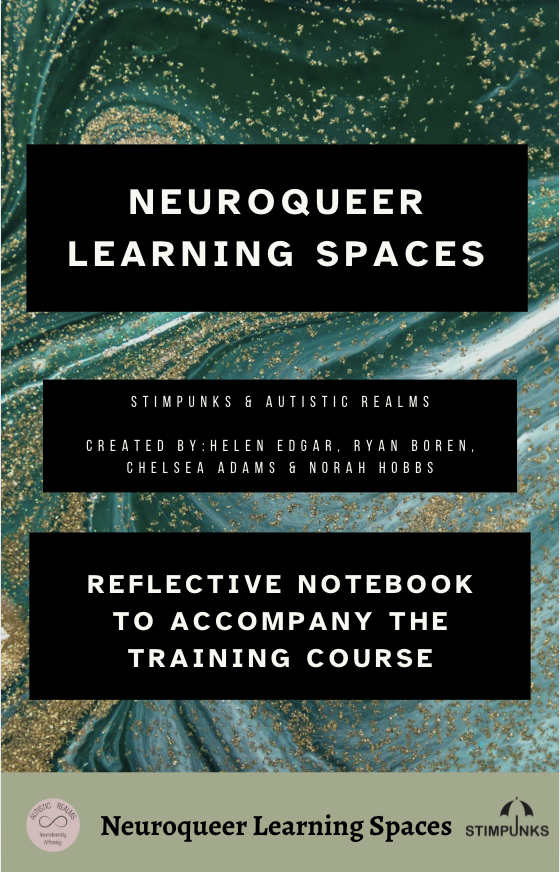
🌀 Neuroqueer Learning Spaces: Reflective Notebook for Educators
A Companion for Neuroqueer Learning Spaces
This beautifully designed reflective notebook is your essential companion to the Neuroqueer Learning Spaces training. Created with educators in mind, it offers space to pause, process, and explore new ways of thinking about learning, neurodivergence, and belonging.
Inside, you’ll find:
🧠 Thought-provoking prompts to deepen your engagement with key ideas
📝 Guided reflection questions linked to each training theme
🗂️ Space for notes, creative ideas, and ongoing development
🌱 Invitations to explore your own positionality, values, and practices
🔁 Suggestions for adapting learning environments in neuro-affirming ways
Whether you’re in a classroom, library, studio, or support role, this notebook helps you centre neurodivergent voices and reimagine learning through a transformative, neuroqueer lens.
Ideal for individual reflection or as a team development resource.
Use it to extend the training experience—and begin cultivating spaces where difference isn’t just accepted, but celebrated.
Download the Training Pack
Download the free training pack, which includes:
- 1 x PDF presentation with presenter notes and suggestions
- 1 x PDF presentation slides only
- 1 x PowerPoint presentation
- 1 x PDF Reflective Notebook/Workbook
- 1 x PDF Reflective Notebook/Workbook with presenter notes and suggestions
A collaboration between:
Autistic Realms & Stimpunks Foundation
Any problems with downloads here, please check out the mirror page on Stimpunks website!
Explore Neuroqueer Learning Spaces
Find the full Neuroqueer Learning Spaces course, glossary and related projects on Stimpunks, and discover Cavendish Space, our framework for caves, campfires and watering holes, at its own home.