Sensory systems resources for Autistic and ADHD people of every age, and for families and professionals who want to understand, honour and support sensory needs.
What are sensory systems?
Our sensory systems are how our bodyminds take in the world and ourselves. Most of us learn about five senses at school, but there are at least eight, and all of them shape how safe, calm, joyful or overwhelmed we feel from one moment to the next.
- Sight (visual): light, colour, movement, patterns and visual clutter
- Hearing (auditory): sounds, voices, background noise, echo and pitch
- Touch (tactile): textures, clothing, temperature, pressure and being touched
- Taste (gustatory) and smell (olfactory): flavours, food textures, perfumes and cleaning products
- Vestibular: balance, movement and where our head is in space, felt in swinging, spinning and rocking
- Proprioception: the sense of where our body is and how much force we use, felt in heavy work, deep pressure and stomping
- Interoception: signals from inside the body, such as hunger, thirst, needing the toilet, pain, temperature, heart rate and emotions (Mahler, 2016)
Sensory differences are part of being Autistic and ADHD
Sensory differences are now recognised as a core part of Autistic experience (Robertson & Baron-Cohen, 2017). Autistic adults describe sensory experiences that can be heightened (hyperreactive), muted (hyporeactive) or actively sought, often all three across different senses and on different days (MacLennan et al., 2022). These are not quirks to be trained out. They are real differences in how a nervous system receives and makes sense of the world, and they deserve to be believed and accommodated.
Sensory differences are also common for ADHD people. A 2025 meta-analysis of 30 studies found that ADHD children and adults reported much higher sensory sensitivity, sensory avoiding, sensory seeking and low registration than comparison groups, and called for sensory needs to be routinely explored in ADHD assessment (Jurek et al., 2025). Earlier research found these sensory differences in ADHD adults regardless of Autistic traits, and especially among women (Bijlenga et al., 2017; Panagiotidi et al., 2018). For many AuDHD people, the two layer together.
Monotropism and the senses
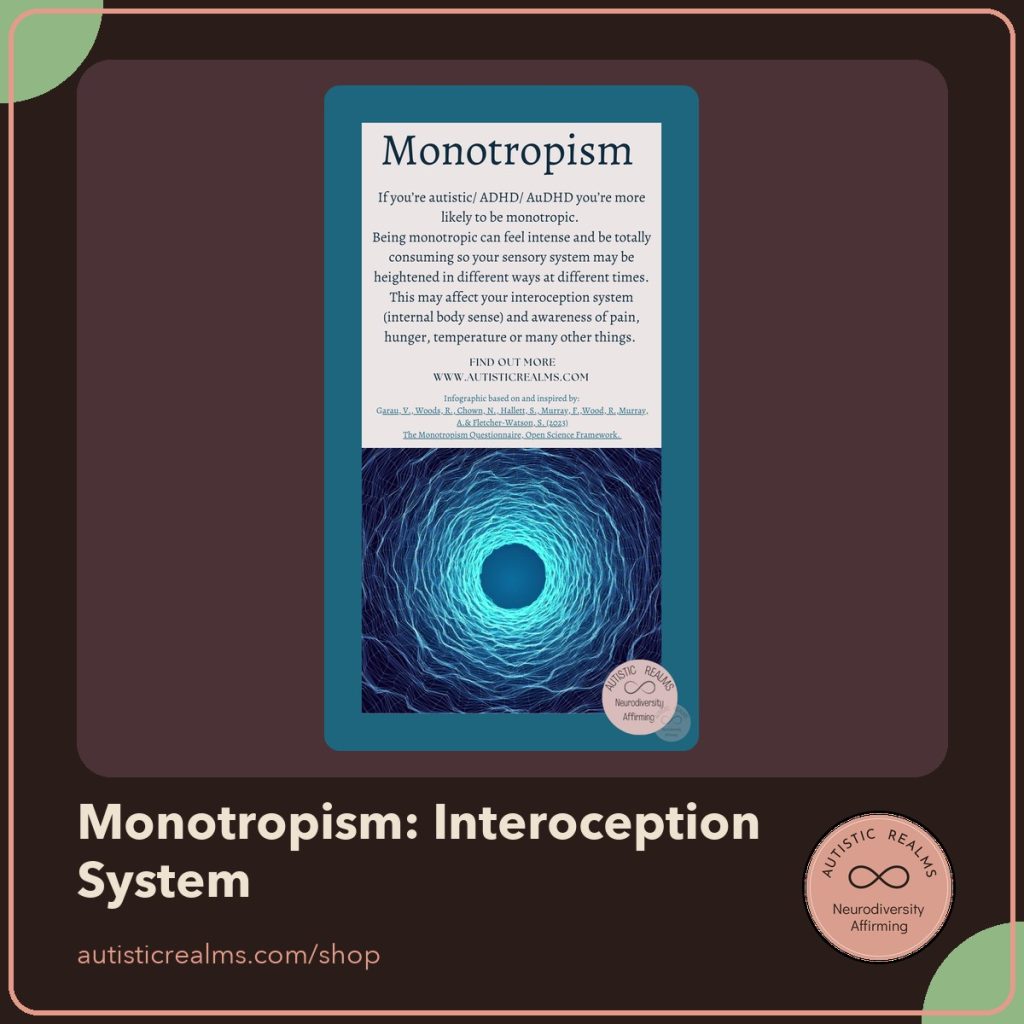
Monotropism helps explain why the same sound can be unbearable one day and barely noticed the next. A monotropic mind tends to focus a lot of attention on a few things at a time (Murray et al., 2005). When we are deep in flow, everything else can fade away; when attention is pulled in many directions at once, sensory input can flood in and overwhelm. Protecting flow, and reducing unpredictable demands on attention, is often one of the most powerful sensory supports there is. My monotropism guide goes deeper, and the Monotropism: Interoception System visual brings the two together.
Interoception: the inside senses
Interoception is how we notice and make sense of what is happening inside our bodies, from hunger and thirst to tiredness, pain and the physical feelings of emotions. Many Autistic and ADHD people experience interoception differently, which can make it harder to notice needs early or to name feelings (Garfinkel et al., 2016; Mahler, 2016). This is not a lack of feeling. It can link with alexithymia, with eating and toilet needs, with burnout and with anxiety, and it deserves gentle, curious, non-judgemental support. Recent research reminds us that interoception is more varied and more complex than heartbeat-counting tests suggest, and that lived experience matters (Savickaite et al., 2026).
Sensory joy, stimming and regulation
Sensory experiences are not only about difficulty. They are also a huge source of Autistic and ADHD joy: the feel of a favourite fabric, repeating a song, the light through leaves, the rhythm of rocking. Autistic adults describe stimming as a way to self-regulate, to soothe and to express intense emotions and thoughts, and they object to approaches that try to stop it (Kapp et al., 2019). Families describe joy as sensory, creative and shared (Holt et al., 2026). Stimming is communication and regulation, and it should be welcomed, not extinguished. You can read more in Stimming as Embodied Sensory Language.
Sensory overwhelm, burnout and anxiety
When sensory needs are ignored for too long, the cost builds. A 2025 systematic review of 48 studies found that sensory and social overwhelm, masking and a lack of understanding all contributed to Autistic burnout, while rest, solitude and sensory relief helped recovery (Ali, Bougoure et al., 2025). Autistic adults describe craving social and sensory rest during burnout (Ali, Mandy & Happé, 2026). Sensory experiences can also be both a source of anxiety and a way to soothe it (Da Silva et al., 2025). Sensory overwhelm can lead to meltdown or shutdown: these are nervous system responses, not behaviour to be managed. My Autistic burnout guide has more.
Sensory needs across the lifespan
Sensory preferences are unique from the very beginning, and Autistic adults and caregivers stress the importance of recognising and advocating for each child’s own sensory profile (Unwin et al., 2025). Sensory needs can shift with age, hormones, health and stress. Autistic people describe sensory sensitivities intensifying during perimenopause and menopause, sometimes so much that masking becomes impossible (Moseley et al., 2020; Cusano et al., 2025), and autistic people report more bothersome psychological and somatic menopause symptoms (Charlton et al., 2025). Older Autistic adults name changing sensory sensitivities as a research priority (Birtwell et al., 2026). My Autistic menopause and perimenopause guide has more.
Sensory needs and intersectionality
Our sensory lives are shaped by who we are and how the world treats us. Gender, race, class, culture, sexuality, disability, poverty and housing all affect whether we can control our sensory environments, whether our stims are accepted or policed, and whether our sensory needs are believed. Much of the research to date has been carried out with mostly White, late-diagnosed adults with university education, so many voices are still missing (Ali, Bougoure et al., 2025; Birtwell et al., 2026). Emerging research with neurodivergent and trans and gender diverse people shows how sensory processing connects with eating, bodies and identity, and why neuronormative and cisnormative assumptions do harm (Cobbaert et al., 2026). Sensory support needs to be culturally responsive, trauma-informed and led by the people it is for.
What helps
- Believing people about their sensory experiences, including children and people who do not use speech to communicate
- Changing the environment rather than expecting the person to tolerate it: lighting, noise, smells, space, queues and waiting
- Predictability and understanding, with time and places to recover. Autistic adults identify sensoryscape, space, predictability, understanding, adjustments and recovery as what makes a public place enabling or disabling (MacLennan et al., 2023)
- In health and care settings, the Autistic SPACE framework: sensory needs, predictability, acceptance, communication and empathy (Doherty et al., 2023)
- Welcoming stimming, movement and sensory tools: ear defenders, sunglasses, fidgets, weighted items, chewables, comfortable clothes
- Building in sensory joy every day, not only as a reward
- Exploring sensory profiles together as a family, with curiosity rather than judgement
- Protecting monotropic flow and lowering demands when capacity is low
Have a question this page does not answer? The Autistic experiences questions and answers page covers what Autistic people, families and professionals ask most, and the glossary explains the words, including interoception, stimming, meltdown, shutdown and monotropism.
Guides to sensory systems on this site
For parents and carers
- Building a Family Sensory Toolkit
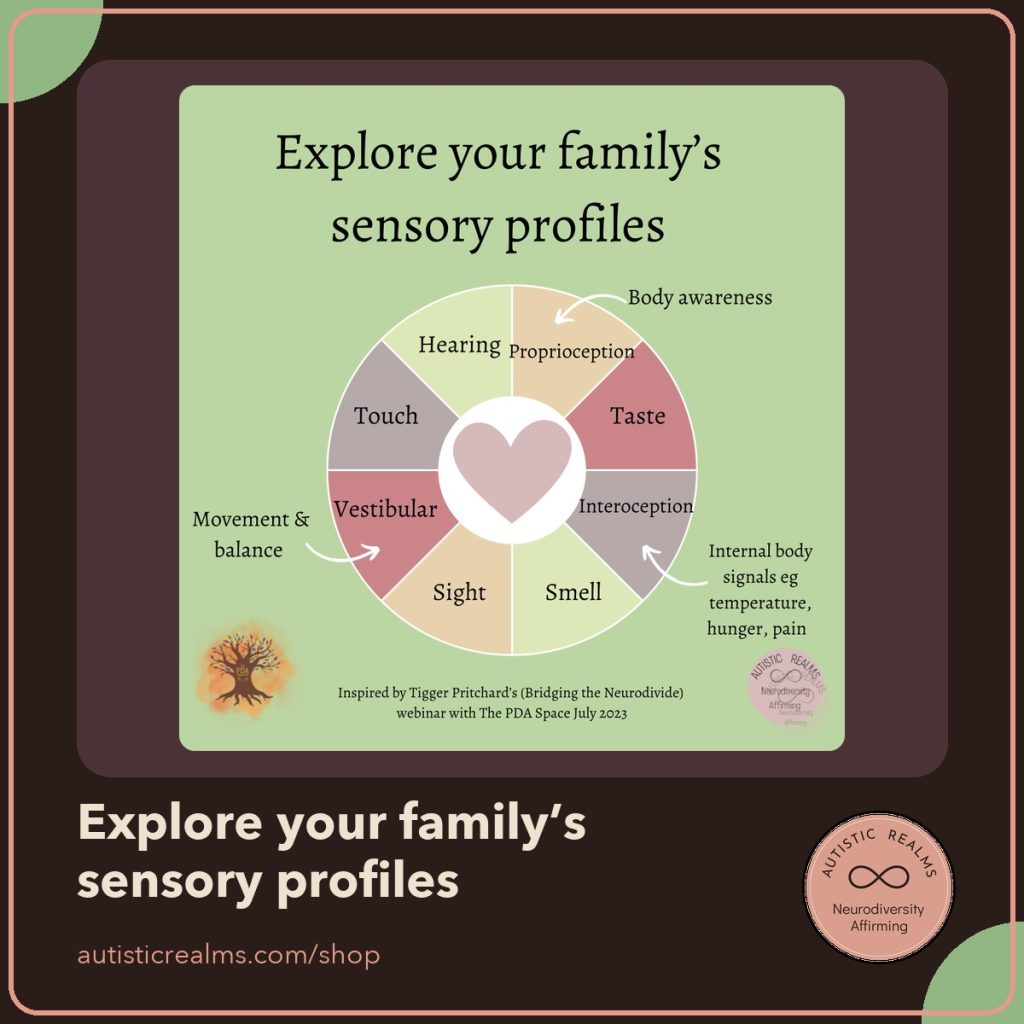
- Explore your family’s sensory profiles (free download)
- A Family Sensory Toolkit Bag (free download)
- Celebrations: neurodivergent-friendly ideas for the whole family
- Being Autistic and Eating: the sensory sides of food and eating
For schools and professionals
- From the Height of a Child: Looking Again at the Primary Classroom Through Cavendish Space
- Little Fluffy Clouds: An Invitation To Play
- An Introduction to Sensory Processing Differences (free download)
- The Limbic System Explained (free download)
For Autistic and ADHD adults
- Stimming as Embodied Sensory Language
- The Constellation of Intensities: Neuroqueering the Spiky Profile
- Hyperemesis, Shutdown, and the Storm After: My Pregnancies Through an Autistic Lens
- Embodiment and Sensory Systems (free download)
- All sensory visuals and resources in the shop
New to the words? What does neurodivergent mean? is a plain-language guide, and the Glossary explains the rest.
Everything below is signposting to other people’s work: articles, websites, books, research and support. Many of these were shared by the Autistic community through the Thriving Autistic Discovery Programme sensory resources.
Articles, Blogs & Websites
- Stimpunks Foundation – Neurodivergent-led writing and resources on sensory overwhelm, stimming and designing spaces that fit. Read about sensory overwhelm | Explore the design field guide | Stim-listening | Stim-watching
- Reframing Autism – Autistic-led organisation. “How to Respond Empathetically to Sensory Sensitivities”. Read the article | All About Autistic Shutdowns: A Guide for Allies
- Kelly Mahler – Interoception resources, printables and blog. Explore printable resources | Interoception for self-helpers
- Autistic SPACE – Doherty, McCowan and Shaw’s framework for meeting sensory and other needs in healthcare. Read the paper
- In Our Own Words – MacLennan and colleagues’ co-produced study of Autistic adults’ sensory experiences, free to read. Read the article
- 21 and Sensory – Emily Andsensory’s blog on Autistic sensory life, from an Autistic sensory researcher and co-author of MacLennan et al. (2023). Read the blog
- NeuroClastic – Autistic-written articles on sensory experiences. Browse the sensory archive
- Embrace Autism – Autistic-led guides to alexithymia and the double empathy problem. Alexithymia and autism guide | The double empathy problem
- Autism Understood – A plain-language explainer on alexithymia, with ideas that help. Read about alexithymia
- BBC Future – Warren and Frankel’s accessible introduction to interoception, including Garfinkel and colleagues’ work with Autistic adults. It uses some medical-model wording, but explains the inner sense clearly. Read the article
- Tigger Pritchard – Autistic advocate’s collection of resources on sensory differences. Explore sensory differences
- SEDSConnective – Charity supporting people who are hypermobile and neurodivergent, where sensory, body and joint experiences often overlap. Visit the site
- Synaesthesia – When senses blend, such as seeing colours with sounds, which many Autistic people experience. Reframing Autism on synaesthesia and autism | Synesthesia Awareness Day resource hub | BBC Future: the people who ‘see’ foreign languages
Watch and listen
- Aucademy – Annette and Monique on Autistic sensory experiences, stimming and relaxation. Watch the talk
- Jessica K Doyle – The Autistic Neurotype, a talk on Autistic ways of being, including sensory experience. Watch the talk
- Insight Timer – Free app with meditations, sleep sounds and music, which some people use for stim-listening and winding down. Visit Insight Timer
Sensory tools and apps
- Hidden Disabilities Sunflower – A lanyard or badge that quietly lets people know you may need more time, space or support. Find out more
- Loop and Vibes earplugs – Soften noise without blocking it out completely. Loop | Vibes
- Finch – Gentle self-care app with a virtual pet, which some people find helpful for noticing body needs like water, food and rest. Visit Finch
- Weighted blankets – Deep pressure can feel calming for many people. The Independent’s tested round-up compares weights, sizes and prices. Read the round-up
- Epic Autism Resources – A community Padlet of Autistic-affirming resources from Spectrum Gaming. Explore the Padlet
Books
- Bogdashina, O. (2016). Sensory perceptual issues in autism and Asperger syndrome: Different sensory experiences, different perceptual worlds (2nd ed.). Jessica Kingsley Publishers.
- Garvey, N. (2023). Looking after your Autistic self: A personalised self-care approach to managing your sensory and emotional well-being. Jessica Kingsley Publishers. Find out more
- Goodall, E., & Brownlow, C. (2022). Interoception and regulation: Teaching skills of body awareness and supporting connection with others. Jessica Kingsley Publishers. Find out more
- Mahler, K. (2016). Interoception: The eighth sensory system. AAPC Publishing.
- Gray-Hammond, D., & Edgar, H. (2026). Re-Storying Autism: A framework for families, parents and carers. Find out more
- My full neuro-affirming reading list
Support and community
- NeuroHub Connect – Neurodivergent-led community, peer support, courses and training. Find out more
- Thriving Autistic – Autistic-led, neuro-affirming community support and training. Visit the site
- Neurodivergent Practitioners Directory – Neurodivergent, neuro-affirming therapists, coaches and counsellors, hosted by Thriving Autistic. Search the directory
- Support and crisis lines – Text, chat, BSL and LGBTQIA+ helplines. See all support and crisis lines
Looking for more support?
My Community Signposting page gathers Autistic-led organisations, support services and resources from across our community, to help you find the right support.
Academic Research
In alphabetical order by first author. Last checked for new research: 18 November 2026.
Ali, D., Bougoure, M., Cooper, B., Quinton, A. M. G., Tan, D., Brett, J., Mandy, W., Maybery, M., Magiati, I., & Happé, F. (2025). Burnout as experienced by autistic people: A systematic review. Clinical Psychology Review, 122, 102669. https://doi.org/10.1016/j.cpr.2025.102669
Ali, D., Mandy, W., & Happé, F. (2026). How does ‘autistic burnout’ feel? A qualitative study exploring experiences of earlier and later-diagnosed autistic adults. Autism, 30(4), 1014–1027. https://doi.org/10.1177/13623613261422117
Bijlenga, D., Tjon-Ka-Jie, J. Y. M., Schuijers, F., & Kooij, J. J. S. (2017). Atypical sensory profiles as core features of adult ADHD, irrespective of autistic symptoms. European Psychiatry, 43, 51–57. https://doi.org/10.1016/j.eurpsy.2017.02.481
Birtwell, K., Bramwell, D., Gowen, E., Brown, L. J. E., Hulme, L., Corsellis, E., & Rowland, C. (2026). “Our existence as whole individuals does not evaporate at age 50”: A mixed methods study of autistic adults’ perspectives on growing older. Autism in Adulthood, 8(2), 211–232. https://doi.org/10.1089/aut.2024.0028
Charlton, R. A., Happé, F. G., Shand, A. J., Mandy, W., & Stewart, G. R. (2025). Self-reported psychological, somatic, and vasomotor symptoms at different stages of the menopause for autistic and non-autistic people. Journal of Women’s Health, 34(5), 622–634. https://doi.org/10.1089/jwh.2024.0784
Cobbaert, L., Schweizer, K., Thomas, K. S., Elwyn, R., Bier, C., Sharpe, S. L., Hay, P., & Mitchell, P. B. (2026). Investigation of associations between self-reported sensory processing, eating disorder symptoms, neurodivergence, and gender congruence from a lived experience lens. Journal of Eating Disorders, 14. https://doi.org/10.1186/s40337-026-01551-8
Cusano, J. L., Erwin, V., Miller, D., & Rothman, E. F. (2025). The transition to menopause for autistic individuals in the US: A qualitative study of health care challenges and support needs. Menopause. https://doi.org/10.1097/GME.0000000000002520
Da Silva, A. B., Berry, E., Craig, S., & Doumas, M. (2025). A systematic review of autistic adults’ experiences of anxiety from a qualitative perspective. Journal of Autism and Developmental Disorders. https://doi.org/10.1007/s10803-025-07025-1
Doherty, M., McCowan, S., & Shaw, S. C. K. (2023). Autistic SPACE: A novel framework for meeting the needs of autistic people in healthcare settings. British Journal of Hospital Medicine, 84(4), 1–9. https://doi.org/10.12968/hmed.2023.0006
Garfinkel, S. N., Tiley, C., O’Keeffe, S., Harrison, N. A., Seth, A. K., & Critchley, H. D. (2016). Discrepancies between dimensions of interoception in autism: Implications for emotion and anxiety. Biological Psychology, 114, 117–126. https://doi.org/10.1016/j.biopsycho.2015.12.003
Holt, J. M., Siekman, K., Fairbanks, M., Fairbanks, M., Juzenas, M., Stern, N., et al. (2026). Moments that matter: Exploring autistic adolescents’ and their families’ joy through family journals. Autism, 30(8), 2051–2063. https://doi.org/10.1177/13623613261455919
Jurek, L., Duchier, A., Gauld, C., Hénault, L., Giroudon, C., Fourneret, P., Cortese, S., & Nourredine, M. (2025). Sensory processing in individuals with attention-deficit/hyperactivity disorder compared with control populations: A systematic review and meta-analysis. Journal of the American Academy of Child & Adolescent Psychiatry, 64(10), 1132–1147. https://doi.org/10.1016/j.jaac.2025.02.019
Kapp, S. K., Steward, R., Crane, L., Elliott, D., Elphick, C., Pellicano, E., & Russell, G. (2019). ‘People should be allowed to do what they like’: Autistic adults’ views and experiences of stimming. Autism, 23(7), 1782–1792. https://doi.org/10.1177/1362361319829628
MacLennan, K., O’Brien, S., & Tavassoli, T. (2022). In our own words: The complex sensory experiences of autistic adults. Journal of Autism and Developmental Disorders, 52(7), 3061–3075. https://doi.org/10.1007/s10803-021-05186-3
MacLennan, K., Woolley, C., Andsensory, E., Heasman, B., Starns, J., George, B., & Manning, C. (2023). “It is a big spider web of things”: Sensory experiences of autistic adults in public spaces. Autism in Adulthood, 5(4), 411–422. https://doi.org/10.1089/aut.2022.0024
Mahler, K. (2016). Interoception: The eighth sensory system. AAPC Publishing.
Moseley, R. L., Druce, T., & Turner-Cobb, J. M. (2020). ‘When my autism broke’: A qualitative study spotlighting autistic voices on menopause. Autism, 24(6), 1423–1437. https://doi.org/10.1177/1362361319901184
Murray, D., Lesser, M., & Lawson, W. (2005). Attention, monotropism and the diagnostic criteria for autism. Autism, 9(2), 139–156. https://doi.org/10.1177/1362361305051398
Panagiotidi, M., Overton, P. G., & Stafford, T. (2018). The relationship between ADHD traits and sensory sensitivity in the general population. Comprehensive Psychiatry, 80, 179–185. https://doi.org/10.1016/j.comppsych.2017.10.008
Robertson, C. E., & Baron-Cohen, S. (2017). Sensory perception in autism. Nature Reviews Neuroscience, 18(11), 671–684. https://doi.org/10.1038/nrn.2017.112
Savickaite, S., Li, R., & Nagai, Y. (2026). Beyond heartbeats: Re-thinking interoception in autism through virtual reality and computational modelling. Frontiers in Neural Circuits, 20, 1934104. https://doi.org/10.3389/fncir.2026.1934104
Unwin, K. L., Philpott-Robinson, K., Barbaro, J., Dwyer, P., Sadka, N., Date, P., & Lane, A. E. (2025). ‘We’re quite good at thinking outside the box’: Early autistic sensory experiences expressed by autistic adults and caregivers of autistic children. Autism, 29(8), 2084–2096. https://doi.org/10.1177/13623613251335069
Read My Posts Related to Sensory Experiences
-

Neurodivergent Friendly Classrooms
-
Supporting neurodivergent students who are struggling to attend school
-
Supporting pupils through Autistic Burnout (Neuro-Affirming Teacher Guide)
-
Supporting autistic students experiencing OCD in a school setting
-
Autism, OCD, Alexithymia & Interoception
-
Education Crisis – Neurodiversity Affirming Teacher Training Needed
-
Supporting Children through Autistic Burnout (Parent/Carer Guide)
-
Parent ideas for autistic children struggling with school attendance
-
‘Profound’ in relation to those with PMLD / PIMD

Shop My Sensory Visuals
Visual resources to help understand and honour sensory experiences through a neuro-affirming lens, many of them free, for use at home, in school and in community settings.
-

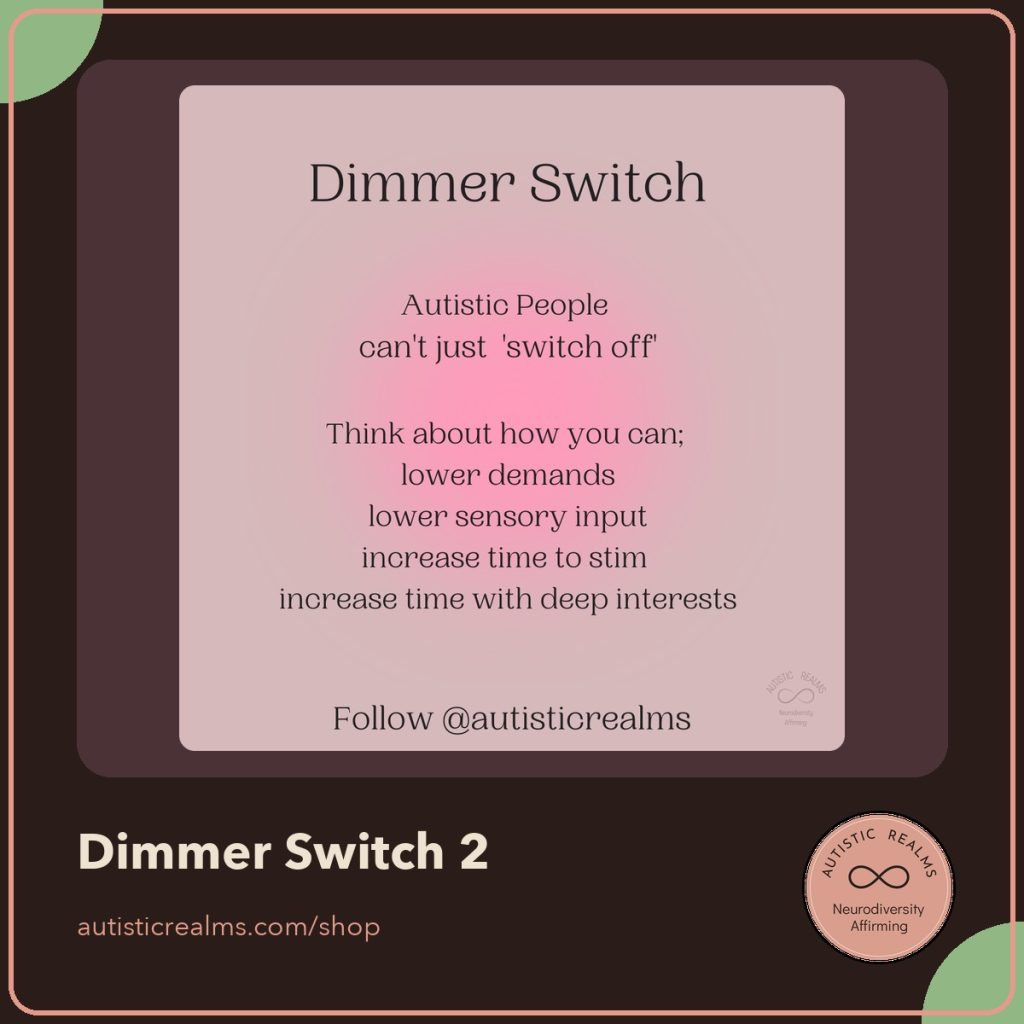
Dimmer Switch 2
Suggested: £2.00 (pay what you can) -
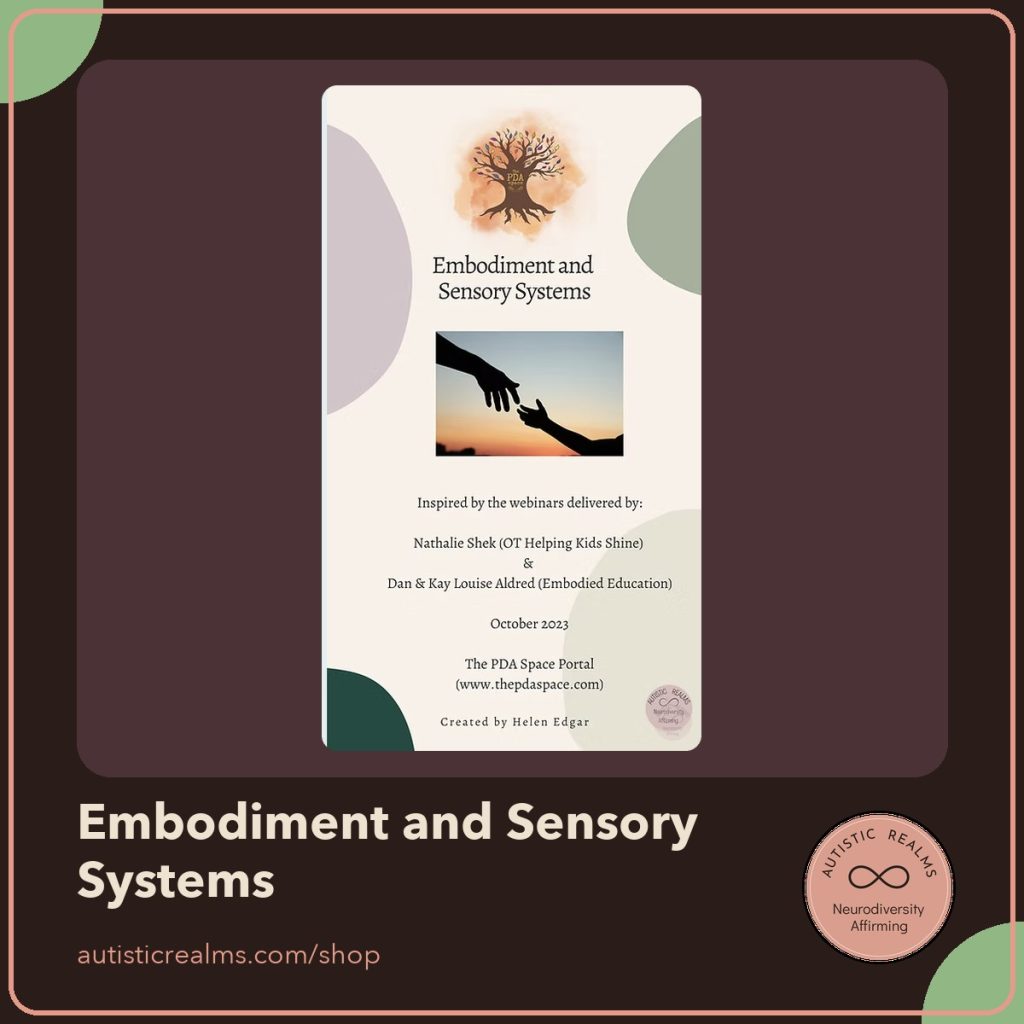
Embodiment and Sensory Systems
Free -
Embodiment: Supporting family wellbeing during transitions
Free -
Explore your family’s sensory profiles
Free -
Let your calm meet their storm co-regulation is important
Suggested: £2.00 (pay what you can) -
Monotropism: Interoception System
Suggested: £2.00 (pay what you can) -
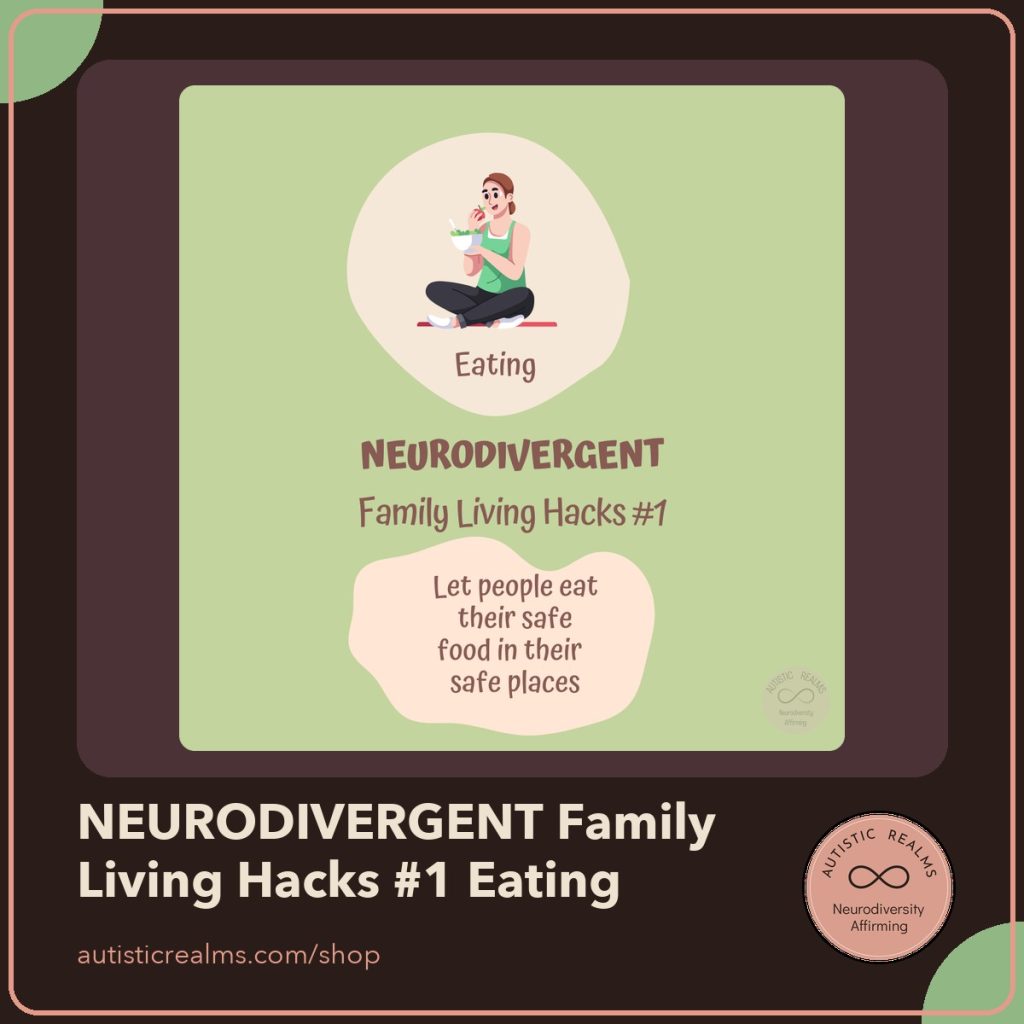
NEURODIVERGENT Family Living Hacks #1 Eating
Suggested: £2.00 (pay what you can) -
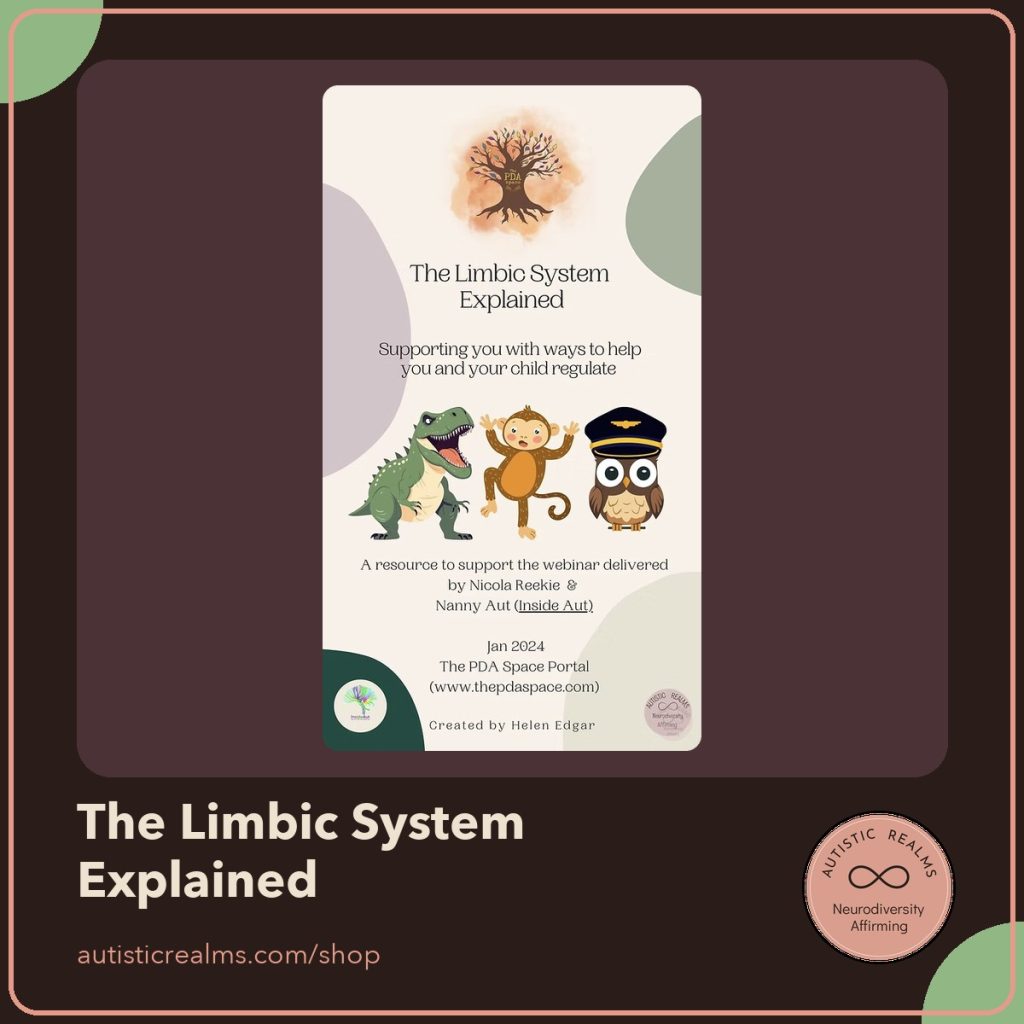
The Limbic System Explained
Free -
What brings you Autistic joy?
Suggested: £2.00 (pay what you can)
Free resources from communities close to my heart
Everything here is free. These resources come from communities close to my heart: Stimpunks Foundation, which I co-direct with Ryan Boren; Thriving Autistic, the Autistic-led social enterprise in Ireland where I am Communications and Community Lead; Re-Storying Autism, the course and workbook David Gray-Hammond and I created together; and Spectrum Gaming, the charity and community for Autistic young people behind Autism Understood and Barriers to Education, where I have volunteered on several projects, including Barriers to Education and their burnout resources.
The Autism Understood and Barriers to Education pages are written especially for Autistic young people, so they are lovely to share with children and teenagers, or to explore together.
Stimpunks Foundation
- Sensory Checklists: free checklists for noticing sensory needs in different spaces.
- Burnout and Sensory Safety: why sensory safety matters for our wellbeing.
- Stimming: a celebration and explanation of stimming.
- Interoception: sensing what is happening inside our bodies.
- Sensory Trauma: how sensory experiences can leave lasting harm, and how to reduce it.
Thriving Autistic
- Module 3: Our Sensory Selves: sensory experiences, practical strategies and more supportive environments.
- Discovery by Thriving Autistic: a free, self-paced programme for recently identified Autistic adults, created by Autistic professionals and drawn from the live Discovery Programme.
Re-Storying Autism
- Re-Storying Autism free guides: short, free guides on topics such as sensory overload, stimming and co-regulation.
- Free preview lesson: try a lesson from the Autistic-led course and workbook for families, parents, carers and Autistic people, at your own pace.
Autism Understood (for young people)
- Sensory Differences: a guide to each of the senses, including the internal senses.
- Being Sensory Smart: understanding your sensory needs and what helps.
- Stimming: why stimming matters and why it is nothing to hide.
- Internal Senses: interoception and the senses inside our bodies, including hunger and thirst.
What would you add?
Do you know of a resource, organisation, book or piece of research that should be here, or have you spotted a link that has stopped working? I would love to hear from you, as this guide grows with our community.