Pink Galaxy background. Text reads: "If you are always trying to be normal, you will never know how amazing you can be" Maya Angelou

Weird Pride and Being Weird

Weird Pride Day: Why Be Normal When You Can Be You?

Every day can be a Weird Pride day if you are weird, but we also hold an annual event on 4th March.


Weird Pride Day is a day for “people to embrace their weirdness, and reject the stigma associated with being weird.
To publicly express pride in the things that make us weird, and to
celebrate the diversity of humankind”.


Embracing weirdness makes you question what even is normal? Robert Chapman has a great book, The Empire of Normality (2023), which helps to explain that the concept of ‘normal’ is socially constructed. What is often perceived as normal is a set of habits, opinions, and behaviours that the majority of people have agreed on at some point. Normality changes across cultures, generations, and even friend groups. What’s considered “normal” today might have been weird a hundred years ago, and what is weird for you may be perfectly normal for someone else – that is the beauty of neurodiversity! And yet, society still pressures us to try and fit into the dominant neuronormative ideals and ways of being —to dress a certain way, communicate in a certain way, even pick the “right” interests to be passionate about! The impact of this is perhaps felt more acutely if you are Autistic or otherwise neurodivergent.

However, weirdness is where creativity, innovation, and the magic of being human have the potential for growth. Many artists, scientists, musicians, writers, and thinkers throughout history were likely all thought of as a bit weird, different and unique. The things that make you “not normal” may also be the things that make you interesting! Find out more on Weird Pride’s website Weird Vs. Normal.

If you are weird, every day can be a weird pride day

The idea of pride as a way to push back against shame and racism, sexism, cis-hetronormativity and neuronormative domination isn’t new. Back in the 1960s, during the fight against racism, the Black Liberation movement introduced pride as a way to reclaim identity. The LGBTQ+ community later embraced this with Gay Pride, inspiring other movements like Disability Pride and Autistic Pride and so on. Many people and communities on the fringes of society are seen as different, and having a day to celebrate those differences, whatever they are, can be empowering, helping people feel less alone and can create a sense of belonging.

The concept of Weird Pride has been discussed independently multiple times, often within the Autistic and neurodivergent community. In 2008, Wired published an article about Mel Baggs, featuring the phrase, “We’re here. We’re weird. Get used to it. A decade later, in 2019, Fergus Murray wrote a piece with the same title. Their mother, Dinah Murray— (who also developed the theory of monotropism) —took the idea even further, creating a Weird Pride badge she proudly wore at formal Autism events. More info about the history of Weird Pride can be found on Fergus Murray’s website – Weird Pride – History.

In 2021, the idea of a dedicated Weird Pride Day took shape. March 4th was chosen because when you say it out loud—“March Fourth!”—it sounds like a call to move forward, to embrace who you are without apology. That same year, Autistamatic released a promo video, and together with Fergus Murray, designed the Weird Pride flag and logo. Over the past few years, Weird Pride has grown. We have a busy Facebook Group, and organisations such as AMASE and Stimpunks are hosting their own international Weird Pride community events.

Life can be so much more interesting when we stop trying to fit in and find communities of other weird people – join us!
Find out more and check out the links below!


“If you are always trying to be normal,
you will never know how
amazing you can be”

Maya Angelou


Find out more about Weird Pride 2025:

Weird Pride Day Events

Stimpunks Events

Educational Weird Pride Info

Happy Weird Pride Day! 🎉

Owl wearing top hat . Text reads IF YOU'RE GOING
TO BE WEIRD, BE
CONFIDENT
ABOUT IT.

Latest Posts

  • Autistic Burnout – Supporting Young People At Home & School

    Autistic Burnout – Supporting Young People At Home & School

    Autistic burnout in young people is real—and recovery starts with understanding. This post offers neuroaffirming ways to spot the signs, reduce demands, and truly support. 💛 #AutisticBurnout #Neuroaffirming #Monotropism #AutisticSupport


  • Monotropic Interests and Looping Thoughts

    Monotropic Interests and Looping Thoughts

    The theory of monotropism was developed by Murray, Lawson and Lesser in their article, Attention, monotropism and the diagnostic criteria for autism (2005). ​ Monotropism is increasingly considered to be the underlying principle behind autism and is becoming more widely recognised, especially within autistic and neurodivergent communities. Fergus Murray, in their article Me and Monotropism:…


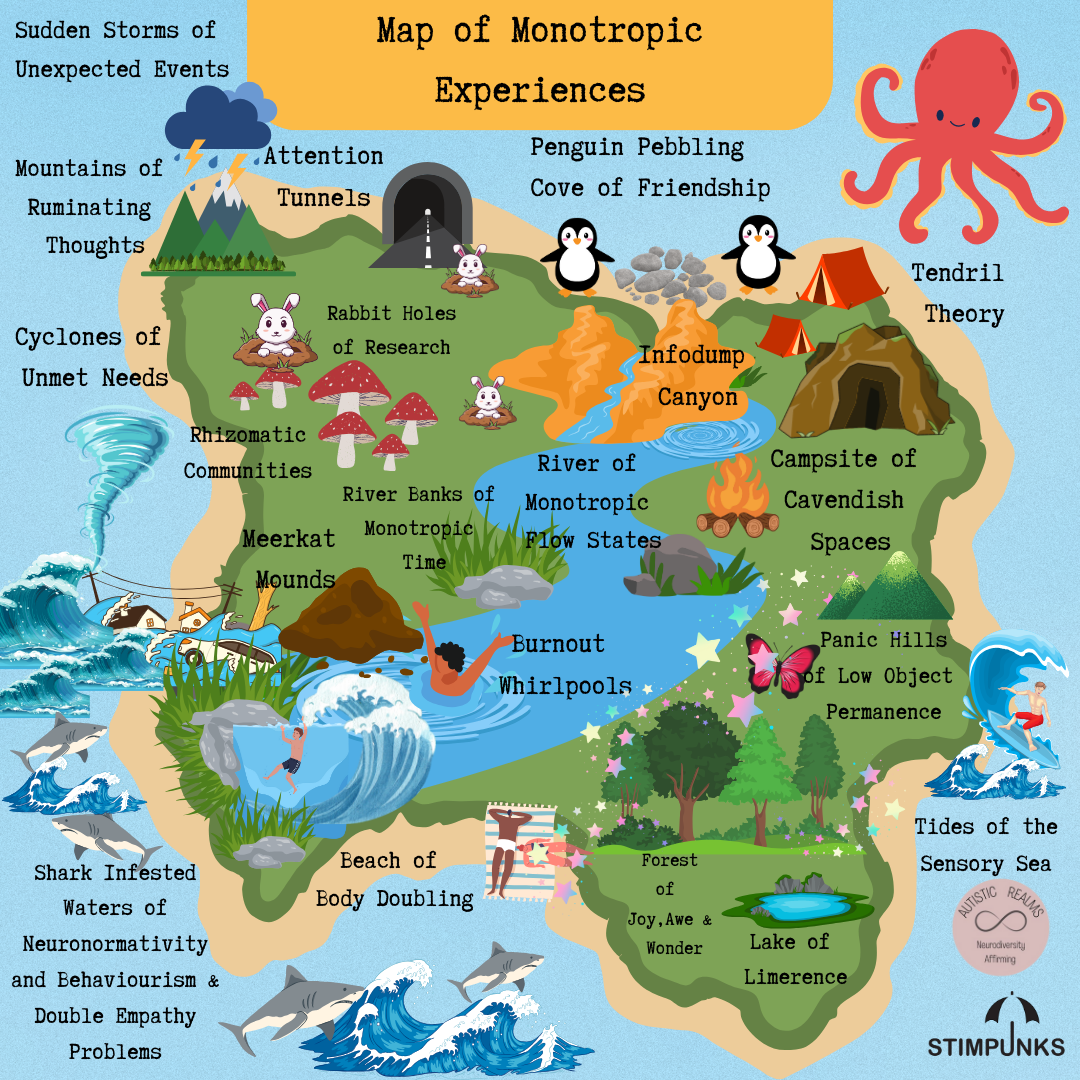
  • Map of Monotropic Experiences

    Map of Monotropic Experiences

    Monotropism seeks to explain Autism in terms of attention distribution and interests.  OSF Preprints | Development and Validation of a Novel Self-Report Measure of Monotropism in Autistic and Non-Autistic People: The Monotropism Questionnaire This map highlights 20 common aspects of my personal monotropic experiences. How many do you experience? Where are you on the map…


  • Autistic Burnout – Supporting Young People At Home & School

    Autistic Burnout – Supporting Young People At Home & School

    Being autistic is not an illness or a disorder in itself, but being autistic can have an impact on a person’s mental and physical health. This is due to the often unmet needs of living in a world that is generally designed for the well-being of people who are not autistic. In addition, three-quarters of…


  • The Double Empathy Problem is DEEP

    The Double Empathy Problem is DEEP

    “The growing cracks in the thin veneer of our “civilised” economic and social operating model are impossible to ignore”, Jorn Bettin (2021). The double empathy problem (Milton, 2012) creates a gap of disconnect experienced between people due to misunderstood shared lived experiences. It is “a breakdown in reciprocity and mutual understanding that can happen between people…


  • Top 5 Neurodivergent-Informed Strategies

    Top 5 Neurodivergent-Informed Strategies

    Top 5 Neurodivergent-Informed Strategies By Helen Edgar, Autistic Realms, June 2024. 1. Be Kind Take time to listen and be with people in meaningful ways to help bridge the Double Empathy Problem (Milton, 2012). Be embodied and listen not only to people’s words but also to their bodies and sensory systems. Be responsive to people’s…


  • Autistic Community: Connections and Becoming

    Autistic Community: Connections and Becoming

    Everyone seeks connection in some way or another. Connections may look different for autistic people. In line with the motto from Anna Freud’s National Autism Trainer Programme (Acceptance, Belonging and Connection), creating a sense of acceptance and belonging is likely to be more meaningful for autistic people than putting pressure on them to try and…


  • Monotropism, Autism & OCD

    Monotropism, Autism & OCD

    This blog has been inspired by Dr Jeremy Shuman’s (PsyD) presentation, ‘Neurodiversity-Affirming OCD Care‘ (August 2023), available here. Exploring similarities and differences between Autistic and OCD monotropic flow states. Can attention tunnels freeze, and thoughts get stuck? Autism research is shifting; many people are moving away from the medical deficit model and seeing the value…


  • Monotropism Questionnaire & Inner Autistic/ADHD Experiences

    Monotropism Questionnaire & Inner Autistic/ADHD Experiences

     Post first published 28th July 2023 Over the past few weeks, there has been a sudden surge of interest in the Monotropism Questionnaire (MQ), pre-print released in June 2023 in the research paper ‘Development and Validation of a Novel Self-Report Measure of Monotropism in Autistic and Non-Autistic People: The Monotropism Questionnaire.‘ by Garau, V., Murray,…


  • Penguin Pebbling: An Autistic Love Language

    Penguin Pebbling: An Autistic Love Language

    Penguin Pebbling is a neurodivergent way of showing you care, like sharing a meme or twig or pretty stone to say “I’m thinking of you,” inspired by penguins who gift pebbles to those they care about.


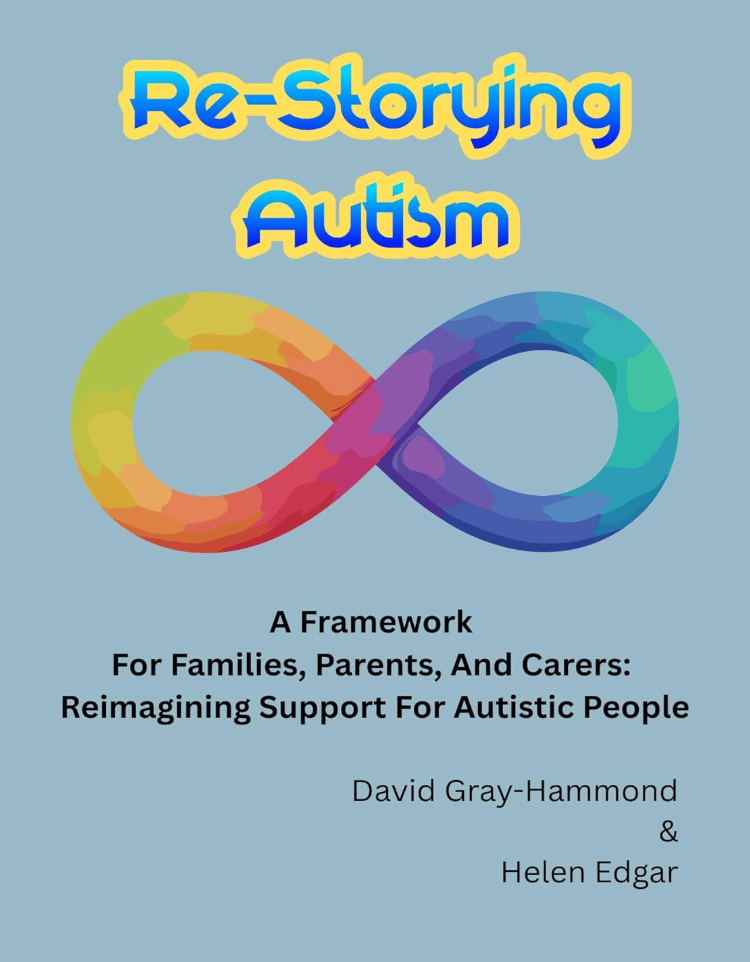
  • New Book – Re-Storying Autism

    New Book – Re-Storying Autism

    Autistic RealmsHelen Edgar Autistic Advocate, Author & ConsultantNeurodiversity-Affirming Supporting Autistic People To Grow & Thrive Welcome to Autistic Realms Newsletter! The days are counting down to the release of mine and David Gray-Hammond’s new workbook to support our upcoming on-demand training course: Re-Storying Autism – A Framework For Families, Parents, And Carers: Reimagining Support For…


  • Stimming as Embodied Sensory Language

    Stimming as Embodied Sensory Language

    Reframing stimming beyond “behaviour” as embodied sensory language, monotropic flow, and neuroqueer, interdependent connection with the world.


  • Embracing Our Autistic Selves Course

    Embracing Our Autistic Selves Course

    Autistic RealmsHelen Edgar Autistic Advocate, Author & ConsultantNeurodiversity-Affirming Supporting Autistic People To Grow & Thrive Welcome to Autistic Realms Newsletter! Happy New Year! I am delighted to be facilitating a new course ‘Embracing our Autistic Selves’ delivered by David Gray-Hammond starting Jan 7th 2026. Embracing Our Autistic Selves is a three-week online experience (via Zoom)…


WordPress Cookie Plugin by Real Cookie Banner