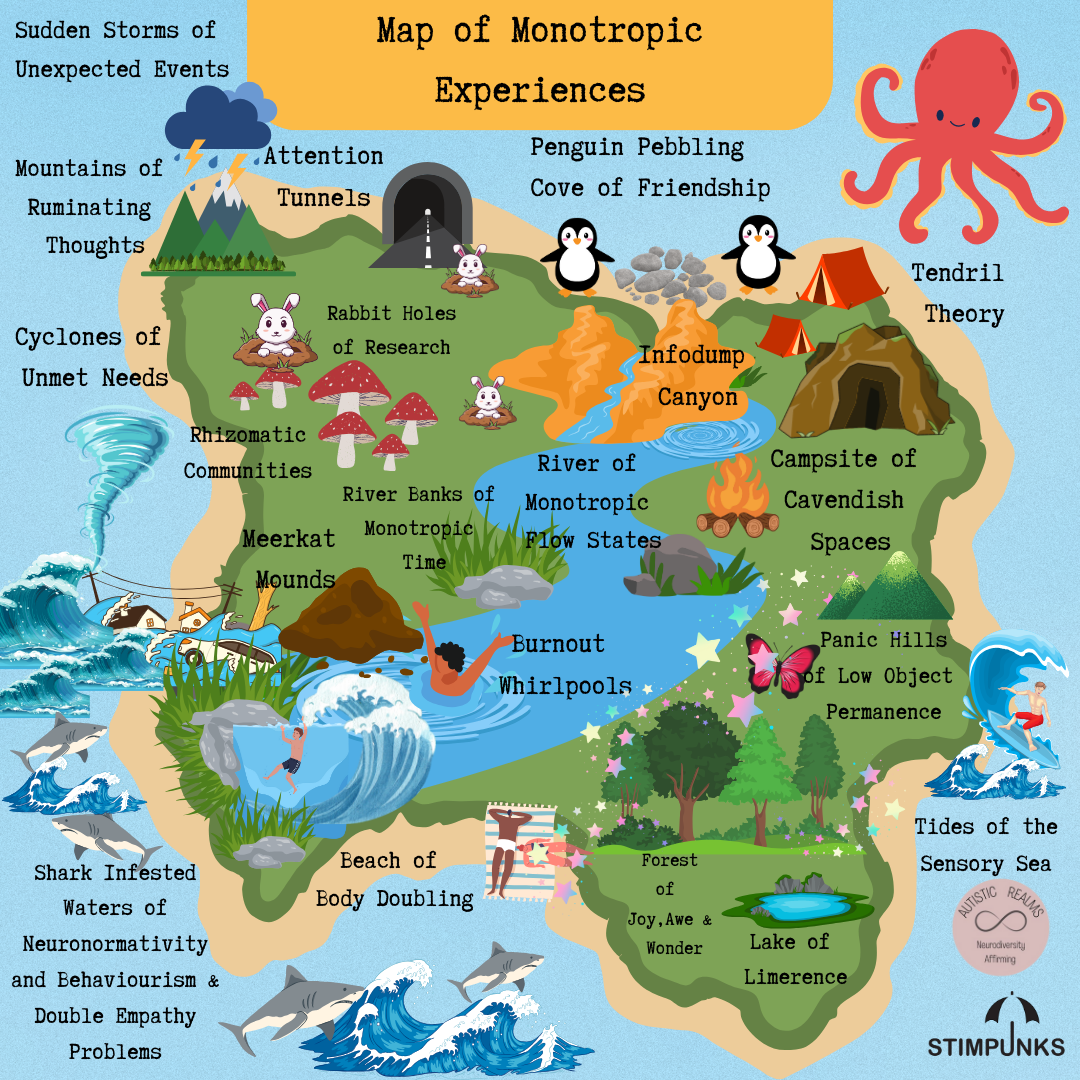
The Map of Monotropic Experiences, created by Helen Edgar of Autistic Realms in collaboration with the Stimpunks Foundation, visually represents 20 common aspects of monotropic experience. Monotropism is a theory that seeks to explain autism (and may also resonate with ADHDers) in terms of attention distribution and interests. Our map was originally inspired by Gemma Correll’s Map of Procrastination.
To understand why the neurodiversity-affirming theory of monotropism is so important and can also be so life-changing for many people, please refer to our Autism Map of Neuronormative Domination, which helps frame this and explains the harm of previous deficit-based views of Autism.
Below is a detailed exploration of each point on the map:
- Attention Tunnels: This refers to the deep focus or “flow states” that many Autistic individuals experience. Entering these attention tunnels is a necessary coping strategy for many, as flow states represent the pinnacle of intrinsic motivation.
- Penguin Pebbling Cove of Friendship: Inspired by the behaviour of penguins offering pebbles to potential mates, “penguin pebbling” is a metaphor for small gestures or exchanges between individuals to show care and a desire to build meaningful connections.
- Tendril Theory (@EisforErin): This concept describes how, when focused on something, an individual’s mind sends out numerous “tendrils” to related thoughts and ideas, creating a web of interconnected interests. Interruptions can disrupt this network, leading to discomfort or distress.
- Mountains of Ruminating Thoughts: This symbolizes the tendency to dwell on certain thoughts or ideas, leading to prolonged periods of reflection or rumination. Monotropic people may be more likely to get into ‘stuck flow’ states.
- Cyclones of Unmet Needs: Representing the turmoil that arises when essential needs are not addressed, leading to feelings of frustration or overwhelm due to being neurodivergent and monotropic in a world that is designed for the neuromajority and polytropic population. It can be exhausting constantly battling to get your needs met.
- Rabbit Holes of Research: This depicts the deep dives into specific topics or interests, where one can become completely immersed in an attention tunnel and that tunnel can lead to even more tunnels – a bit like a rabbit warren. It can sometimes feel hard to find your way back out again!
- Infodump Canyon: Refers to the act of sharing lots of information about a particular interest or topic, often in great detail to another person. If the other person shares your passion it can really help strengthen the relationship bond.
- Rhizomatic Communities: Symbolizing interconnected communities that grow and spread like rhizomes, representing non-linear and non-hierarchical constellation-like networks of relationships.
- River of Monotropic Flow States: Illustrates the seamless flow of attention when deeply engaged in a singular interest or activity. Being in a flow state can really help to regulate the mind/body and sensory system.
- Campsite of Cavendish Spaces: Named after Henry Cavendish, this represents safe spaces where individuals can retreat to engage in interest led learning and have space for themselves to rest, to learn from others and engage in collaborative social learning. Find out more about Cavendish Space here and in our Neuroqueer Learning Space project pages.
- Meerkat Mounds (Gray-Hammond & Adkin): Inspired by the work of Gray-Hammond and Adkin, this symbolizes the state of being a monotropic person may be more likely to experience if they have more demands in their life than they have the capacity to manage. If an Autistic/ADHD person is in burnout, they may enter a type of Meerkat mode, be on high alert, and seek a hook into a flow state even more to try and regulate themselves.
- Riverbanks of Monotropic Time: When absorbed in special interests or passions, time can feel altered, with the outside world feeling like it is fading away. This represents the unique perception of time during deep engagement that monotropic people may experience.
- Shark-Infested Waters of Neuronormativity, Behaviorism & Double Empathy Problems (Milton, 2012): This area highlights the challenges posed by societal norms that prioritize neurotypical behaviours, behavioural interventions that may not consider individual needs, and the double empathy problem, which refers to mutual misunderstandings between different lived experiences.
- Beach of Body Doubling: Represents the practice of having another person present during tasks to increase focus and productivity, a strategy some find beneficial especially if monotropic and you find task switching difficult or stopping and starting new tasks hard.
- Burnout Whirlpools: Symbolizing the risk of burnout due to prolonged personal and systemic stress or overexertion, leading to sensory, physical and mental exhaustion.
- Panic Hills of Low-Object Permanence: Illustrates the anxiety that can arise from difficulties in maintaining the perception of objects or people when they are out of sight. For many monotropic people it can be hard to recall things that are outside of your attention tunnel when you are so absorbed.
- Forest of Joy, Awe, and Wonder: This forest depicts profound positive emotions and deep appreciation for certain experiences or interests. Being monotropic can be difficult at times, but having such fine attention to detail and deep immersion in flow (cognitive and sensory) can also bring great joy and inspire awe and wonder.
- Lake of Limerence: Represents intense emotional states of infatuation or deep passion towards someone. It may be hard to loop out of limerent thoughts, they can be all consuming just like any other monotropic interest (person/topic/event or experience). If it’s a monotropism thing – it is a monotropism thing!
- Tides of the Sensory Sea: Symbolizing the fluctuating sensory experiences, from sensory seeking to sensory overload, that many monotropic individuals have to navigate and try to balance to get through their days. If you are neurodivergent, you are more likely to have difficulties processing your interoception system and may also experience alexythemia. This will have an impact on a person’s well-being.
- Sudden Storms of Unexpected Events: This image depicts the distress or discomfort that unexpected changes or events can cause, disrupting routine and predictability that may be felt more intensely if you are monotropic.
This map serves as a tool to visualize and understand the diverse experiences associated with monotropic attention and autistic perspectives. It invites reflection and discussion on how these aspects manifest in individual lives. We hope that you enjoy the map – please let us know how you are using this resource!
Download our FREE open-source training pack!
You’ll Learn To:
✅ Understand the theory of monotropism and the importance of flow
✅ Recognise how environments can create “stuck states”
✅ Explore the detrimental impact of neuronormative domination on Autistic well-being
✅ Create flow-supportive environments where ALL minds can thrive
✅ Understand intersectionality and the Double Empathy Problem for deeper inclusion
✅ Celebrate authentic Autistic identity and the strength of community storytelling and shared experiences
Perfect for: schools, healthcare settings, workplaces, and community networks.
A creative tool for reflection, connection, and meaningful change.
Timing and Preparation: The training content is approximately 4,000 words, designed to cover around 45 minutes of presentation time. Delivered live as a workshop with space for discussion and Q&A, it typically runs for 1-2 hours and can be expanded into a full-day session if preferred.

Download your
Map of Monotropic Experiences
Training Pack
More Maps?
Check out:
A Map of Procrastination: https://www.facebook.com/gemmacorrell (Gemma Correll’s amazing work inspired our Map of Monotropic Experiences, which was first published on 20th Oct 2024 via Autistic Realms).
The Land of Autistic Communication: https://www.assistiveware.com/autism-acceptance-communication
Flow Well-Being Map by Daniella Wain, Stephanie Petty, Brett Heasman from York St John University
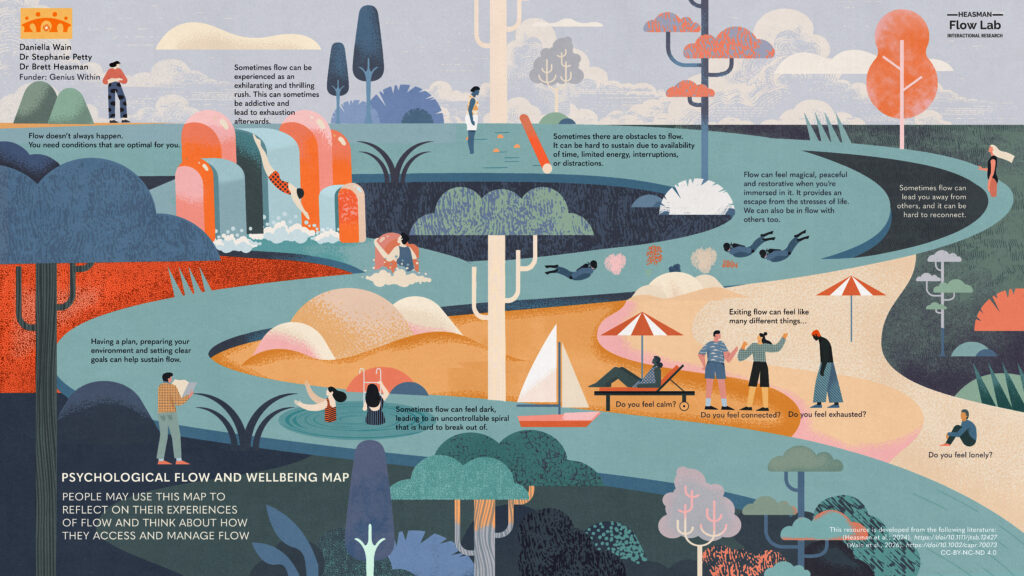
Find out more about the Flow Well-Being Map:
https://yorksj.figshare.com/articles/figure/Flow_Wellbeing_Map_v1_0_/31891972?file=63365058