Autism has been explained to us for generations. This course and workbook does something different. Re-Storying Autism is a number one Amazon Best Seller 2026 , it is an invitation to step out of inherited stories about what autism is and begin shaping your own; one rooted in lived experience, relational safety, and Autistic ways of knowing. Not a cure. This is about meaning, agency, autonomy, and reconnection. Purchase A Licence For Professional Use Here This isn’t another autism workbookMost autism resources fall into one of two traps: They either reduce Autistic life to deficits and strategies, Re-Storying Autism offers something radically different. It assumes:
This course doesn’t ask “How do I function better?” No checklists, no assessments, just a collaborative way of learning about neurodiversity and supporting Autistic people. Check Out The Workbook & Video Course
|



 |
 |
 |
Built on NeuroHub Community Ltd’s Six-Point Framework
This work is grounded in NeuroHub Community Ltd’s six-point framework for supporting Autistic people; a model developed through years of community work, research, education, and lived experience.
The framework understands Autistic wellbeing as something that emerges when we attend to:
- How Autistic experience is understood and framed
- The sensory and emotional landscape of the bodymind
- Identity, masking, and the cost of survival
- Environment, predictability, and relational safety
- Power, systems, and institutional harm
- Connection, meaning, and Autistic ways of becoming
Rather than isolating “the individual” as the problem, this framework recognises that distress is often created between people, environments, and systems.
Re-Storying Autism uses this framework not as a rigid structure, but as a steady ground; one that keeps reflection safe, contextual, and humane.
Order The Workbook
What “re-storying” actually means
Re-storying is not positive thinking.
It’s not reframing trauma to make it easier to endure.
It’s a grounded, reflective process of:
- Making sense of how a nervous system learned to survive
- Understanding how environments shape distress
- Separating identity from harm and adaptation
- Allowing identity to be fluid, contextual, and alive
When the story changes, behaviour often follows; but the aim is not to change observable behaviour, it’s to rewrite the story of autism.that has been passed down to you.
What’s included
The Workbook (nearly 400 pages!)
This is not a journal full of prompts and platitudes.
It’s a substantial, structured companion designed for anyone wanting to better support Autistic people aged 8 years or older.
Inside, you’ll explore:
- Autistic identity beyond diagnostic labels and behaviour lists
- Masking, burnout, and the long-term cost of adaptation
- Why “resilience” narratives often deepen harm
- How systems, power, and services shape lived experience
- Ways of reconnecting with self without forcing coherence or certainty
You don’t have to move linearly. You can drop in and out, pause, return, skip, and linger.
This work respects Autistic pacing and autonomy.
Order Workbook in Paperback or on Kindle
The On-Demand Video Course (7 modules)
The video course brings the workbook to life through seven carefully structured modules.
Rather than lectures or instruction, the videos offer:
- Clear, accessible explanations of complex ideas
- Reflection without pressure to disclose, perform, or “progress”
- A sense of being accompanied, not managed
Watch at your own pace.
Pause. Rewatch. Walk away and return.
No deadlines. No targets. No productivity theatre.
Access Video Course Through NeuroHub
Who this is for
This is for those who want to better understand and support Autistic people and help them after:
- Feeling disconnected from themselves after years of coping
- Being exhausted by being told to manage or optimise themselves
- Wanting language for their experience that isn’t medicalised or moralised
- Carrying complex histories involving trauma, addiction, or marginalisation
- Knowing that identity continues to unfold across a lifetime
- Wanting space to reflect without being fixed
You don’t need to be confident, healed, or stable.
You only need curiosity and enough safety to reflect.
Who this is not for
This isn’t for:
- Parents seeking to change their child
- Professionals looking for a quick autism explainer
- Behavioural compliance or “life skills” training
- Anyone invested in cure narratives
This work starts from the assumption of Autistic dignity.
Why this exists
Across years of community work, consultancy, research, and lived experience, one pattern kept repeating:
Autistic people weren’t failing because they lacked skills.
They were suffering because the stories about them erased context, power, and humanity.
Re-Storying Autism exists to offer a different starting point; one that honours complexity, contradiction, and growth without demanding assimilation.
How to access it
- Workbook: Paperback and Kindle
- Video course: On-demand, lifetime access
Pre-order offer
The full video course is available for £100.
And if you’re a paid NeuroHub member, the video course is included at no extra cost.
An invitation
You don’t have to re-story an entire life.
You don’t have to reach clarity or closure.
Sometimes the most meaningful shift is letting a story be told differently.
Re-Storying Autism offers space, language, and grounding for that work; held within a framework designed with Autistic people, not imposed upon them.
The story is still unfolding.
Licencing For Professionals & Organisations
If you are a professional such as a therapist or social worker and would like to purchase a licence to use Re-Storying Autism in your work, we offer the following packages:
Individual Professionals
-
Video Course Only
- 6 months for £300
- 12 months for £500
-
Workbook Only
- 6 months for £125
- 12 months for £200
-
Video And Workbook
- 6 months for £325
- 12 months for £600
Organisations
-
Video Course Only
- 6 months for £600
- 12 months for £1000
-
Workbook Only
- 6 months for £250
- 12 months for £400
-
Video And Workbook
- 6 months for £650
- 12 months for £1200
Purchasing a licence allows you to use the content and distribute it privately with your clients
For organisational licences, please get in contact to build the right package for you.
If you are interested in purchasing a licence for Re-Storying Autism, please get in contact below:
Email
Guidance For Professionals On Using Re-Storying Autism
A FREE Guide for Therapists, Advocates & Professionals Download
 |
| Join NeuroHub |
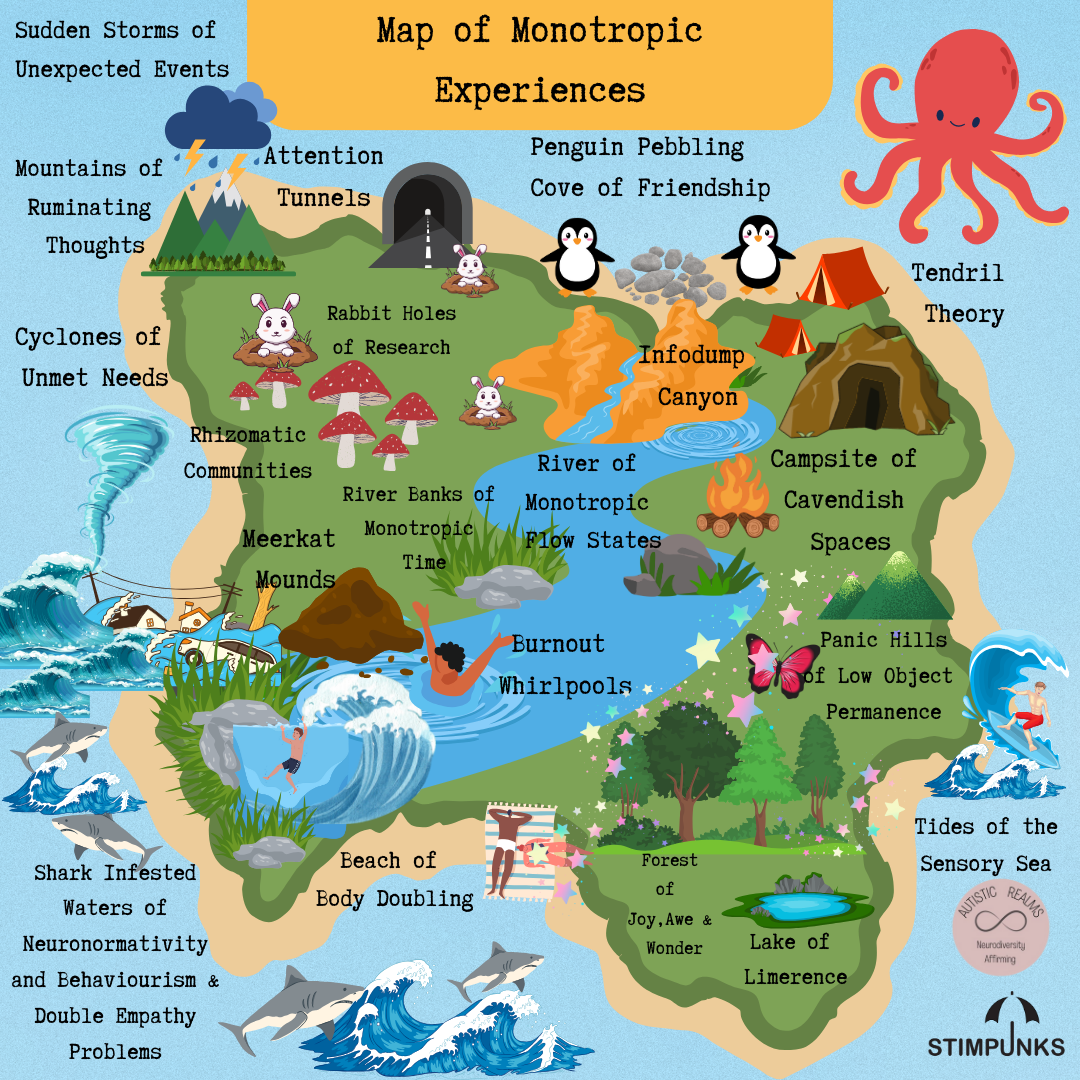
Finally……. here is a Penguin Pebble for you all!
Penguin Pebbling is an Autistic love language. It is a way of showing you care by sharing a meme or a pretty stone to say “I’m thinking of you.” Inspired by penguins who gift pebbles to those they care about.
Looking forward to sharing more blogs, resources, research and upcoming events soon!
If you find this news letter valuable please do share and encourage people to sign up and visit Autistic Realms – pass on a Penguin Pebble!
Best Wishes,
Helen
“Community is magic.
Community is power.
Community is resistance.”
Alice Wong