The neurodiversity rainbow infinity symbol may be familiar to lots of us; it speaks of boundlessness, of variation, of the quiet insistence that there is no single right way to be human.
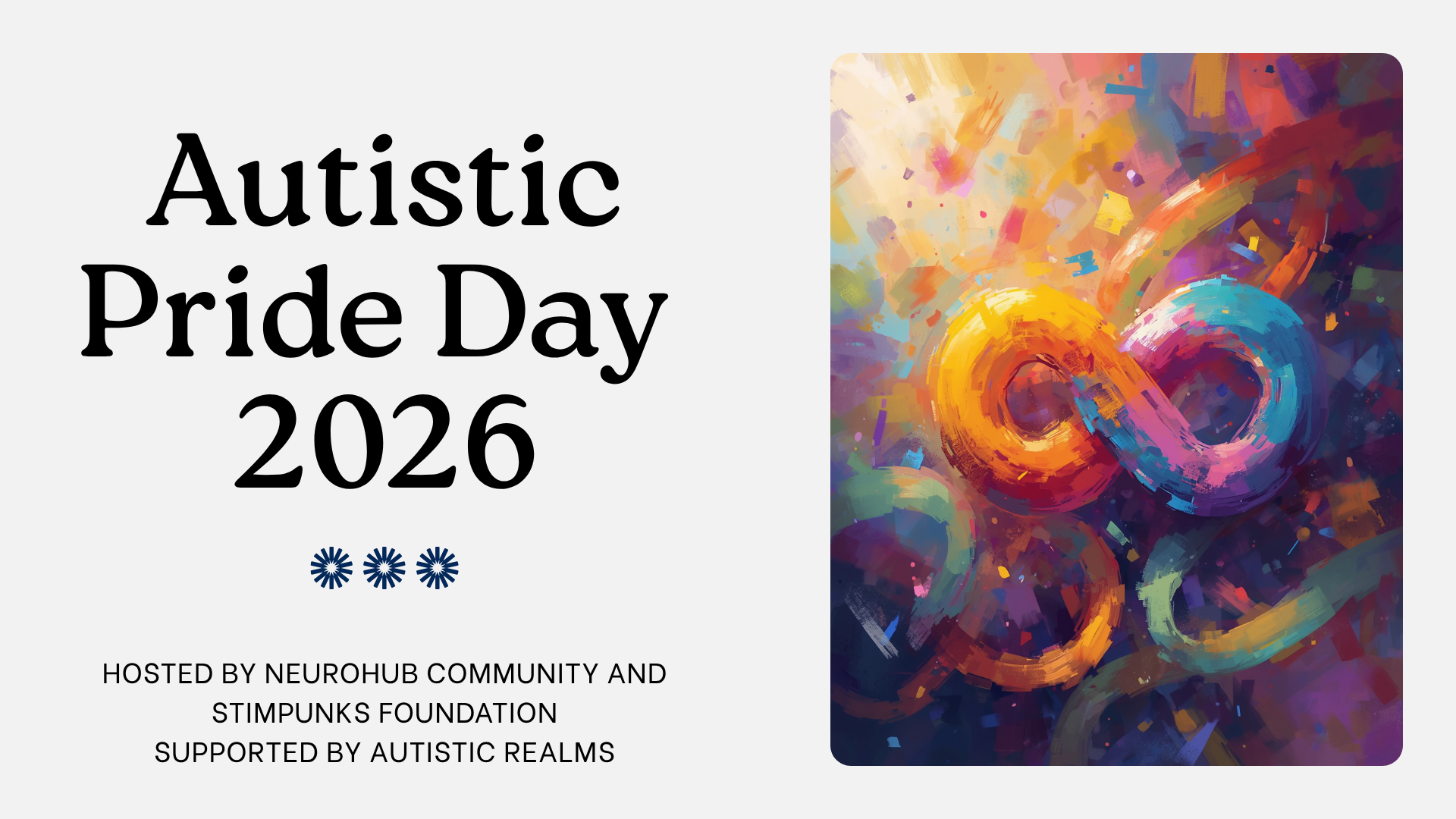
The rainbow infinity symbol first appeared on Autistic Pride Day on 18 June 2005, when Aspies For Freedom chose it to represent diversity with infinite variations and infinite possibilities. The choice of rainbow was deliberate and meaningful. It borrowed from the visual language of LGBTQIA+ pride to celebrate that neurodivergent people’s lives are not problems to be solved, but identities worth celebrating. Some time later, a gold variant emerged through Autistic UK, drawing on Au, the chemical symbol for gold, as a community-led response to the pathologising blue of “Light It Up Blue” campaigns (Johnson, 2021). The rainbow symbol now represents the whole of neurodiversity, and the gold Autistic infinity symbol is woven through it to represent Autistic people within neurodiversity.
As Nick Walker (2021) writes in Neuroqueer Heresies, neurodiversity is a biological fact. It is the infinite variation in neurocognitive functioning that has always existed within our species.
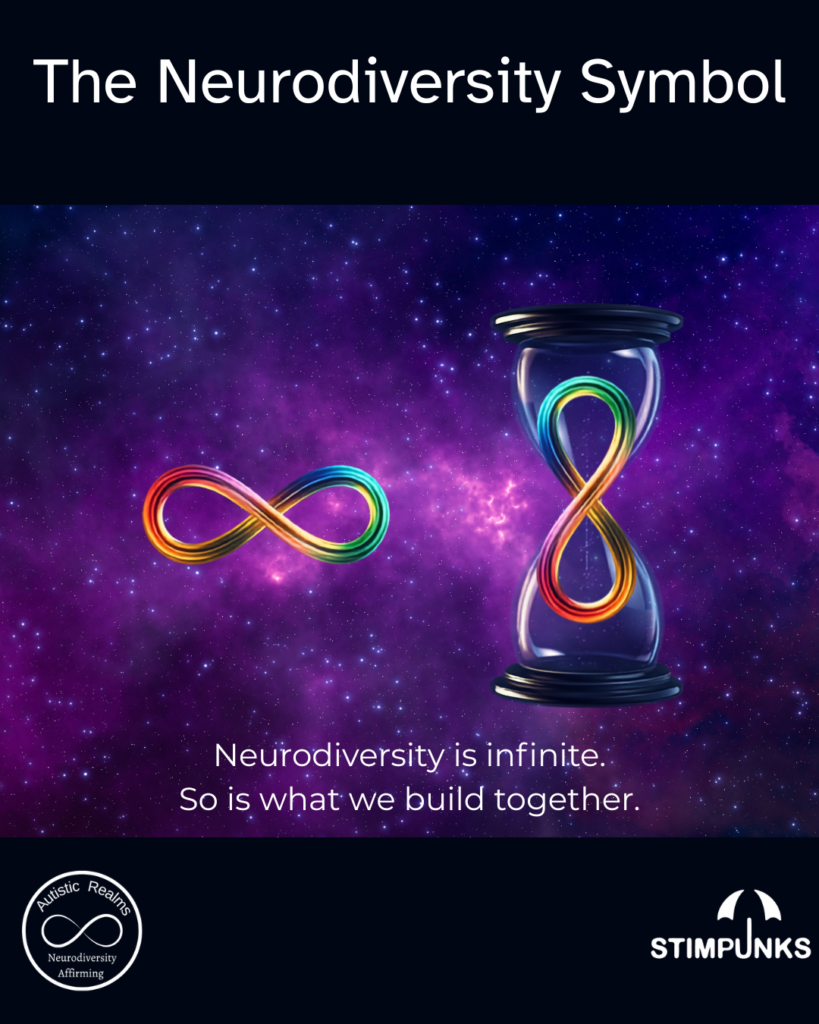
What happens when you turn the neurodiversity symbol?
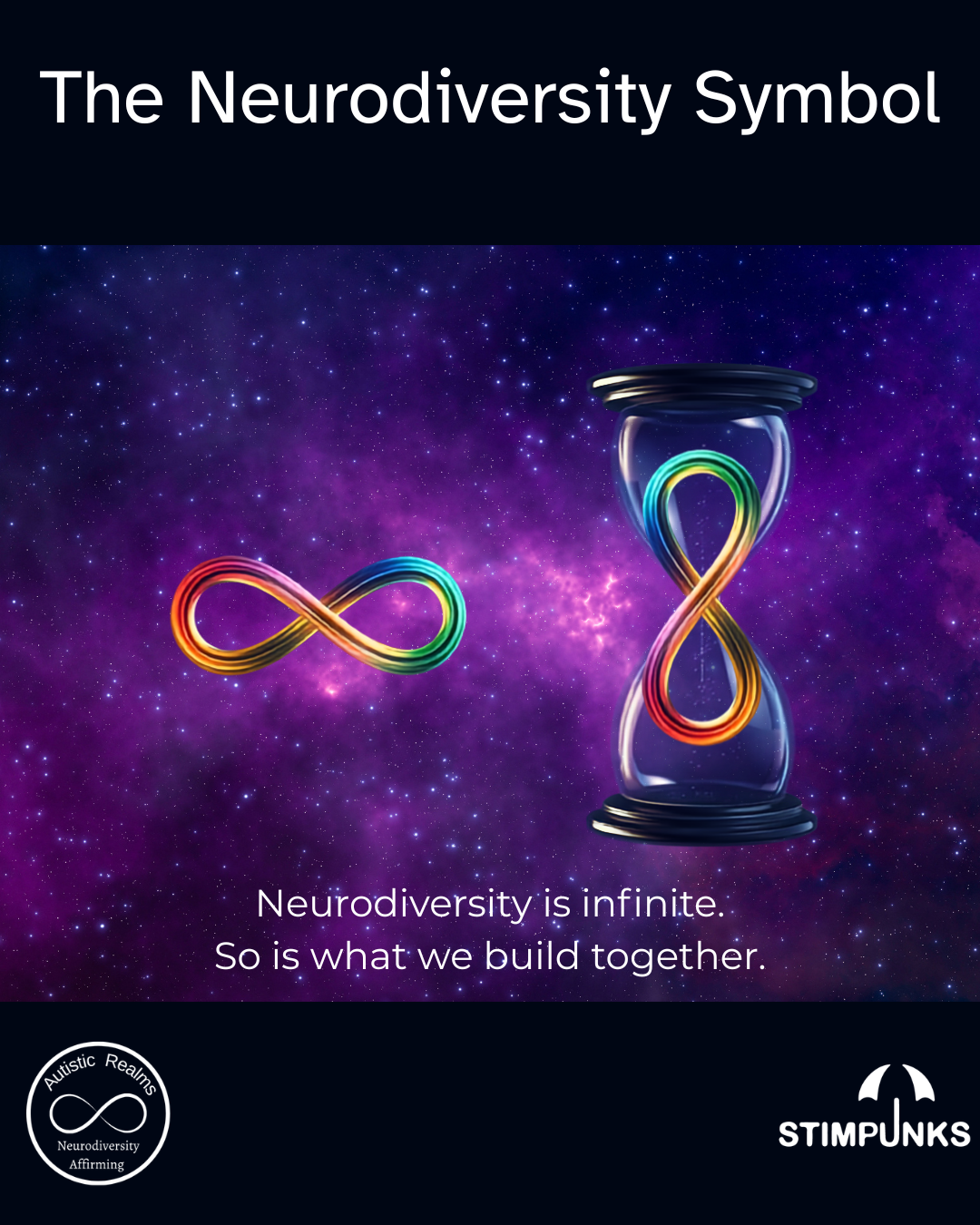
If you rotate the neurodiversity infinity symbol 90 degrees so it is vertical, it becomes an hourglass shape. That also shifts the potential of meaning and expands it even further. The symbol that was about infinite breadth and variation now also holds the concept of time and collective becoming.
In collaboration with Ryan Boren at Stimpunks Foundation, I developed this hourglass as a way of thinking about neurodiversity, drawing on historian Nico Slate’s (2022) study of the Highlander Folk School and its approach to community change. This framing grew from our co-authored piece on the neurodiversity infinity symbol.
The Highlander Folk School was a place in Tennessee where people came together to learn from one another, share what they knew, and collaborate on what they wanted to do next. Myles Horton, one of its founders, captured something important about how the Folk School worked when he shared that, “You don’t have to know the answers. The answers come from the people, and when they don’t have any answers, then you have another role, and you find resources.” Knowledge did not flow from the top down; it moved between people, through people, and outward into community change.
The hourglass, which is the neurodiversity infinity symbol on its side, holds that shape beautifully. As I read about the Highlander Folk School, I immediately pictured a vertical infinity symbol. I think it can work as a visual representation of the idea of collective becoming to expand conversations about neurodiversity and draw upon the possibilities of neuroqueering.
The hourglass has a wide top, where many kinds of people and sources of knowledge can gather. It then narrows at the waist, which is the point where one person receives what has come before and decides what to do with it next. The hourglass then opens again at the base, into something larger and more collective, something that moves beyond any single person or moment (Slate, 2022).
Neurodiversity is not only boundless. It moves through time, through people, through everything we build together. The wide upper chamber fills with what people have learned and lived. The narrow waist holds the weight of one person’s present moment, their attention, their care, their choices. The wide lower chamber opens into what could come next, into possibilities, into community, into futures we are already shaping.
Neurodiversity is infinite and timeless, so is what we build together.
References
Edgar, H., & Boren, R. (2026). Neurodiversity infinity symbol. Autistic Realms and Stimpunks Foundation. https://stimpunks.org/glossary/neurodiversity-infinity-symbol/
Johnson, A. (2021). Awareness to pride: The evolution of autism symbols from 1963 to today. LinkedIn. https://www.linkedin.com/pulse/awareness-pride-evolution-autism-symbols-from-1963-amber
Slate, N. (2022). The answers come from the people: The Highlander Folk School and the pedagogies of the civil rights movement. History of Education Quarterly, 62(2), 191-210. https://doi.org/10.1017/heq.2021.42
Stimpunks Foundation. (2026). Highlander Folk School crosswalk. https://stimpunks.org/space/highlander/
Walker, N. (2021). Neuroqueer heresies: Notes on the neurodiversity paradigm, Autistic empowerment, and postnormal possibilities. Autonomous Press.