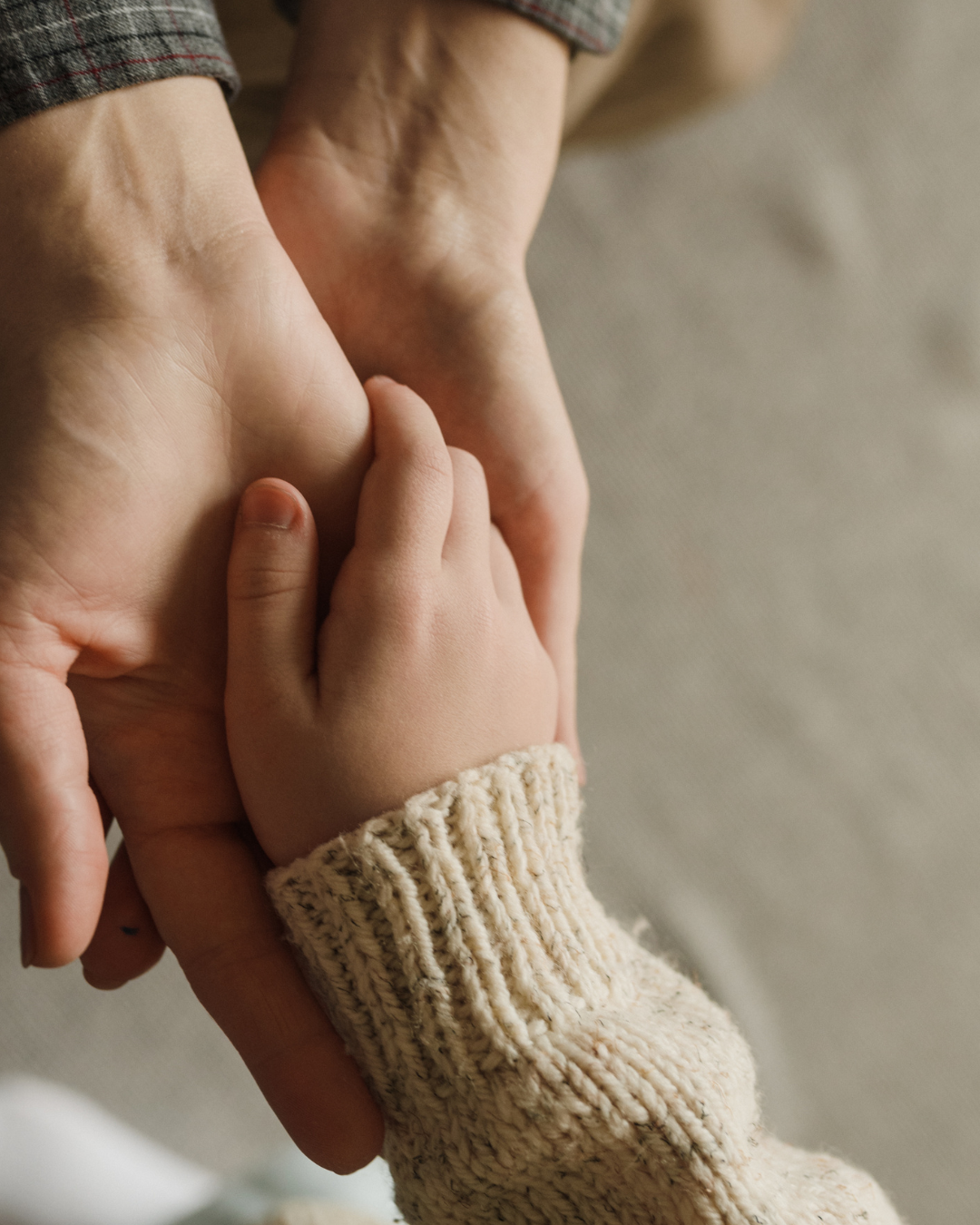
A close-up image of a small child’s hand gently holding an adult’s hand. The child is wearing a soft, knitted sweater, and their fingers curl around the adult’s thumb. The adult’s hand is open and relaxed, creating a sense of safety and support. The lighting is warm and natural, emphasizing skin textures and the tenderness of the moment. The overall feeling is intimate and reassuring, suggesting care, trust, and connection between the two.

Neuro-Affirming Practice Is Not a Framework. It’s a Way of Being.

There’s a phrase we hear a lot right now: neuro-affirming practice. It shows up in training brochures, on websites, in job descriptions, and anyone reading this will know how passionate I am about this! However, somewhere in the journey from community knowledge to professional adoption, something important can get lost.

At it’s core, being neuro-affirming is about being human. It is about being kind, compassionate, and genuinely empathic. It is about letting go of assumptions, recognising our own privilege, and truly accepting people as they are — not as we think they should be, or as a framework suggests they might become.

It isn’t a checklist, a certified approach, or a set of strategies you can just implement once the training is done; it is a journey. It requires you to unlearn deficit-based narratives and reorient yourself, which can’t happen overnight; it is an ongoing process. It is a commitment to being genuinely present with another person, meeting them where they are, and letting that presence shape everything that follows. I am still learning and re-learning with every single person I connect with.

Neuro-affirming practice is a relational orientation; you have to dig deep into yourself, question your own presumptions and the sources of your knowledge, value the lived experience of others who share their stories, and really work with the people you are caring for.

When Any Approach Can Become Harmful

Almost any framework or approach, however well-intentioned, can be applied in ways that cause harm if the underlying goal is to bring someone into alignment with neuronormative expectations.

For example if we take the idea of always presuming competence, as I explored in my piece on presuming competence (2025), the principle feels like it has genuinely liberatory roots, it may sound fabulous on the surface. However, if it is applied without nuance — without the right accommodations, without attuned communication support, without attending to whether someone feels physically and emotionally safe in their own body — it can become a new form of pressure: a demand dressed in affirming language and that takes away autonomy and agency.

The same is true of Intensive Interaction, of low-demand approaches, of sensory orientated frameworks, of any relational model you care to name. I wrote more about this in my co-authored article with Dr Joanna Grace; Intensive Interaction as neuro-affirming relational practice (Edgar & Grace, 2026). Reducing any deeply relational approach to a step-by-step procedure and to work towards neuronormative goals undermines practice across the board and can be harmful. The philosophical foundations we build on are everything; it is our orientation which is important.

What Data Cannot Reach

Research matters, but data alone cannot capture what it means to truly be with someone — and the pressure to produce data-legible outcomes can actively exclude everyone, especially the people who need genuine relational presence most, those with profound and multiple learning disabilities.

For those with profound and multiple learning disabilities, a subtle shift in breathing, a change in eye movement, a change in muscle tone, a moment of stillness that feels different from the stillness before may all carry meaning, or it may just be a reflex response; when you really know some one you will be able to judge this and know when to respond and when to pause. As Firth (2025) reminds us, progress lives in the relationship; it cannot be reduced to a checklist or a developmental stage, and trying to do so risks missing the point entirely.

When systems demand measurable proof, we risk building practice that is legible to funders and inspectors, but invisible and harmful to the people it is supposed to serve. The meaning in relationships can’t be measured; it is something felt, because we are human and have developed a connection with someone.

Being Human Is the Practice

So what does neuro-affirming practice actually look like?

Neuro-affirming practice is about being human with others, with empathy and attunement.

I think it looks like arriving without an agenda, following someone’s lead, not strategically, but out of genuine curiosity about their inner world. It looks like understanding that every person is already a meaning-maker: that meaning lives in bodyminds, in rhythm, in sensation, in a turning towards or a turning away — long before it lives in words or can be communicated through any other means.

As Milton’s Double Empathy Problem helps to clarify (2012), the difficulty in communication arises in the relational space between people with different lived experiences. For those with intellectual disabilities and profound and multiple learning disabilities, this places responsibility on the practitioner; it is something that needs to be held with humility and an awareness of privilege and power.

There is no qualification or training that gives you the right to say you are neuro-affirming. There isn’t a framework you can just adopt and say that because you are using this framework it means you are neuro-affirming. Even the most wonderful frameworks out there, created by Autistic-led, deeply passionate, affirming teams, can be manipulated if the practitioner isn’t really in tune and has the person’s well-being at the core of what they do. To be neuro-affirming requires a willingness to show up, slow down, and stay — not because a support plan says so, but because every person, regardless of how they communicate, how their body moves, or what they can or cannot do, deserves to be genuinely met.

Being neuro-affirming is about being human, it is about being kind, compassionate, having empathy, letting go of presumed competence, recognising your privilege, and really being with people and accepting them as they are.

“Belonging is never an individual achievement. It is something created in the spaces between us.”

Elly Chapple Diagnosis: Human

Related post from Ann Memmott on LinkedIn (1st May 2026)



Latest Posts

  • Autistic Burnout – Supporting Young People At Home & School

    Autistic Burnout – Supporting Young People At Home & School

    Autistic burnout in young people is real—and recovery starts with understanding. This post offers neuroaffirming ways to spot the signs, reduce demands, and truly support. 💛 #AutisticBurnout #Neuroaffirming #Monotropism #AutisticSupport


  • Monotropic Interests and Looping Thoughts

    Monotropic Interests and Looping Thoughts

    The theory of monotropism was developed by Murray, Lawson and Lesser in their article, Attention, monotropism and the diagnostic criteria for autism (2005). ​ Monotropism is increasingly considered to be the underlying principle behind autism and is becoming more widely recognised, especially within autistic and neurodivergent communities. Fergus Murray, in their article Me and Monotropism:…


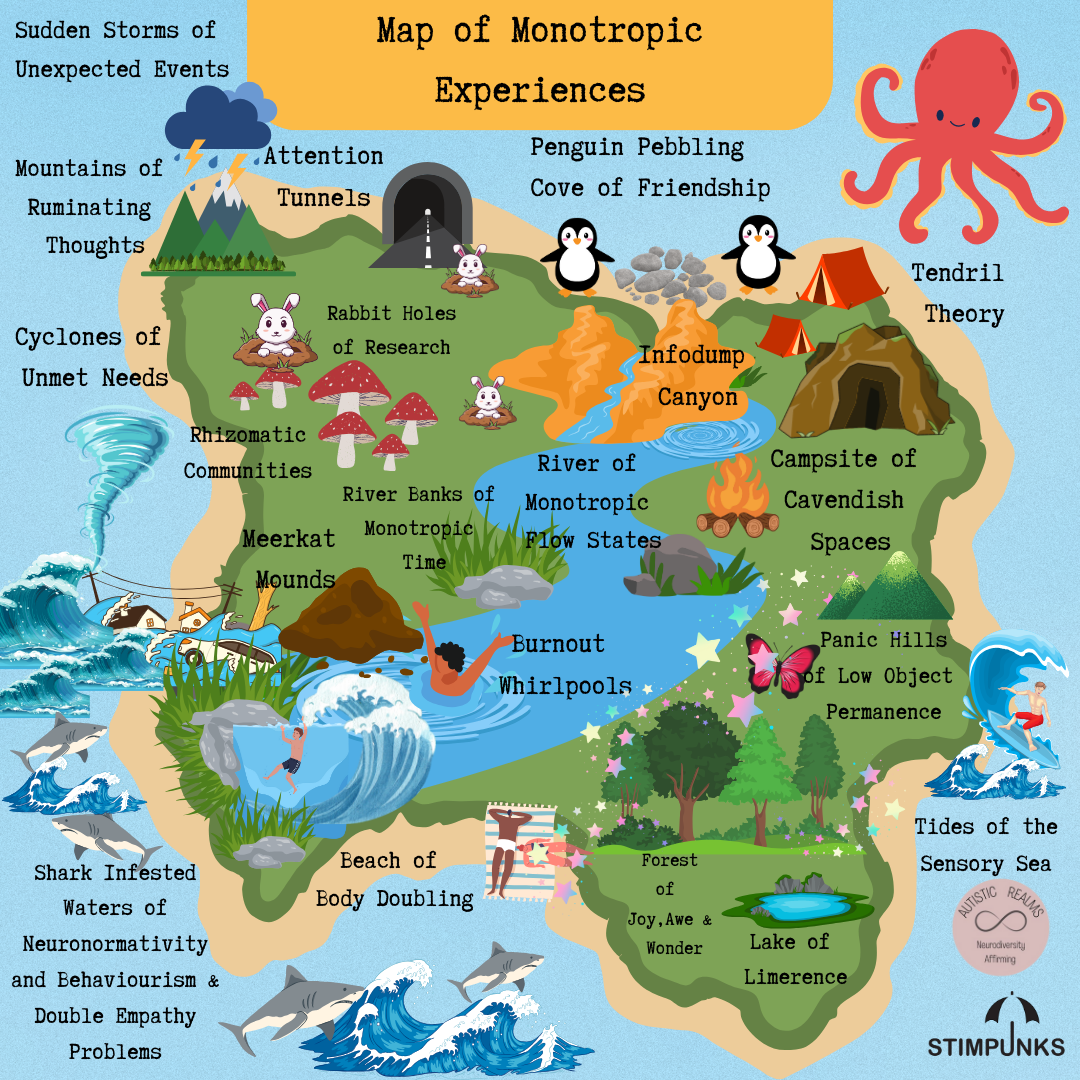
  • Map of Monotropic Experiences

    Map of Monotropic Experiences

    Monotropism seeks to explain Autism in terms of attention distribution and interests.  OSF Preprints | Development and Validation of a Novel Self-Report Measure of Monotropism in Autistic and Non-Autistic People: The Monotropism Questionnaire This map highlights 20 common aspects of my personal monotropic experiences. How many do you experience? Where are you on the map…


  • Autistic Burnout – Supporting Young People At Home & School

    Autistic Burnout – Supporting Young People At Home & School

    Being autistic is not an illness or a disorder in itself, but being autistic can have an impact on a person’s mental and physical health. This is due to the often unmet needs of living in a world that is generally designed for the well-being of people who are not autistic. In addition, three-quarters of…


  • The Double Empathy Problem is DEEP

    The Double Empathy Problem is DEEP

    “The growing cracks in the thin veneer of our “civilised” economic and social operating model are impossible to ignore”, Jorn Bettin (2021). The double empathy problem (Milton, 2012) creates a gap of disconnect experienced between people due to misunderstood shared lived experiences. It is “a breakdown in reciprocity and mutual understanding that can happen between people…


  • Top 5 Neurodivergent-Informed Strategies

    Top 5 Neurodivergent-Informed Strategies

    Top 5 Neurodivergent-Informed Strategies By Helen Edgar, Autistic Realms, June 2024. 1. Be Kind Take time to listen and be with people in meaningful ways to help bridge the Double Empathy Problem (Milton, 2012). Be embodied and listen not only to people’s words but also to their bodies and sensory systems. Be responsive to people’s…


  • Autistic Community: Connections and Becoming

    Autistic Community: Connections and Becoming

    Everyone seeks connection in some way or another. Connections may look different for autistic people. In line with the motto from Anna Freud’s National Autism Trainer Programme (Acceptance, Belonging and Connection), creating a sense of acceptance and belonging is likely to be more meaningful for autistic people than putting pressure on them to try and…


  • Monotropism, Autism & OCD

    Monotropism, Autism & OCD

    Exploring similarities and differences between Autistic and OCD monotropic flow states. Can attention tunnels freeze, and thoughts get stuck?


  • Monotropism Questionnaire & Inner Autistic/ADHD Experiences

    Monotropism Questionnaire & Inner Autistic/ADHD Experiences

     Post first published 28th July 2023 Over the past few weeks, there has been a sudden surge of interest in the Monotropism Questionnaire (MQ), pre-print released in June 2023 in the research paper ‘Development and Validation of a Novel Self-Report Measure of Monotropism in Autistic and Non-Autistic People: The Monotropism Questionnaire.‘ by Garau, V., Murray,…


  • Penguin Pebbling: An Autistic Love Language

    Penguin Pebbling: An Autistic Love Language

    Penguin Pebbling is a neurodivergent way of showing you care, like sharing a meme or twig or pretty stone to say “I’m thinking of you,” inspired by penguins who gift pebbles to those they care about.


  • Neuro-Affirming Practice Is Not a Framework. It’s a Way of Being.

    Neuro-Affirming Practice Is Not a Framework. It’s a Way of Being.

    Neuro-affirming practice isn’t a framework or a checklist. It’s about being human — kind, compassionate, and truly present with people, just as they are.


  • What Would A Neuroqueer Pedagogy Be?

    What Would A Neuroqueer Pedagogy Be?

    “What would a neuroqueer pedagogy be?” By Ombre Tarragnat (English translation with permission from Genre en Cours article Feb 2026)


  • Intensive Interaction as Neuro-Affirming Relational Practice

    Intensive Interaction as Neuro-Affirming Relational Practice

    Intensive Interaction isn’t about “fixing” or prompting communication. It’s about meeting someone where they are—through connection, attunement, and shared flow. A neuro-affirming, relational framing to support those with profound and multiple learning disabilities.


This website stores cookies on your computer. These cookies are used to provide a more personalized experience and to track your whereabouts around our website in compliance with the European General Data Protection Regulation. If you decide to to opt-out of any future tracking, a cookie will be setup in your browser to remember this choice for one year.

Accept or Deny

WordPress Cookie Plugin by Real Cookie Banner