Images of tress, tent, sun, mountains. Text reads: Map of Monotropic Experiences: Reframing Autism Through A Neurodiversity-Affirming Lens Created by: Helen Edgar (Autistic Realms) & Ryan Boren, Norah Hobbs and Chelsea Adams (Stimpunks) FREE Training for Professionals, Families and Community Groups to Support Autistic People

Map of Monotropic Experiences: Open Source Training Resources


The Map of Monotropic Experiences:
Reframing Autism Through A
Neurodiversity-Affirming Lens


Training for Professionals, Families and Community Groups

to Support Autistic People

Images of tress, tent, sun, mountains. Text reads: Map of Monotropic Experiences:
Reframing Autism Through A
Neurodiversity-Affirming Lens
Created by:
Helen Edgar (Autistic Realms)
& Ryan Boren, Norah Hobbs and
Chelsea Adams (Stimpunks)
FREE Training for Professionals, Families
and Community Groups
to Support Autistic People

At Autistic Realms and Stimpunks, we believe in telling our own stories and validating each others experiences. The Map of Monotropic Experiences is a collaborative project by Helen Edgar (Autistic Realms) and the Stimpunks Foundation (Ryan Boren, Norah Hobbs and Chelsea Adams), created by and for Autistic people.

I created the original map in 2024 as a reflection of my own monotropic experiences. This was inspired by Gemma Correll’s A Map of Procrastination.
We have developed this further and are offering a space for everyone to reflect on their authentic identity as Autistic/ADHD people and discover how embracing the theory of monotropism may help develop a stronger understanding of identity and support well-being.

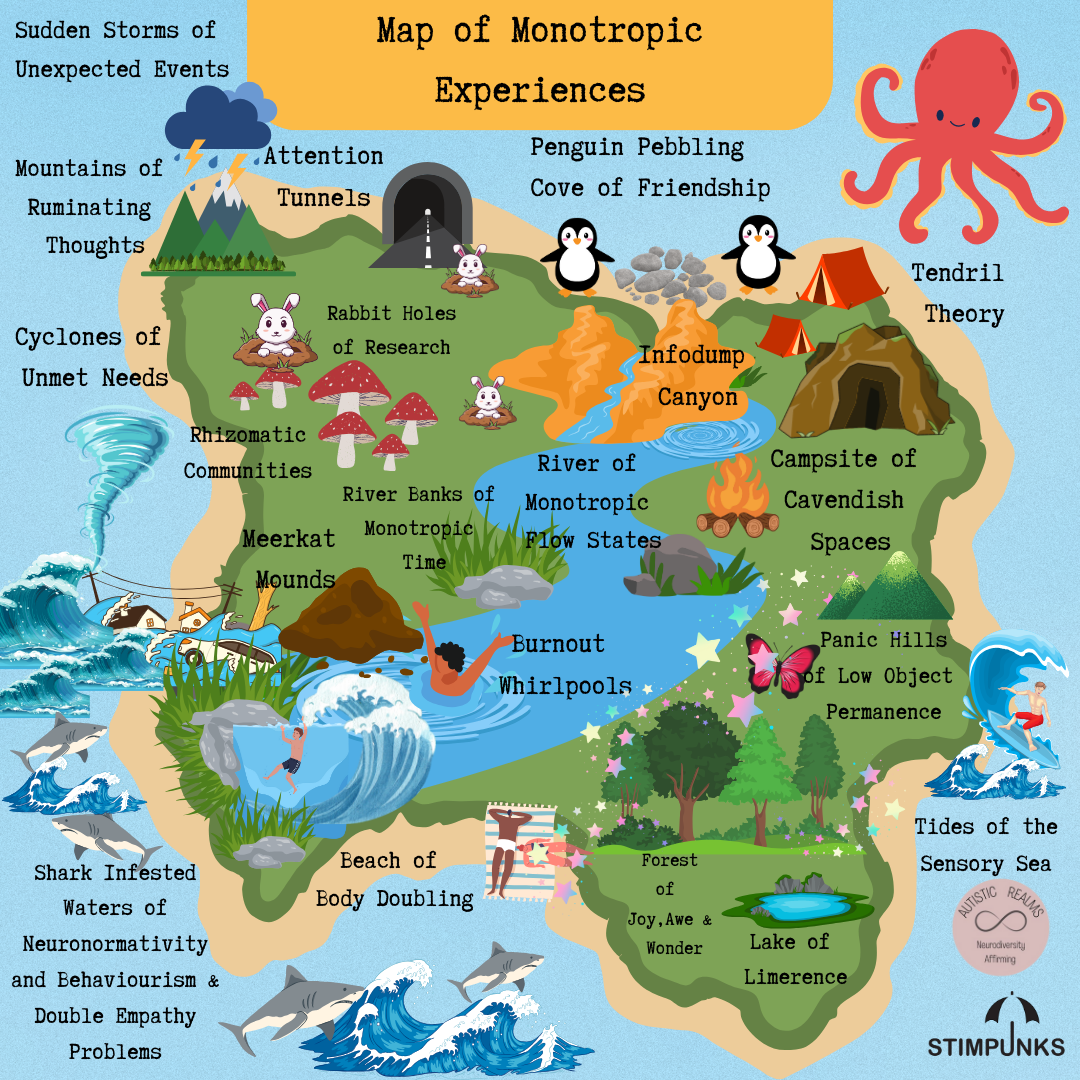
Map of Monotropic Experiences Map of an island with the areas: Attention Tunneling Penguin Pebbling Cove of Friendship Tendril Theory (@EisforErin) Mountains of Ruminating Thoughts Cyclones of Unmet Needs Rabbit Holes of Research Infodump Canyon Rhizomatic Communities River of Monotropic Flow States Campsite of Cavendish Spaces Meerkat Mounds (Gray-Hammond & Adkin) Riverbanks of Monotropic Time Shark Infested Waters of Neuronormativity, Behaviourism & Double Empathy Problems (Milton, 2012) Beach of Body Doubling Burnout Whirlpools Panic Hills of Low-Object Permanence Forest of Joy Awe and Wonder Lake of Limerence Tides of the Sensory Sea Sudden Storms of Unexpected Events


Our training helps to reframe how we understand ourselves and Autistic people, not through the deficit-focused lens of traditional autism research, but through lived experience and Autistic voices.

Our open source training offers a radical, affirming reframe of Autism, grounded in the theory of monotropism — a way of understanding the deep, focused attention patterns common among Autistic and ADHD individuals.
Rather than seeing Autistic traits as deficits, monotropism recognises our monotropic “interest-based nervous system” as a natural and meaningful way of engaging with the world.

At the heart of our work is the importance of embracing authentic Autistic identity, not as something broken or needing correction, but as a valuable and vibrant way of being. Building strong community connections and validating lived experiences are central to this journey.

You’ll Learn To:

✅ Understand the theory of monotropism and the importance of flow
✅ Recognise how environments can create “stuck states”
✅ Explore the detrimental impact of neuronormative domination on Autistic well-being
✅ Create flow-supportive environments where ALL minds can thrive
✅ Understand intersectionality and the Double Empathy Problem for deeper inclusion
✅ Celebrate authentic Autistic identity and the strength of community storytelling and shared experiences

Perfect for: schools, healthcare settings, workplaces, and community networks.


A creative tool for reflection, connection, and meaningful change.

Timing and Preparation: The training content is approximately 4,000 words, designed to cover around 45 minutes of presentation time.

Delivered live as a workshop with space for discussion and Q&A, it typically runs for 1-2 hours and can be expanded into a full-day session if preferred.


Get the Training

Here’s an embedded preview of the training slides:

Download the full training pack here.
The Map of Monotropic Experiences Training Pack consists of:
1 x PDF version with presenter notes and suggestions
1 x PDF version slides only
1 x PowerPoint 
1x PDF script only


A suggested donation for organisations and professionals is $100 (£75 GBP). This is also available as free open-source training for individuals and those with limited funds through Autistic Realms and Stimpunks.

Get the Workbook

My Monotropic Map: Understanding and Embracing Our Unique Flow

A creative, neuroaffirming workbook for Autistic people of all ages, and those who support them

Image of Map of Monotropic Experiences. Text reads: Map of Monotropic Experiences

Reframing Autism Through A
Neurodiversity-Affirming Lens

Workbook & Activity Ideas

Training for Professionals, Families and
Community Groups to Support Autistic People

Created by:
Helen Edgar (Autistic Realms)
Ryan Boren,
Norah Hobbs &
Chelsea Adams (Stimpunks)

Our interactive workbook brings the Map of Monotropic Experiences to life as a practical and reflective guide for exploring how Autistic attention, sensory systems, and energy flow. It includes engaging activities designed to support personal insight and promote wellbeing through meaningful, affirming strategies.

What’s Inside:

  • Themed chapters based on key aspects of monotropism
  • A wide range of accessible reflective questions and practical creative activities to support self-understanding and communication
  • Original metaphors and illustrations that make complex ideas easier to grasp
  • Co-reflection tasks and collaborative prompts for family members, carers, educators, or support workers
  • Grounded in lived experience, affirming language, and neurodiversity-affirming approaches

Whether you’re an Autistic adult, young person, parent/carer, teacher, counsellor or therapist, this workbook supports deeper understanding, more effective communication, and pathways to wellbeing.

Explore Autistic passions, time spirals, attention tunnels, burnout and more through a compassionate and strengths-based lens.

Available as a downloadable PDF

Digital Downloads
Maps & Posters For Your Setting

Map of Monotropic Experiences Map of an island with the areas: Attention Tunneling Penguin Pebbling Cove of Friendship Tendril Theory (@EisforErin) Mountains of Ruminating Thoughts Cyclones of Unmet Needs Rabbit Holes of Research Infodump Canyon Rhizomatic Communities River of Monotropic Flow States Campsite of Cavendish Spaces Meerkat Mounds (Gray-Hammond & Adkin) Riverbanks of Monotropic Time Shark Infested Waters of Neuronormativity, Behaviourism & Double Empathy Problems (Milton, 2012) Beach of Body Doubling Burnout Whirlpools Panic Hills of Low-Object Permanence Forest of Joy Awe and Wonder Lake of Limerence Tides of the Sensory Sea Sudden Storms of Unexpected Events

Feedback

We hope you find this training valuable. We welcome you to share how you have used our resources and how they may have benefited you, those you support, or your community.

Please share your feedback.


Want to know more about monotropism?

Autistic Realms

Stimpunks

Monotropism.org

Follow: Monotropism.org on Bluesky

More Maps?

Check out:


A Map of Procrastination: https://www.facebook.com/gemmacorrell (Gemma Correll’s amazing work inspired our Map of Monotropic Experiences, which was first published on 20th Oct 2024 via Autistic Realms).

The Land of Autistic Communication: https://www.assistiveware.com/autism-acceptance-communication


Latest Posts

  • Autistic Burnout – Supporting Young People At Home & School

    Autistic Burnout – Supporting Young People At Home & School

    Autistic burnout in young people is real—and recovery starts with understanding. This post offers neuroaffirming ways to spot the signs, reduce demands, and truly support. 💛 #AutisticBurnout #Neuroaffirming #Monotropism #AutisticSupport


  • Monotropic Interests and Looping Thoughts

    Monotropic Interests and Looping Thoughts

    The theory of monotropism was developed by Murray, Lawson and Lesser in their article, Attention, monotropism and the diagnostic criteria for autism (2005). ​ Monotropism is increasingly considered to be the underlying principle behind autism and is becoming more widely recognised, especially within autistic and neurodivergent communities. Fergus Murray, in their article Me and Monotropism:…


  • Map of Monotropic Experiences

    Map of Monotropic Experiences

    Monotropism seeks to explain Autism in terms of attention distribution and interests.  OSF Preprints | Development and Validation of a Novel Self-Report Measure of Monotropism in Autistic and Non-Autistic People: The Monotropism Questionnaire This map highlights 20 common aspects of my personal monotropic experiences. How many do you experience? Where are you on the map…


  • Autistic Burnout – Supporting Young People At Home & School

    Autistic Burnout – Supporting Young People At Home & School

    Being autistic is not an illness or a disorder in itself, but being autistic can have an impact on a person’s mental and physical health. This is due to the often unmet needs of living in a world that is generally designed for the well-being of people who are not autistic. In addition, three-quarters of…


  • The Double Empathy Problem is DEEP

    The Double Empathy Problem is DEEP

    “The growing cracks in the thin veneer of our “civilised” economic and social operating model are impossible to ignore”, Jorn Bettin (2021). The double empathy problem (Milton, 2012) creates a gap of disconnect experienced between people due to misunderstood shared lived experiences. It is “a breakdown in reciprocity and mutual understanding that can happen between people…


  • Top 5 Neurodivergent-Informed Strategies

    Top 5 Neurodivergent-Informed Strategies

    Top 5 Neurodivergent-Informed Strategies By Helen Edgar, Autistic Realms, June 2024. 1. Be Kind Take time to listen and be with people in meaningful ways to help bridge the Double Empathy Problem (Milton, 2012). Be embodied and listen not only to people’s words but also to their bodies and sensory systems. Be responsive to people’s…


  • Autistic Community: Connections and Becoming

    Autistic Community: Connections and Becoming

    Everyone seeks connection in some way or another. Connections may look different for autistic people. In line with the motto from Anna Freud’s National Autism Trainer Programme (Acceptance, Belonging and Connection), creating a sense of acceptance and belonging is likely to be more meaningful for autistic people than putting pressure on them to try and…


  • Monotropism, Autism & OCD

    Monotropism, Autism & OCD

    This blog has been inspired by Dr Jeremy Shuman’s (PsyD) presentation, ‘Neurodiversity-Affirming OCD Care‘ (August 2023), available here. Exploring similarities and differences between Autistic and OCD monotropic flow states. Can attention tunnels freeze, and thoughts get stuck? Autism research is shifting; many people are moving away from the medical deficit model and seeing the value…


  • Monotropism Questionnaire & Inner Autistic/ADHD Experiences

    Monotropism Questionnaire & Inner Autistic/ADHD Experiences

     Post first published 28th July 2023 Over the past few weeks, there has been a sudden surge of interest in the Monotropism Questionnaire (MQ), pre-print released in June 2023 in the research paper ‘Development and Validation of a Novel Self-Report Measure of Monotropism in Autistic and Non-Autistic People: The Monotropism Questionnaire.‘ by Garau, V., Murray,…


  • Penguin Pebbling: An Autistic Love Language

    Penguin Pebbling: An Autistic Love Language

    Penguin Pebbling is a neurodivergent way of showing you care, like sharing a meme or twig or pretty stone to say “I’m thinking of you,” inspired by penguins who gift pebbles to those they care about.


  • Beyond “Complex Needs”: Neuro-Affirming, Relational Practice with Children with Profound and Multiple Learning Disabilities

    Beyond “Complex Needs”: Neuro-Affirming, Relational Practice with Children with Profound and Multiple Learning Disabilities

    A neuro-affirming, relational approach to supporting children with profound and multiple learning disabilities, centred on safety, communication, and being-with.


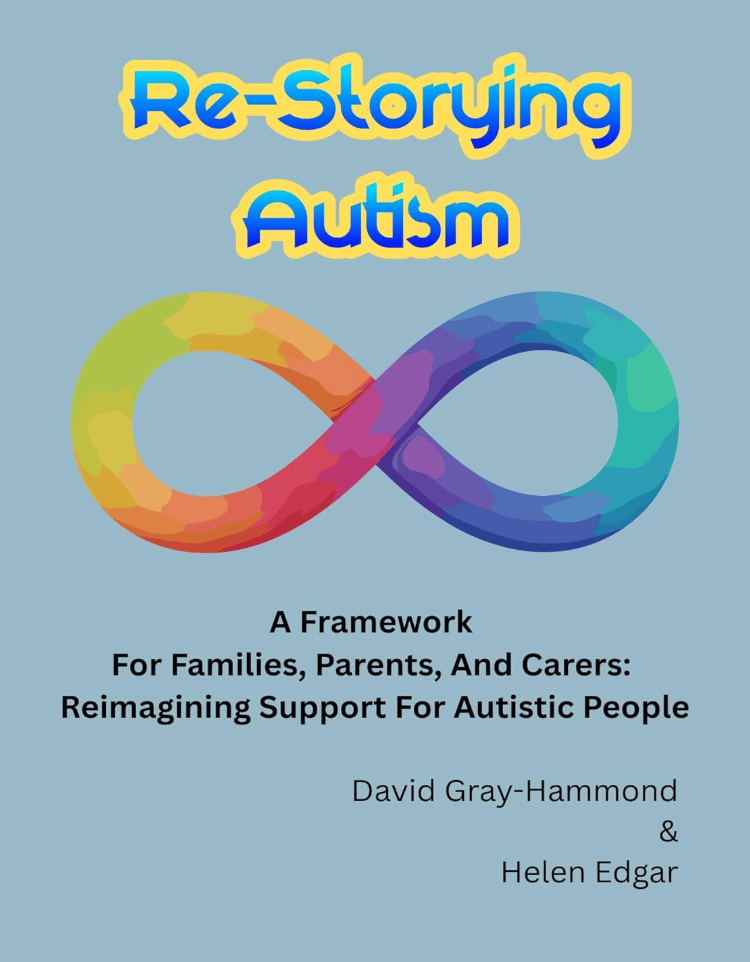
  • New Book – Re-Storying Autism

    New Book – Re-Storying Autism

    Autistic RealmsHelen Edgar Autistic Advocate, Author & ConsultantNeurodiversity-Affirming Supporting Autistic People To Grow & Thrive Welcome to Autistic Realms Newsletter! The days are counting down to the release of mine and David Gray-Hammond’s new workbook to support our upcoming on-demand training course: Re-Storying Autism – A Framework For Families, Parents, And Carers: Reimagining Support For…


  • Stimming as Embodied Sensory Language

    Stimming as Embodied Sensory Language

    Reframing stimming beyond “behaviour” as embodied sensory language, monotropic flow, and neuroqueer, interdependent connection with the world.


WordPress Cookie Plugin by Real Cookie Banner