On 20 August 2026, community members gathered online for Clarion Call, an emergency event space hosted and organised by Viv Dawes, with guest speakers Sofia Farzana, Claire Betson, Katie Munday and Pete Wharmby, who was unable to join live. I was honoured to support and facilitate this event.
The event had been organised before Professor Jason Arday’s death, in response to a fast-accumulating wave of stigmatising media coverage and misinformation about autism and Autistic identity from Uta Frith, including Channel 4’s The Great ADHD Myth? documentary. Professor Arday’s death sadly brought the same issues of intersectionality, racism and structural harm into even sharper focus for neurodivergent people.
The call opened with an acknowledgement of collective and systemic trauma, particularly for people in the Global Majority.
Why We Gathered
Viv Dawes, Autistic Advocate, shared that what happened to Professor Arday wasn’t an isolated event; it followed Professor Arday stepping down from his post and his subsequent death after prolonged bullying by the media and public commentary. It is a hideous reminder of the structural racism and hate experienced across the UK and wider society for Autistic or otherwise neurodivergent and disabled people, and especially those most marginalised and those who are Black.
This was followed by a documentary aired on Channel 4 in the UK that suggested ADHD was a myth, alongside weeks of controversy created by Professor Dame Uta Frith and amplified by the UK press, who have been arguing that the “modern autism spectrum has widened to the point of collapse and lost its clinical meaning”. She suggested that late-diagnosed individuals, particularly women and adolescents with high intelligence and social anxiety, may be misdiagnosed and could be better served by labels other than autism.
Together, these events on top of the stigma and misunderstanding about Autistic people already out there, left so many of us, myself included, feeling relentlessly attacked from every direction over the past few weeks.
Professor Jason Arday was Cambridge’s youngest Black professor, and he had spoken openly about being Autistic, dyslexic, and not speaking until he was 11 years old, and not reading until age 18. His academic work focused on racial inequality, mental health and neurodiversity in higher education. He resigned from his post in early August, disputing plagiarism allegations that had followed weeks of scrutiny, and was found dead at his home in Battersea, London, on 8 August 2026.
In the 22 days before his death, an estimated 249 articles were published about him — 188 of them in the nine days after he resigned and asked to be left alone. Cambridge’s chancellor, Chris Smith, publicly condemned what he called a “racist feeding frenzy,” arguing that concerns about academic integrity could be investigated without racial hostility. Steven Barnett, Professor of Communications at the University of Westminster, put it more bluntly, saying this “is persecution, not investigation” (Courthouse News Service, 2026). Thousands of people gathered in Trafalgar Square to mourn him and to say, publicly, that this was never really about academic integrity but was about racism (Al Jazeera).
Channel 4’s “The Great ADHD Myth?“ aired on 18 August 2026, two days before the Clarion Call, and I think all of us felt the impact and harm that we know this will cause for ADHDers on top of everything else going on at the moment. ADHD UK’s formal response challenged the programme, which framed ADHD as scientifically contested, even though it is recognised by the World Health Organisation, the NHS, and an international consensus statement signed by 80 leading researchers, with 208 empirically supported statements about ADHD. The repercussions of such a programme are just scary, invalidating people’s identity, needs, and severely impacting a whole community’s wellbeing.
Uta Frith’s ongoing invalidating commentary on people’s autism diagnosis added to the heavyweight of what feels like a coordinated pile-on. Frith, a UCL professor, has published work questioning whether the “autism spectrum” concept has lost its meaning and is leading to misdiagnosis. In recent UK press articles and comments, she has said the definition of autism has “widened” to include people with “milder traits,” warning that social media may have “also spread simplified or misleading ideas” about the condition (The Times, 2026). The same debate has now reached government policy. Health Secretary Wes Streeting has now commissioned a review into rising ADHD and autism diagnoses, partly framed around welfare spending (BBC News).
Autistic researchers have been quick to respond. Dr Monique Botha, at Durham University, has argued the review treats rising diagnoses as “analytically suspicious” while ignoring the structural exclusion and epistemic injustice Autistic girls and women in particular have faced, and that leaving people undiagnosed and unsupported carries “extreme risks of suicidality, depression, homelessness” and more. Dr Rachel Moseley-Braund, at Bournemouth University, estimates that somewhere between 435,700 and 1.2 million Autistic people in the UK are still undiagnosed, because our assessment tools still “under-detect autism in people assigned female at birth and people of colour” (Science Media Centre).
Their research is exactly why Autistic-led research and lived experiences need to shape how our community is understood and supported.
Naming the Harm: Race, Disability & Intersectionality
What followed through our meeting was raw and heartfelt. Sofia Farzana of SEMA — Scotland’s only Autistic-minority-ethnic-led organisation — spoke about being disbelieved throughout her own life and career, connecting Professor Arday’s death to a wider pattern of “selective outrage” across race, disability, gender identity, and faith. Claire Betson of Neuro By Nature Therapy reflected on institutional accountability and on how the BBC allowed race and disability stigma to be played off against one another.
Together, they named something several attendees felt had gone largely unsaid elsewhere and the whole point of this article, that racism and ableism are not two separate issues, but intersectional.
Call to action: when you next see race, class, gender, age or sexuality and disability discussed as separate issues in the media, name the overlap. Intersectionality is not an abstract concept; it is what costs lives.
Remembering Jason Arday
We held a 2-minute silence and some tributes collected in Everything Good About Jason Arday were shared.
Call to action: read and share his own words and research rather than the headlines — his memoir Great and Unfortunate Things (with Eve Claxton), and We See Things They’ll Never See, co-written with Chantelle Jessica Lewis, on neurotypical hegemony and building solidarity across ableism and racism.
Community Matters
Several community members offered reflections that deserve to be carried forward. Katie Munday of Autistic and Living the Dream challenged white Autistic advocates, themself included, to stop centring whiteness in autism advocacy and to speak up about racism as readily as they speak up about ableism. Debi Gregory, who described being taught during their academic studies that diagnosticians could choose to withhold an ADHD or autism diagnosis regardless of whether someone met the clinical criteria, and proposed a community campaign — “I’m Neurodivergent, And” — pairing lived experience with peer-reviewed research to counter harmful stereotypes, a wonderful idea!
Call to action: if you’re a white Autistic person, take Katie’s challenge seriously this week — look at who you amplify, and make space for Black and Brown neurodivergent voices, including sharing work from SEMA.
Professional Accountability
Claire Betson, speaking as a trauma-informed counsellor, also reflected on Channel 4’s ADHD documentary, describing the professionals featured as lacking rigour and showing clear clinical bias. She linked this to a wider pattern in which Black children are more often diagnosed with oppositional defiance disorder rather than ADHD or PDA, reflecting a racialised gap in how distress is understood and named, reflecting wider issues of who is believed, what support they get and life outcomes.
Call to action: if you work in a diagnostic or clinical role, consider where your own privileges may lie.
What You Can Do Right Now
- Sign the Good Law Project’s petition demanding a public inquiry into press conduct, and the Change.org petition calling on the UK Government for an independent review.
- Complain about Channel 4’s The Great ADHD Myth? using the official Ofcom complaints form — ADHDventures has a template letter you can use.
- Support Professor Arday’s family fundraiser. Read and buy his work (links above) and read his academic work.
- Sign the petition for a dedicated Autism crisis line, created in memory of Mikayla Raines and Dr Jason Arday.
- Follow, credit, and pay Black and Brown neurodivergent creators and advocates — start with the Everyday Racism Linktree.
- If you’re white, learn about your own unconscious bias and read Why I’m No Longer Talking to White People About Race by Reni Eddo-Lodge, or her original essay, and Becoming Trustworthy White Allies — then actively call out racism when you see it.
With Love and Solidarity
The news is relentless, our community is in crisis, but we are here together, and we can all make a difference.
With love and solidarity.
Coping and Mental Health Support
- UK (Shout): text SHOUT to 85258
- Ireland (Text About It): text HELLO to 50808
- US/Canada (Crisis Text Line): text HOME or HOLA to 741741
- Neurodivergent Practitioners Network: Thriving Autistic‘s neuro-affirming sister organisation has a global directory of neurodivergent therapists, coaches and counsellors.
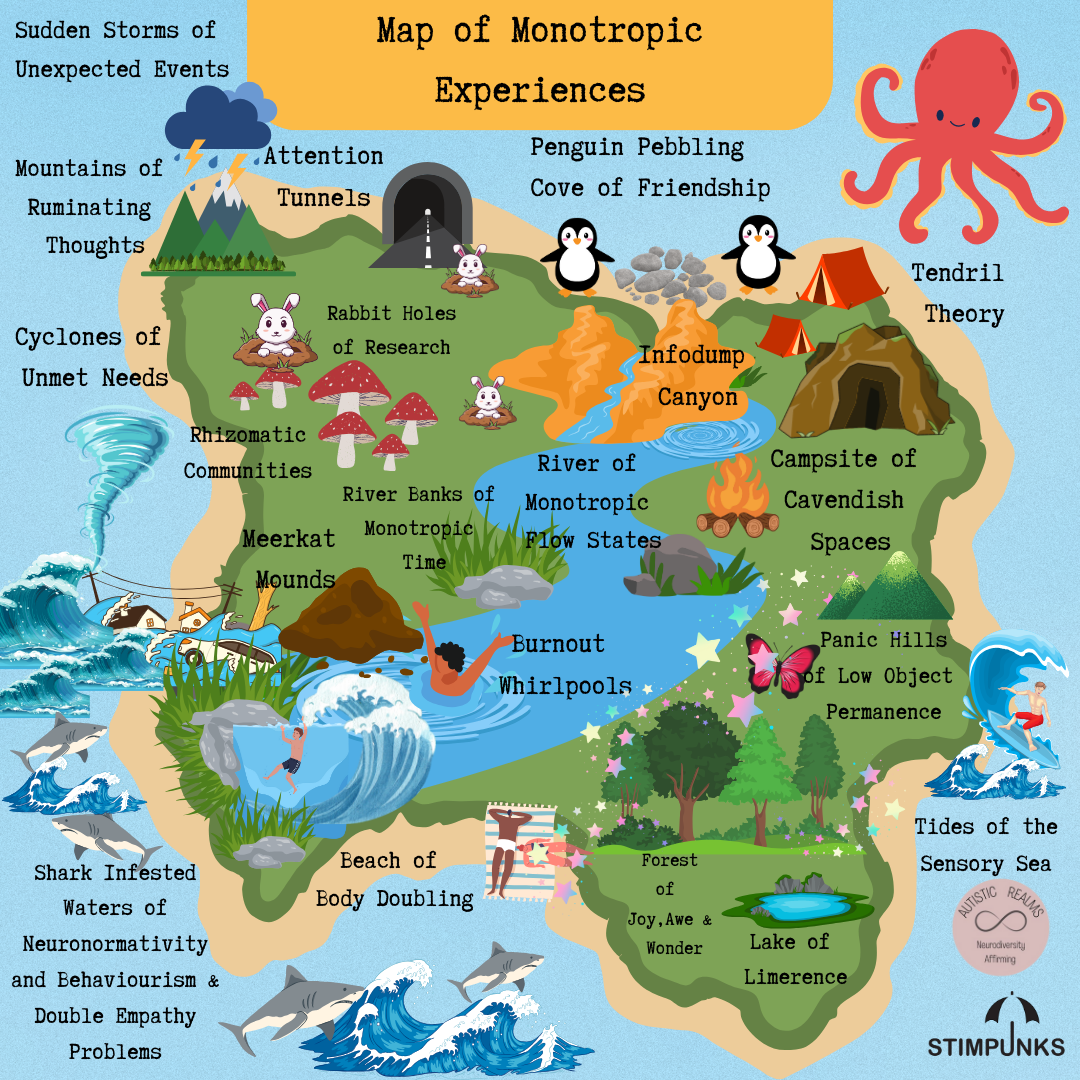
- Stimpunks Field Guide: Regulation and Coping: a practical, community-built guide to regulation and crisis support for neurodivergent and disabled people with signposting for global support hotlines and services.
Watch the Clarion Call Event
Signposting and resources shared in the event:
References
ADHD UK. (2026). Challenging Channel 4’s “The Great ADHD Myth?” https://adhduk.co.uk/challenging-c4-the-great-adhd-myth/
Al Jazeera. (2026, August 18). Thousands mourn Jason Arday in London, blaming ‘racist’ press for his death. https://www.aljazeera.com/features/2026/8/18/tens-of-thousands-mourn-jason-arday-in-london-blaming-press-for-his-death
BBC News. (2026). [Article on the government review into rising ADHD and autism diagnoses]. https://www.bbc.co.uk/news/articles/cdew81wd2y8o
Channel 4. (2026). New Channel 4 documentary “The Great ADHD Myth?” seeks to determine whether ADHD is genuine https://www.channel4.com/press/news/new-channel-4-documentary-great-adhd-myth-seeks-determine-whether-adhd-genuine
Courthouse News Service. (2026, August 19). Cambridge chancellor condemns media frenzy after Black professor’s death. https://www.courthousenews.com/cambridge-chancellor-condemns-media-frenzy-after-black-professors-death/
Faraone, S. V., et al. (2021). The World Federation of ADHD International Consensus Statement: 208 evidence-based conclusions about the disorder. Neuroscience & Biobehavioral Reviews, 128, 789–818. https://www.adhdevidence.org/evidence
Frith, U. (2026, August 4). Has autism become too broad to be useful? UCL News. https://www.ucl.ac.uk/news/2026/aug/has-autism-become-too-broad-be-usefu
Science Media Centre. (2026). Expert reaction to interim report on rise in conditions such as ADHD and autism as commissioned by Wes Streeting. https://www.sciencemediacentre.org/expert-reaction-to-interim-report-on-rise-in-conditions-such-as-adhd-and-autism-as-commissioned-by-wes-streeting/
The Times. (2026). [Article on Uta Frith and autism over-diagnosis]. https://www.thetimes.com/life-style/health-fitness/article/uta-frith-autism-over-diagnosis-5vv6t57qq