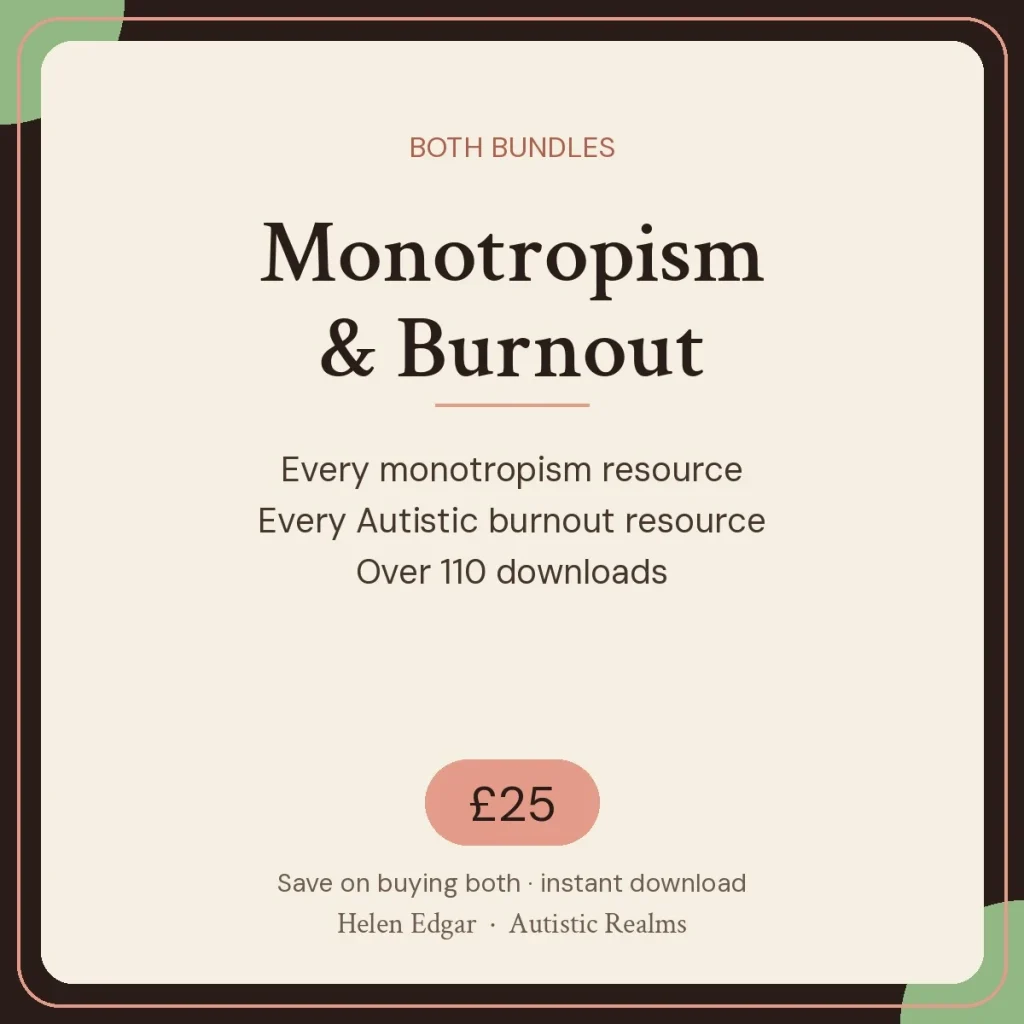
Get every resource on this topic: the Monotropism Bundle has every monotropism resource in one download for £15.99, or get both bundles for £25.
What is monotropism?
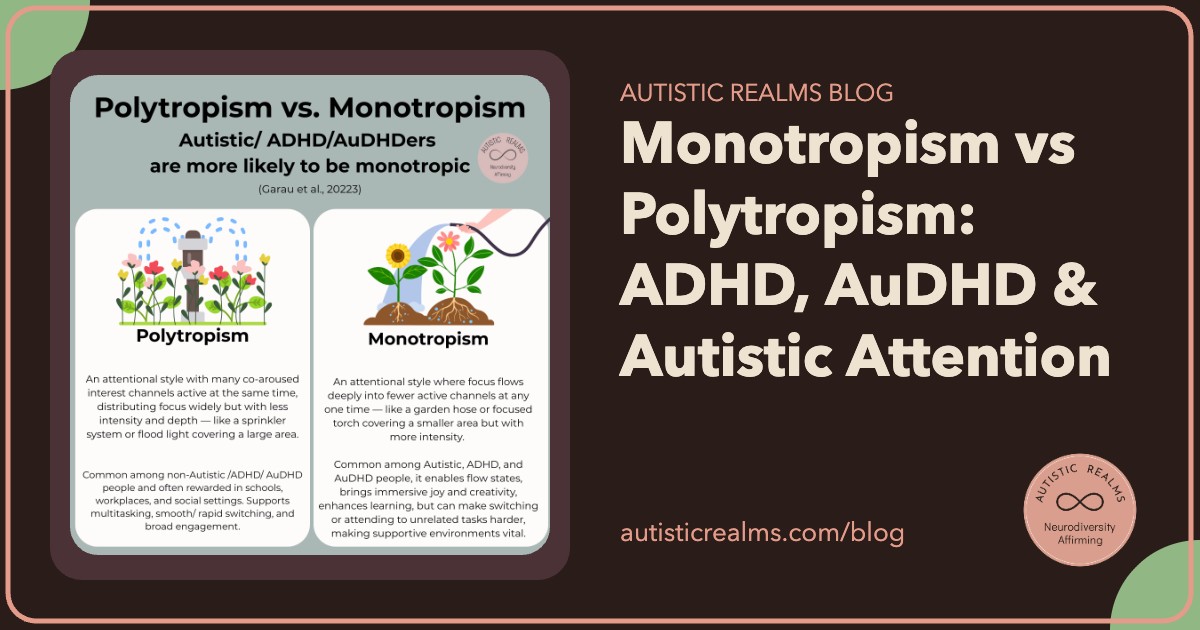
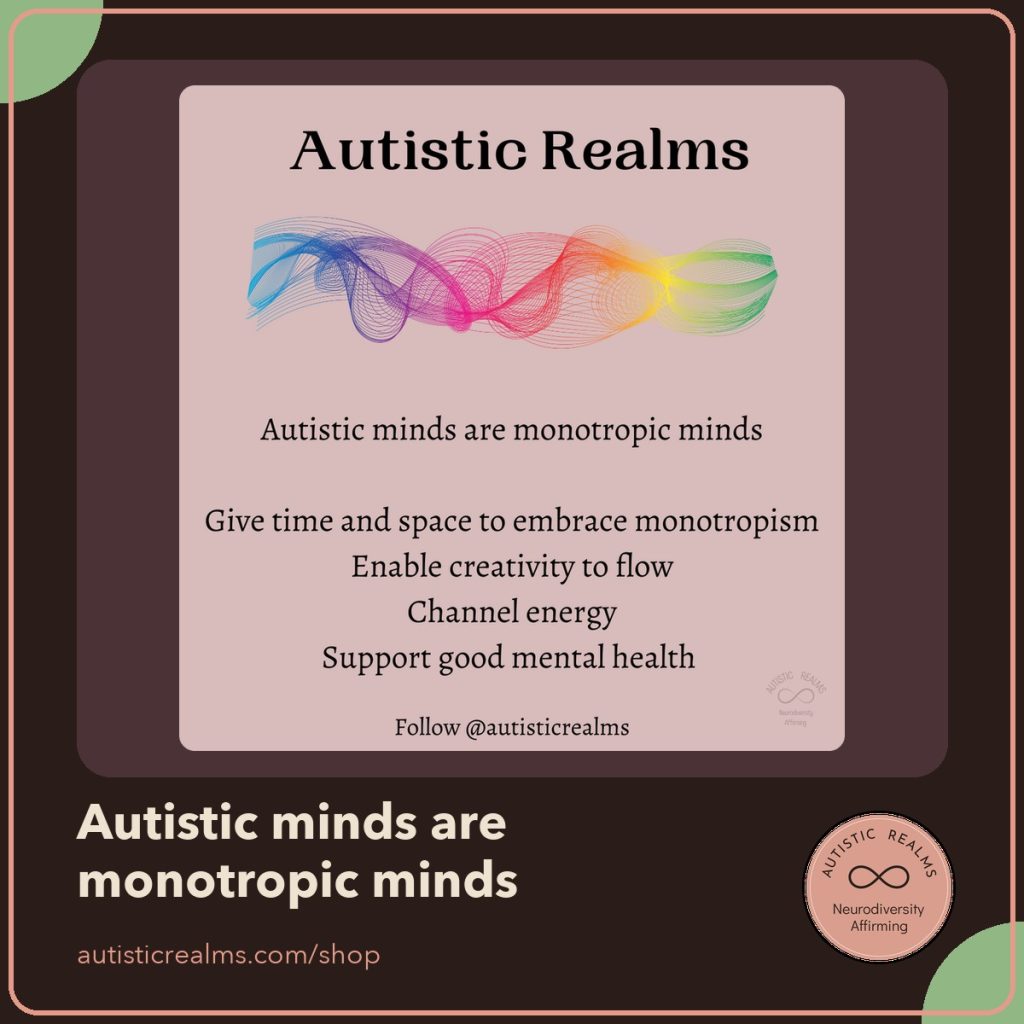
Monotropism is a theory of autism, developed by Autistic people, that explains Autistic experience through attention. It says that the amount of attention anyone has at a given moment is limited, and that in a monotropic mind that attention is pulled strongly towards a few things at a time, rather than spread thinly across many. Everything else follows from that: deep focus and deep interests, difficulty switching tasks, the cost of interruptions, sensory intensity, the way time stretches and collapses, and why so many Autistic and ADHD people recognise themselves in it.
The theory was developed by Dr Dinah Murray, Dr Wenn Lawson and Mike Lesser in the 1990s and published in 2005 (the word itself was coined for Dinah by Jeanette Buirski in 1992). Fergus Murray describes it as a model of the mind as an interest system: our interests direct our attention, and in a monotropic mind fewer interests are active at any one time, but they pull far harder. Research using the Monotropism Questionnaire (Garau et al., 2023) found that Autistic, ADHD and especially AuDHD people score much higher on monotropic traits than people who are neither.
I am monotropic, and I write about monotropism because it was the first explanation of autism that described my life from the inside rather than listing what was wrong with me. It is not a deficit model. It explains why the same mind that cannot cope with a noisy classroom can spend six hours in joyful flow, and it points towards what helps: fewer demands, fewer interruptions, time for deep interests, and environments built for attention that goes deep rather than wide.
Monotropism in everyday life
- Attention tunnels and flow. Being pulled all the way into an interest is restorative, not a distraction. Time in monotropic flow is how many of us rest, regulate and recharge.
- Switching costs. Moving between tasks, being interrupted, or being asked to hold several things at once uses far more energy than the tasks themselves.
- Monotropic time. Time can feel like a spiral or a loop rather than a straight line: stretched inside an interest, collapsed between them.
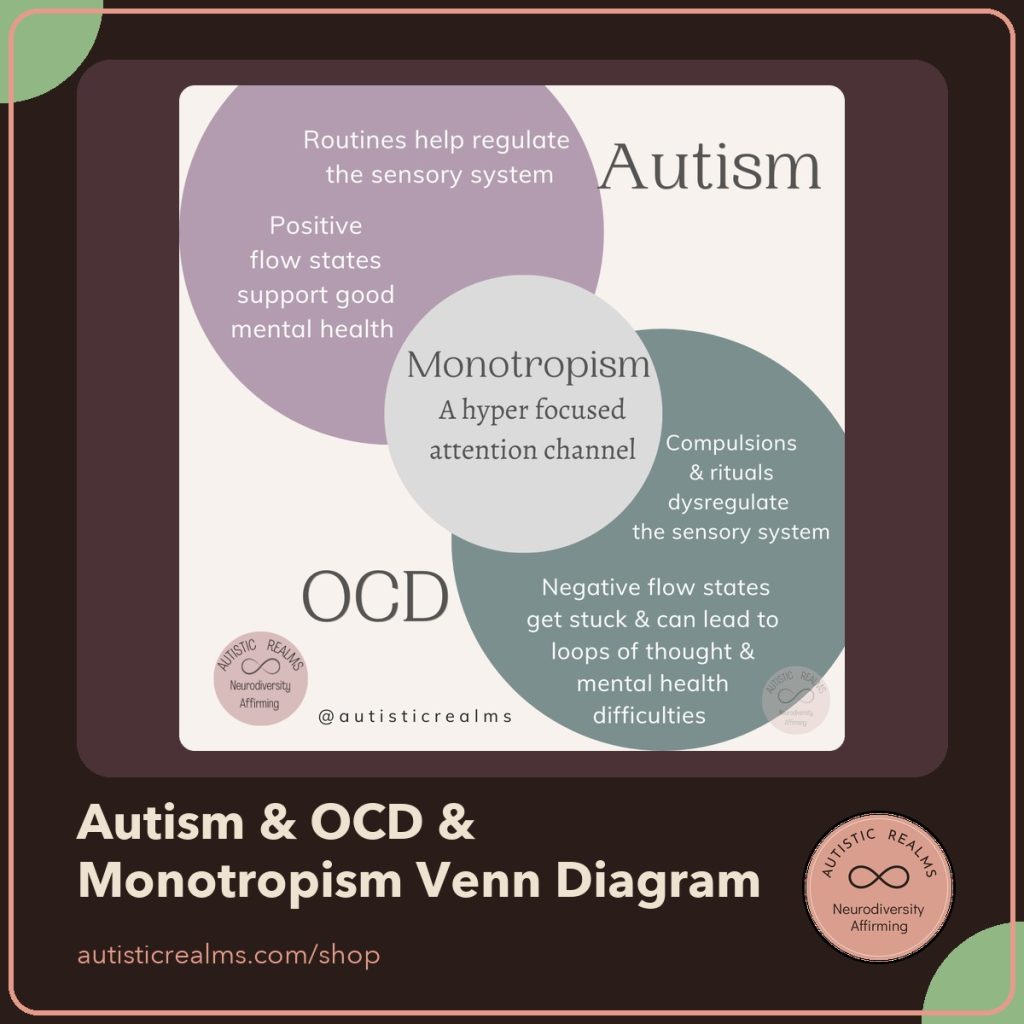
- Looping thoughts. The same depth of attention can get stuck on worries, which is one way monotropism and OCD overlap.
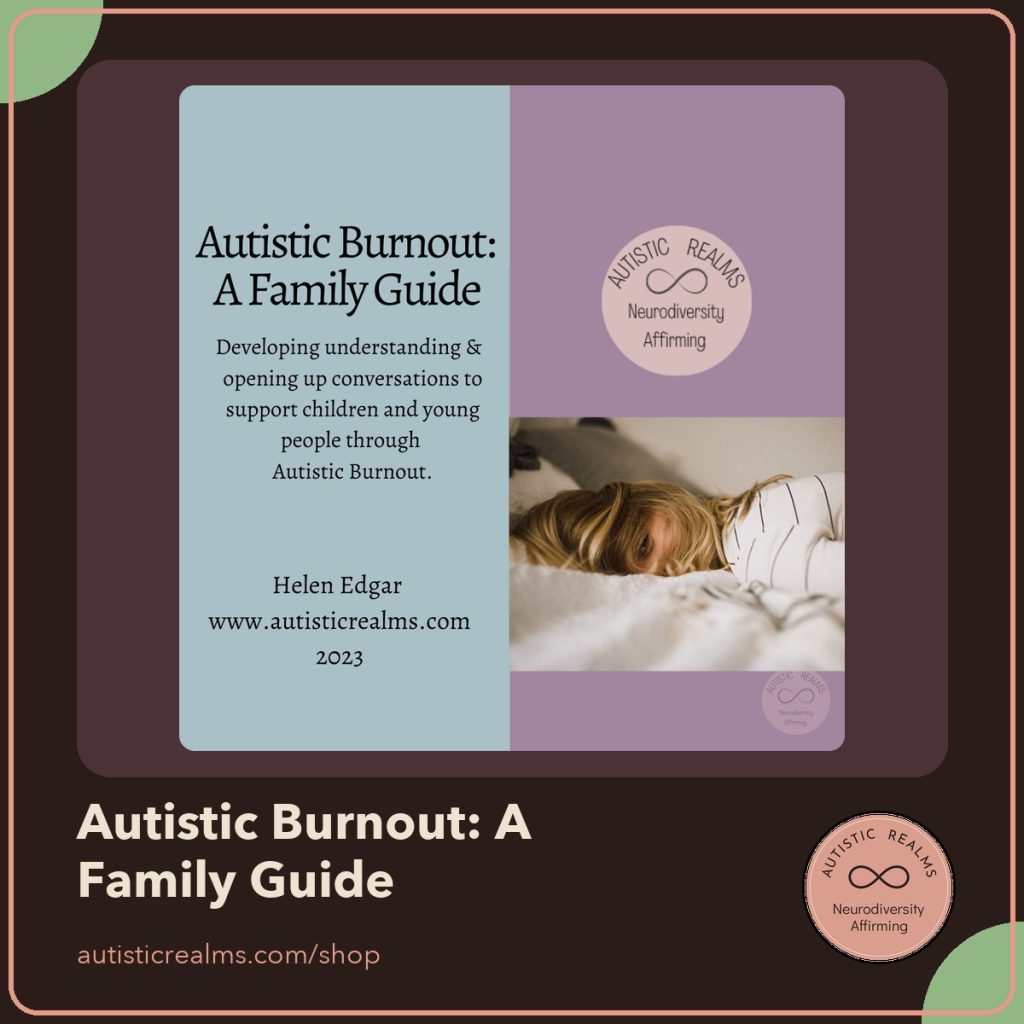
- Burnout. When demands exceed resources for too long, and there is no time for flow, the result is Autistic burnout. Protecting monotropic flow is part of preventing it.
- Shared flow. Turning attention together, towards what the other person is interested in, is the basis of connection, play and learning with monotropic children.
What’s new in monotropism research (2025 to 2026)
Research on monotropism keeps growing, and more and more of it is led by Autistic people. Wenn Lawson (2025), one of the theory’s original authors, describes monotropism as an “insider’s view” of Autistic being. Lawson links monotropic attention to interoception and to object permanence, which helps explain why change can feel so destabilising and why things out of sight can slip out of mind.
Patrick Dwyer and colleagues found that Autistic young people, and their caregivers, report much more hyperfocus than their peers, yet laboratory tasks did not pick this up. This is a gentle reminder that controlled lab settings may miss how Autistic attention really works in everyday life (Dwyer et al., 2025). Their larger study of nearly 500 adults linked hyperfocus and attention to sound sensitivity and anxiety across Autistic, ADHD and AuDHD people (Dwyer et al., 2026).
A scoping review of 43 publications compared flow, hyperfocus, Autistic inertia and monotropism, and found the strongest overlaps between inertia, monotropism and hyperfocus (Pace-Tonna et al., 2026). A study of 101 adults found that monotropic traits were highest in people with a mixed ADHD and Autistic profile, which supports the idea that monotropism runs across diagnostic labels rather than sitting inside one (Papińska, 2026).
Other new work shows how monotropism shapes joy, creativity and community. Neurodivergent creative students named monotropism as one of the roots of their creativity (Erin et al., 2026). Focused interests draw many Autistic adults to museums and galleries, with real benefits for wellbeing (Dantas & Fletcher, 2025). Autistic-led research on what a good Autistic life looks like (Hedlund et al., 2025), on photography as a monotropic art form (Heartwood, 2025), and on the strengths Autistic health care professionals bring to their work (Woods, 2026) all add to a growing picture of monotropism as a way of being, not a deficit. In eating disorder care, Cobbaert (2026) argues that Autistic routines should be understood through their function and lived experience before being labelled as “rigid”.
A note on language and gaps. Some newer papers still describe monotropic focus as “rigid” or use deficit-based terms. I include them because their findings matter, and I read them through a neuro-affirming lens: deep attention is a difference that needs the right environment, not something to fix. Most monotropism research so far has involved mainly white, Western, speaking adults. I would love to see much more research led by and with Autistic people of colour, LGBTQIA+ Autistic people, non-speaking people, people with learning disabilities, and Autistic children and young people themselves.
For a fuller list, see the Winter Research Round-Up 2025 on Monotropism.org (Edgar & Murray, 2026). Full references are in the research list further down this page.
Take the Monotropism Questionnaire
The Monotropism Questionnaire (MQ) is a 47-item self-report measure from Garau and colleagues (2023). You can take a free self-scoring version and read what your score means: Monotropism Questionnaire: take it and understand your results, then interpreting your Monotropism Questionnaire results.
Have a question this page does not answer? The Autistic experiences questions and answers page covers what Autistic people, families and professionals ask most, and the glossary explains the words, from identity and school to burnout and intersectionality.
Guides to monotropism on this site
Start here
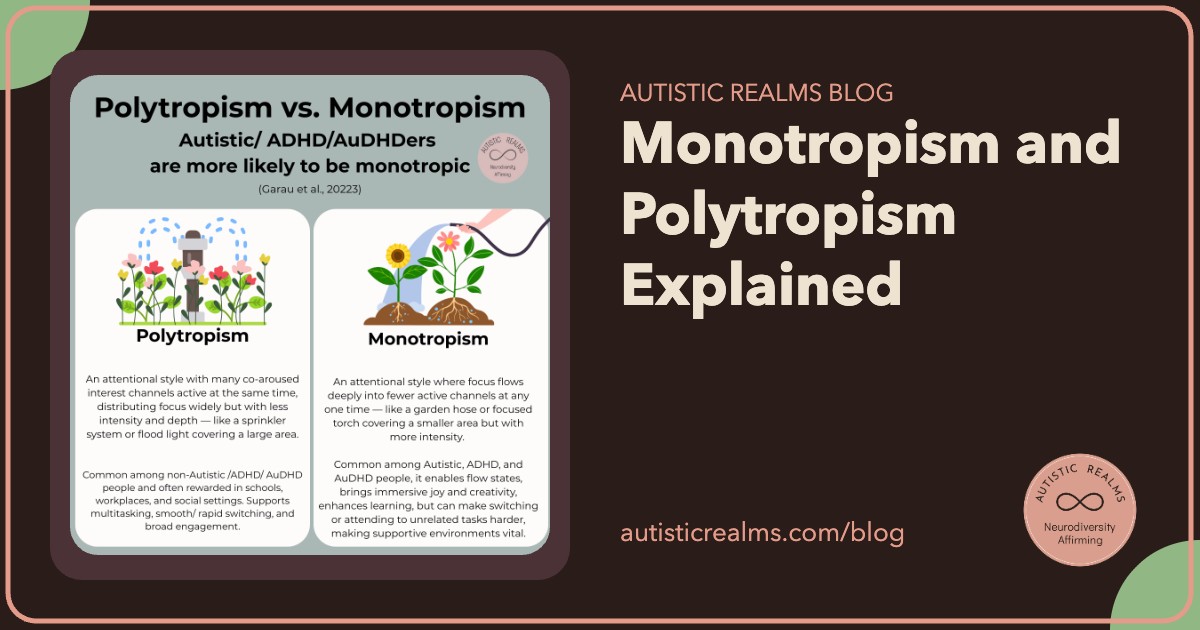
- What is monotropism? Monotropism vs polytropism explained
- Monotropism vs polytropism in ADHD, AuDHD and autism
- Monotropism and experiences of being monotropic
- Monotropism: a poem for children and families
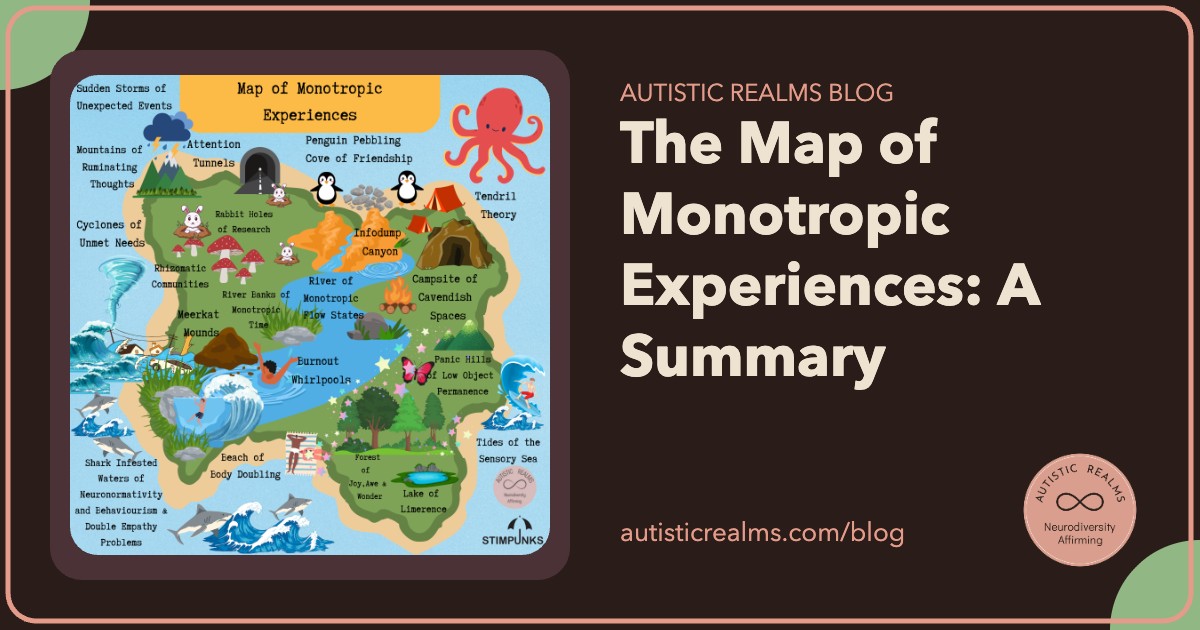
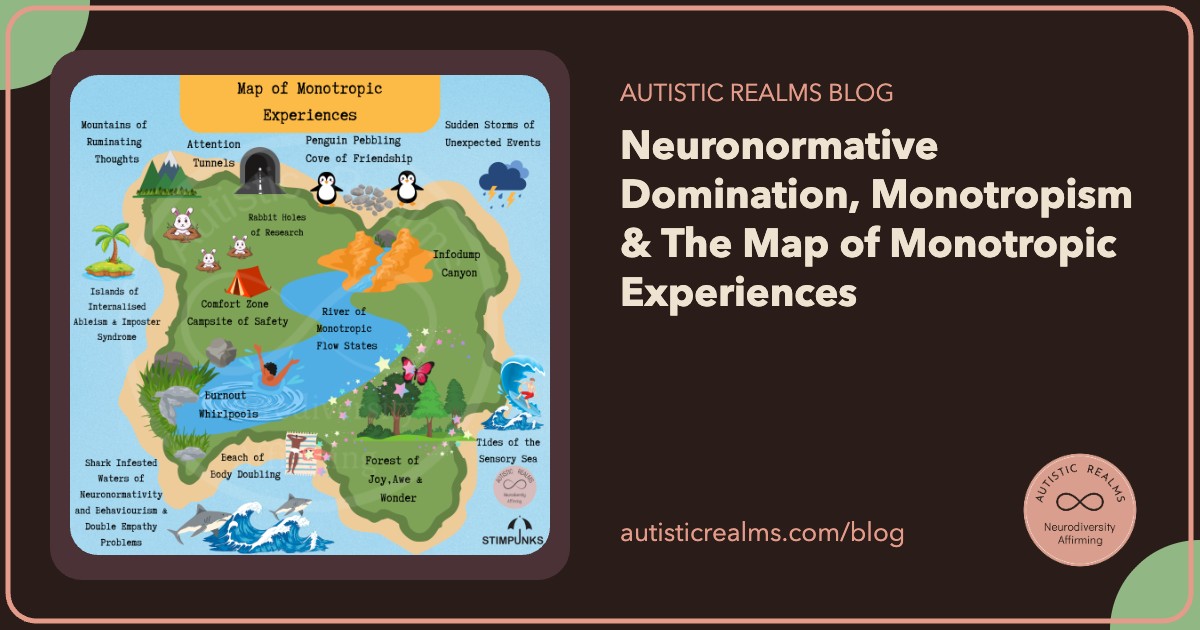
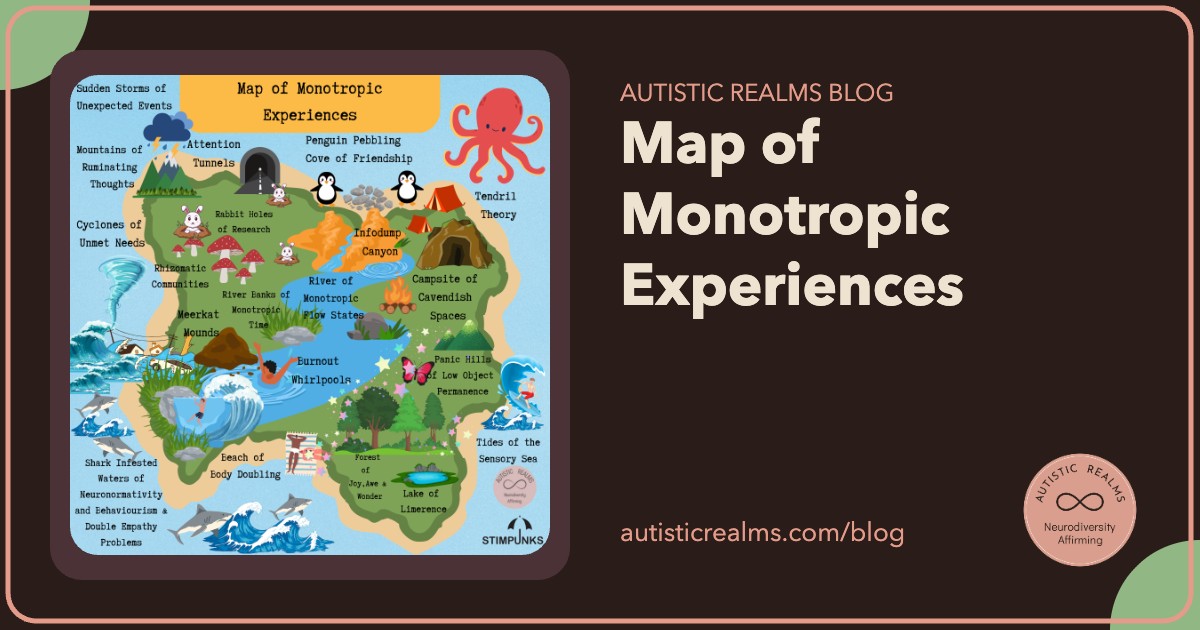
- The Map of Monotropic Experiences: a summary, and the Map’s own website with free training
- What does neurodivergent mean? A plain-language guide
Flow, time and attention
- Monotropic flow state: Autistic focus and deep interests
- Autistic looping thoughts: monotropism and stuck interests
- Monotropic time: Autistic and AuDHD experiences of time
- The monotropic spiral: memory, time and autism
- What are glimmers? Autistic joy and monotropism
- Autistic and ADHD limerence: a monotropism lens
For families, schools and practitioners
- Shared flow: co-regulation with Autistic children
- Embracing Autistic children’s monotropic flow states
- Monotropism and Autistic play: no right way to play
- Why “interest-led” is not enough: embracing monotropism in practice
- Supporting Autistic students: monotropism in the classroom and beyond
- Gestalt language processing, monotropism and young people
- Autistic skill regression: burnout or shifting attention?
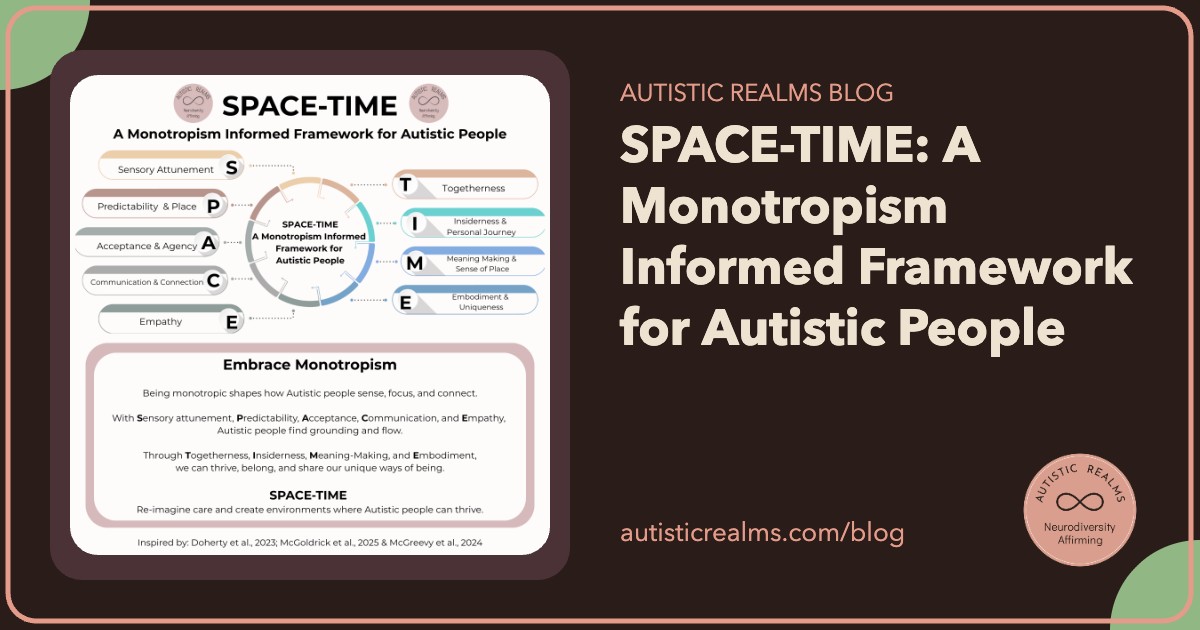
- SPACE-TIME: a monotropism-informed framework
Monotropism, OCD and burnout
- Monotropism, autism and OCD: looping thoughts explained
- Autism and OCD: differences and what could help
- Autistic burnout: signs, recovery and resources
- Going deeper: rest, burnout and monotropic flow
- Reclaiming rest: Autistic burnout, monotropism and resistance
Resources, e-books and courses
- An Introduction to the Theory of Monotropism, a free e-book with Fergus Murray
- Embracing Monotropism and Preventing Burnout, an e-book, pay what you can
- My Monotropic Map: Workbook and the free Map of Monotropic Experiences training
- All monotropism visuals in the shop, pay what you can
- Re-Storying Autism course and Building a Positive Autistic Identity, both built on monotropism
- Monotropism.org, the home of the theory, run by Fergus Murray
Everything below is the longer collection of writing, research, videos, podcasts and books about monotropism that I have gathered over the years.
Monotropism & Being Monotropic

The theory of Monotropism was developed by Dr Dinah Murray, Wenn Lawson and Mike Lesser (2005) in the late 1990’s and their ideas were published in their paper, Attention, monotropism and the diagnostic criteria for autism. They stated, “At any one moment the amount of attention available to a conscious individual is limited…. The authors suggest competition between mental processes for scarce attention is an important factor in the shaping of the cognitive process.”(Murray et al., 2005).
The word monotropism (was coined for Murray in 1992 by Jeanette Buirski)
Monotropism is increasingly considered to be the underlying principle behind autism and is becoming more widely recognised especially within autistic and neurodivergent communities. Fergus Murray, in their article Me and Monotropism: A unified theory (2018), describes monotropism as a ‘pull’. Murray describes montropism as ‘resting on a model of the mind as an interest system’: we are all interested in many things, and our interests help direct our attention. Different interests are salient at different times. In a monotropic mind, fewer interests tend to be aroused at any time, and they attract more of our processing resources, making it harder to deal with things outside of our current attention tunnel’.

My experience of being monotropic feels like having a channel of energy that flows through the whole body mind, it is completely consuming. It feels like there is a force within monotropism that draws me into specific channels of thinking and enables me to hyperfocus, it can lead to high levels of engagement and motivation.
Monotropism can create a happy ‘flow state’; a monotropic way of thinking and processing can sweep you along; much like a river, it has momentum and can have a deep intense current. It can be a wonderful experience of escapism and regulation. Engaging in monotropic flow states is like entering a happy state of mind, where you may become so hyper-focused that nothing else matters or is even noticed around you.
Monotropism is a good way of conceptualising how autistic special interests can support better mental health. By embracing the theory of monotropism, I feel we can gain an understanding of how flow states may help to recharge and regulate the sensory system. Embracing a natural state of monotropic flow can help to enable positive mental health, work and also learning outcomes for autistic people.
However, I also feel an understanding of monotropism could support a better understanding of the mental health difficulties that some autistic people may experience. When in a flow state it can be hard to shift attention channels to engage in different tasks, which may make daily life quite challenging. It is hard to pull out of / or switch channels of attention that are so consuming. As much as monotropism can create a happy flow state, I feel it can also lead to darker, negative flow states and be exhausting to manage.
I firmly believe that a deeper understanding of monotropism may help reduce the impact of autistic burnout and could improve the mental health outcomes for autistic people. Research has slowly been emerging over the last few years, but this area still needs far more research.
I am happy to support any projects about monotropism / autistic burnout if time and my personal / family commitments allow.
Please get in touch with me at helen@autisticrealms.com
Writing & Resources

Check out my Map of Monotropic Experiences. The supporting resource page has been created in collaboration with Stimpunks.
Downloadable PDFs and posters of The Map of Monotropic Experiences are now available in Stimpunks Shop (all profits donated to Stimpunks Foundation to support community work).
Training resources coming soon!
More Resources!

Monotropism.org – The Main Website for all things Monotropism related – explanations, history, up-to-date research and more! (hosted by Fergus Murray)
https://monotropism.org/
Wenn Lawson’s website about all things Autistic and Monotropism related: https://www.buildsomethingpositive.com/wenn/research.html
Stimpunks – Shared blogs/infographics and resources about monotropism (ongoing)
https://stimpunks.org/glossary/monotropism/
Neurodiverse Connection – I am a regular blog contributor writing about autism, mental health and education. Recent blogs have included:
The Monotropism Questionnaire (Helen Edgar, Aug 23)
Embracing Children’s Monotropic Flow States (Helen Edgar, Sept 23)
How learning about monotropism changed my view of being Autistic (Guest contributor Sept 2025)
National Autistic Society:
What is monotropism? (Helen Edgar & Tanya Adkin, 2025)
&
Understanding a neuroaffirming theory of autism (Helen Edgar and Tanya Adkin, Sept 2025)
Thinking Person’s Guide to Autism – ‘Supporting Young People through Autistic Burnout’ (Helen Edgar, Sept 23), highlighting the importance of understanding monotropism to support people through autistic burnout recovery.
Autistic Burnout – Autism Understood – I contributed to the autistic burnout resources on this amazing website for young people developed by Spectrum Gaming Team (May 23)
Monotropism – Recent writing on Monotropism – Referenced on the Monotropism website by Fergus Murray & also guest contributor to seasonal update blogs about monotropism research (ongoing).
The PDASpace – Guest blog writer (ongoing) including various articles highlighting the importance of understanding monotropism to support the well being of neurodivergent young people and their families at home and in educational settings.
Royal Foundation Centre for Early Childhood – Referenced in Kerry Murphy’s ‘Embracing Neurodivergent Pathways of Development’ (Oct 23)
Anna Freud – National Centre for Children and Families – Autistic Realms is a recommended resource in their Guide to Neurodiversity in the Early Years (April 2023)
TeachingTimes EYFS – A Template For A Neurodivergent-Friendly Education Framework? – TeachingTimes (Helen Edgar, May 2023)
Spectrum Gaming Epic Autism Padlet Resources – volunteer admin and contributor to an evolving collection of the best neurodiversity affirming free access resources for young people and families, including a section about monotropism (ongoing)
Kelly Mahler and Kieran Rose – Interoception and Monotropism
https://www.kelly-mahler.com/product/interoception-and-monotropism/
Kerrry Murphy: Diverse Pathways:
https://diversepathways.org/
Why Monotropism is made for Early Childhood
https://diversepathways.org/f/why-monotropism-is-made-for-early-childhood-pt13
London Autism Podcast
My deep dive into Monotropism and understanding how Autistic attention shapes experience, why burnout happens, and how reclaiming rest becomes a radical and restorative practice.
https://podcasts.apple.com/gb/podcast/interview-with-helen-edgar-on-the-topics/id1440829884?i=1000731782978
More Research & Blogs

Original article by Murray, Lesser & Lawson (2005), Attention, monotropism and the diagnostic criteria for autism Autism, 9(2), 139–156.
Aiston, J., Koteyko, N., & Van Driel, M. (2025c). Discourse-based approaches to autistic focussed interests: Understanding shared focus, mutual accommodation, and multimodal expression. Applied Linguistics. https://doi.org/10.1093/applin/amaf006
Atkinson, A. (2026). An interest-based exploration of monotropism and its use in the classroom. In N. Keates & K. Waldock (Eds.), Neurodivergent education and lifelong learning (pp. 129–146). IGI Global Scientific Publishing. https://doi.org/10.4018/979-8-3693-8044-4.ch007
Bertilsdotter Rosqvist H., Hultman L., et Hallqvist J., Energy Management: Experiences of young autistic adults in work, leisure activities and relationships, Alter [En ligne], 17-3 | 2023, mis en ligne le 20 Septembre 2023, consulté le 03 mars 2024.
Brosnan, M., & Camilleri, L. J. (2025). Neuro-affirmative support for autism, the Double Empathy Problem and monotropism. Frontiers in Psychiatry, 16. https://doi.org/10.3389/fpsyt.2025.1538875
Cobbaert, L. (2026). Beyond appearances: Understanding autistic behaviours through context, function and lived experience in eating disorder care. Journal of Eating Disorders, 14(1). https://doi.org/10.1186/s40337-026-01810-8
Dantas, S., & Fletcher, A. (2025). Focused interests, motivation, and museum/gallery attendance: A mixed-methods survey exploring autistic adults’ experiences and wellbeing outcomes. Neurodiversity, 3. https://doi.org/10.1177/27546330251394513
Dwyer, P., Sillas, A., Saron, C. D., & Rivera, S. M. (2025). Investigating autistic hyperfocus and monotropism: Limited convergence of event-related potentials, laboratory tasks, and questionnaire responses. Research in Autism, 127, Article 202683. https://doi.org/10.1016/j.reia.2025.202683
Dwyer, P., Williams, Z. J., Lawson, W. B., & Rivera, S. M. (2024). A trans-diagnostic investigation of attention, hyper-focus, and monotropism in autism, attention dysregulation hyperactivity development, and the general population. Neurodiversity, 2. https://doi.org/10.1177/27546330241237883
Dwyer, P., Williams, Z. J., Lawson, W., & Rivera, S. M. (2026). A trans-diagnostic investigation of attention and diverse phenotypes of “auditory hyperreactivity” in autism, ADHD, and the general population. Journal of Attention Disorders, 30(1), 57–81. https://doi.org/10.1177/10870547251361226
Dwyer, P., Sillas, A., Prieto, M., Camp, E., Nordahl, C. W., & Rivera, S. M. (2024). Hyper‐focus, sticky attention, and springy attention in young autistic children: Associations with sensory behaviors and cognitive ability. Autism Research, 17(8), 1677–1695. https://doi.org/10.1002/aur.3174
Edgar, H., & Murray, F. (2026, March 21). Winter research round-up 2025. Monotropism.org.
Erin, B., Shaw, S. C. K., Quadt, L., & Eccles, J. A. (2026). Colours of the mind: A qualitative study exploring the relationship between neurodivergence and creativity. PLOS ONE, 21(10), Article e0359079. https://doi.org/10.1371/journal.pone.0359079
Field, C., & Sylvan, K. (2025). Neurodiversity and attentional normativity. Philosophy and Phenomenological Research, 111(2), 513–531.
Gillespie‐Smith, K., Mair, A., Alabtullatif, A., Pain, H., & McConachie, D. (2024). A Spectrum of Understanding: A Qualitative Exploration of Autistic Adults’ Understandings and Perceptions of Friendship(s). Autism in Adulthood.
Goldman, M. (2025). From Pathology to Adaptation: Reframing focused interest engagement as self and community care. Neurodiversity, 3. https://doi.org/10.1177/27546330251328415
McGoldrick, E., Munroe, A., Ferguson, R., Byrne, C., & Doherty, M. (2025). Autistic SPACE for Inclusive Education. Neurodiversity, 3. https://doi.org/10.1177/27546330251370655 (Original work published 2025)
Heartwood, R. (2025). I spy with my monotropic eye: Photography as a particularly autistic medium. Ought: The Journal of Autistic Culture, 6(2), Article 12. https://doi.org/10.9707/2833-1508.1226
Heasman, B., Williams, G., Charura, D., Hamilton, L. G., Milton, D., & Murray, F. (2024). Towards autistic flow theory: A non‐pathologising conceptual approach. Journal for the Theory of Social Behaviour. https://doi.org/10.1111/jtsb.12427
Hedlund, Å., Wester, M. E., Edenvik, P., Ingard, C., Isakson, K., Sabel, L. K., Unéus, D., Lindström, T., Black, M. H., & Bertilsdotter Rosqvist, H. (2025). A good autistic life: An autistic-led conceptualization of autistic flourishing through autistic women’s lived experiences. Frontiers in Sociology, 10, Article 1611803. https://doi.org/10.3389/fsoc.2025.1611803
Lawson, W. (2025). Research by autistic researchers: An “insider’s view” into autism. The autistic way of being. Frontiers in Psychiatry, 16, Article 1664507. https://doi.org/10.3389/fpsyt.2025.1664507
McGreevy, E., Quinn, A., Law, R., Botha, M., Evans, M., Rose, K., Moyse, R., Boyens, T., Matejko, M., & Pavlopoulou, G. (2023). An experience sensitive approach to care with and for autistic children and young people in clinical services. (Pre-print).
Neville, F., Sedgewick, F., McClean, S., White, J., & Bray, I. (2024). Reacting, retreating, regulating, and reconnecting: How autistic adults in the United Kingdom use time alone for Well-Being. Autism in Adulthood. https://doi.org/10.1089/aut.2024.0148
O’Neill, C., & Kenny, N. (2023). “I Saw Things through a Different Lens. . .”: An Interpretative Phenomenological Study of the Experiences of Autistic Teachers in the Irish Education System. Education Sciences, 13(7), 670.
Pace-Tonna, C., Murtaza, M., Rodak, T., Farb, N., Ryan, W., & Lai, M.-C. (2026). Flow and similar attentional states in autism and ADHD: A scoping review of similarities and differences. Perspectives on Psychological Science. Advance online publication. https://doi.org/10.1177/17456916261470783
Papińska, A. (2026). Does monotropism bridge ADHD and ASD? A latent profile analysis in adults. Personalized Psychiatry, 5(1), e8–e18. https://doi.org/10.5114/psychs.2026.159107
Pritchard-Rowe, E., De Lemos, C., Howard, K., & Gibson, J. (2024). Autistic adults’ perspectives and experiences of diagnostic assessments that include play across the lifespan. Autism. https://doi.org/10.1177/13623613241257601
Pritchard-Rowe, Lemos, Howard, and Gibson (Aug 2023) Diversity in Autistic Play: Autistic Adults’ Experiences
Rapaport, H., Clapham, H., Adams, J., Lawson, W., Porayska-Pomsta, K., & Pellicano, L. (2023). “In a State of Flow”: a qualitative examination of autistic adults’ phenomenological experiences of task immersion. Autism in Adulthood.
Shepherd, J., Sutton, B. S., Smith, S., & Szlenkier, M. (2024). ‘Sea‐glass survivors’: Autistic testimonies about education experiences. British Journal of Special Education.
Tarragnat, O. (2025). Autistic situated knowledges and the science question in autism: Non-innocent metaphors in the theory of monotropism. HUMANA.MENTE Journal of Philosophical Studies, 18(47), 133–156.
Wassell, E. (2025). Experiences of autistic joy. Disability & Society, 1–26. https://doi.org/10.1080/09687599.2025.2498417
Woods, S. E. O. (2026). Why we need more autistic health care professionals and how to support them. Autism in Adulthood, 8(1), 5–13. https://doi.org/10.1089/aut.2023.0099
More Blogs
A great accessible article that clearly explains the theory of monotropism by Fergus Murray (2018)
https://www.bps.org.uk/psychologist/me-and-monotropism-unified-theory-autism
Blog about autism and monotropism and flow states by Ferrous / Oolong / Fergus Murray
https://oolong.medium.com/craft-flow-and-cognitive-styles-a47f827fcd6a
David Gray-Hammond’s website about ‘Neuroqueerness, Autistic, and Neurodivergent Experience’. Guest writer Tanya Adkin has also written several articles about monotropism, AuDHD and developed a theory about ‘monotropic split’ which is shared on this website.
https://neurohubcommunity.org/tag/monotropism/
Guest Post: What is monotropic split? – Emergent Divergence (now NeuroHub Community)
Addie. (2024, April 14). Liberated Movement. Monotropic Musing’s Substack.
Browne, C. (Autistic Village). (2024, April 22). School as a Polytropic Environment: The impact on Monotropic minds. Autistic Village.
Jade Farrigton: Spotlight on monotropism by Helen Edgar
Marsh, E. (2024, April 11). Hypersensitive, hyperfocused and ready for “Hijack”: an autistic experience of sensory anxiety – reframing autism. Reframing Autism.
Cook, S. T. (2024, March 18). For the Birds: Hi! I’m Autistic. For the Birds.
Harris, J. (2025) May be I’m Amazed: Flow, Flow, Flow blog
Irion, J. (2023, December 25). Monotropism Employment Theory – Jim Irion. Medium.
Hallett, S. (2024, March 19). Counselling in a Neurodiverse World. Medium.
Aurelialightcaster. (2023, October 9). Monotropism: Facing my Fear of the Depths. Aurelia Under the Radar.
AUDHD Coach Jess. (2025, February). Monotropism & hyperconnectivity explain a LOT for autistic ADHDers. Substack.
BalanceWithBhuvan ( Threads. Monotropism might be the most powerful framework for understanding the neurodivergent mind that most people have never heard of.
Graduate, S. W. (2025, February20). Monotropism. SocialWorkGraduate.
IAmPayingAttention. Instagram. What is Monotropism?
Murray, F. (2025, April 5). Autistics on Autism – Fergus Murray. Medium.
Spaced out & smiling. (2025, January 19). All about the ‘long hug’.
Added November 2026, shared through the Thriving Autistic Discovery Programme:
Dwyer, P. (n.d.). Monotropism: Between obsessive joy and overwhelm. Olga Tennison Autism Research Centre blog, La Trobe University.
Hallett, S. (2021, September 14). Loops of concern. Medium. Revisited in 2025: Loops of concern – revisited.
Marsh, E. (2025, September 29). Monotropism: Understanding Autistic ways of being through the lens of attention. Reframing Autism.
Murray, F. (n.d.). Starting points for understanding autism: Monotropism in practice. Medium.
Pritchard, T. (n.d.). Monotropism [Collection of articles, videos and resources]. Tigger Pritchard.
Websites

Comprehensive website set up by Fergus Murray. Read about explanations and applications of monotropism theory, its history, and what’s happening now. Hosting the archives of Dinah Murray.
StimPunks
An amazing website to dive into that draws together writing and ideas from across the world about neurodivergence, they also have a wonderful blog series and the most comprehensive up to date glossary about everything to do with neurodiversity / disability and neurodivergence I have found.
https://stimpunks.org/glossary/monotropism/
SaltForMySquid
A cartoon about monotropism by SaltForMySquid that may be good for young people.
https://saltformysquid.com/monotropism/
An EPIC new website created by autistic young people for autistic young people. Fully accessible, Autism-affirming with amazing signposting throughout. Created by the fabulous Spectrum Gaming Team.
https://autismunderstood.co.uk/autistic-differences/monotropism/
National Autistic Society: What is monotropism? Understanding a neuroaffirming theory of autism
Diverse Pathways: Diverse Pathways of Development is a strengths-led, neurodiversity-affirming project offering developmental insights that honour the lived experiences of neurodivergent children. Grounded in early years expertise, disability justice, and collective advocacy, we are not here to fix the SEN(D) system, we are here to reimagine it entirely.
https://diversepathways.org/
Videos
Valeria Garau’s presentation about the Monotropism Questionnaire Research (2022)
Kieran Rose (The Autistic Advocate) has a great series of YouTube videos to support his website and training about autism. This is a great video clearly explaining monotropism.
https://youtu.be/qUFDAevkd3E
Studio III Atlass – A wonderful video with Damian Milton discussing monotropism and flow states
https://youtu.be/MUDQD1p2zFE
Kelly Mahler: Monotropism and Interoception
Great video about monotropism from Aucademy an amazing autistic led educative platform
https://www.youtube.com/live/cEtLOGcTA0A?feature=share
Fergus Murray explaining The Monotropism Questionnaire
Yo Samdy Sam: AuDHDers Take the Monotropism Test
Autism From The Inside: Autism and Monotropism: How to Leverage Your Monotropic Brain
Small Helpings Monotropism
Autistamatic: Special Interests, Autism and Relationships
Autistic FM: Autism and Monotropism
Richard Woods, Why does the Monotropism Questionnaire (MQ) have anxiety related items?
Wenn Lawson: Understanding Monotropism
This short video adds some further thoughts on what it’s like to be monotropic. It explains and also shows how to support monotropic Autistic individuals
I’m Autistic, Now What?: The best theory of autism you’ve probably never heard of
Autistamatic: Monotropism: One step at a time
Fergus Murray: Craft, flow and cognitive styles
Podcasts
‘Broadcaster, John Offord chats to Dr Dinah Murray, an independent researcher with a background in linguistics, anthropology and philosophy and her son Fergus Murray, a science teacher, writer and ‘autist’ about Monotropism, a cognitive strategy posited to be the central underlying feature of autism.’
The Different Minds podcast series • A podcast on Spotify for Podcasters
BBC podcast with Dr Wenn Lawson and Jamie Knight ‘Monotropism Changed my Life’
https://www.bbc.co.uk/programmes/p0fbt947
Jesse Meadows interviews Fergus Murray (2025). Autistic Pride is Impossible Without Weird Pride/Attention Tunneling with Fergus Murray. Sluggish.
Nic King & Kate Fox interview Tanya Adkin & David Gray-Hammond (2025). Special – Monotropism (Part One), Special – Monotropism (Part Two); and Fergus Murray & Sonny Hallett (Part One). Neurotypicals Don’t Juggle Chainsaws.
Heasman Flow Lab with Gemma Williams, Lorna Hamilton, Fergus Murray & Brett Heasman. Towards Autistic Flow Theory (Flow Podcast, Episode 1).
Autism Stories: Dinah Murray. Autism Stories.
Middletown Centre for Autism (2025, July 9). Monotropism with Joan McDonald. The Middletown Centre for Autism Podcast.
Books
The Autism Books by Autistic Authors Project now has a page specifically dedicated to books about monotropism!
Bastow, C., & Case, J. (2025). Someone like me: An Anthology of Non-Fiction by Autistic Writers. Verve Books. (inlcudes chapter by Fergus Murray: Monotropic Superdrive at Home.
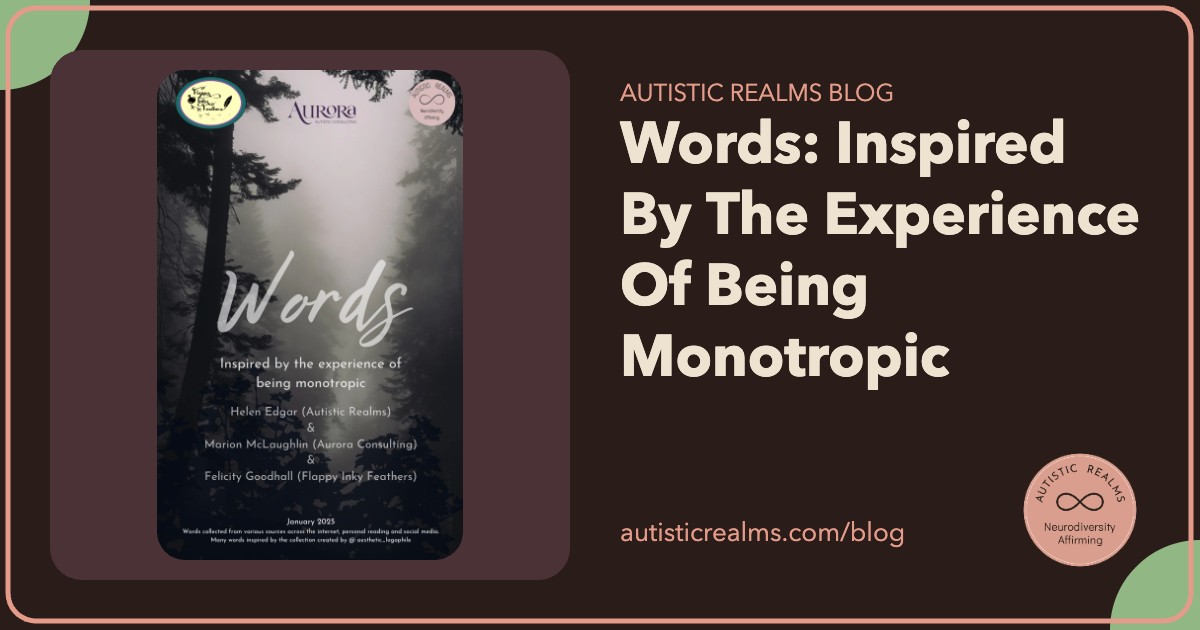
Edgar, H., Goodhall, F., & McLaughlin, M., (2025). Words Inspired by the Experience of Being Monotropic. Autistic Realms.
Harris, J. (2025). Maybe I’m amazed. John Murray.
Lawson, W. B. (2025). Autism and being monotropic: What medical and other practitioners need to know. Springer Singapore.
Lawson, W. B. (2025). Autism and physical disability: Dual experiences, challenges, and inclusion solutions. Lived Places Publishing.
Lawson, W. (2010). The passionate mind: How people with autism learn. Jessica Kingsley Publishers.
Rosqvist, H. B., & Jackson-Perry, D. (2024). The Palgrave Handbook of Research Methods and Ethics in Neurodiversity Studies. Palgrave Macmillan.
Stenning, A. (2023). Narrating the many autisms. Routledge. https://doi.org/10.4324/9781003036807
Wharmby P. (2022) What I want to talk about
https://www.goodreads.com/book/show/61111675-what-i-want-to-talk-about?from_search=true&from_srp=true&qid=FQ4D2RIRbV&rank=2
Wharmby P. (2023) Untypical by Pete Wharmby
Untypical: How the World Isn’t Built for Autistic People and What We Should All Do About it by Pete Wharmby | Goodreads
Wood, R. (2019) Inclusive Education for Autistic Children
https://www.goodreads.com/book/show/52280818-inclusive-education-for-autistic-children?from_search=true&from_srp=true&qid=imPqevvwpZ&rank=1
Check out my shop!


Some of my recordings about monotropism
Kieran Rose’s Video about Monotropism
Writing
Read my resources related to monotropism.
-

Deep Focus, Deep Understanding: Exploring Monotropism Through an Autistic Lens
Written by Helen Edgar,
-
Rewriting My Story: Understanding Myself Through Monotropism
Written by Helen Edgar,
-
My Monotropic Galaxy: A Constellation of My Autistic Self
Written by Helen Edgar,
-
Child-Led Play and Monotropism in Gestalt Language Processors: A Journey of Re-Learning
Written by Helen Edgar,
-
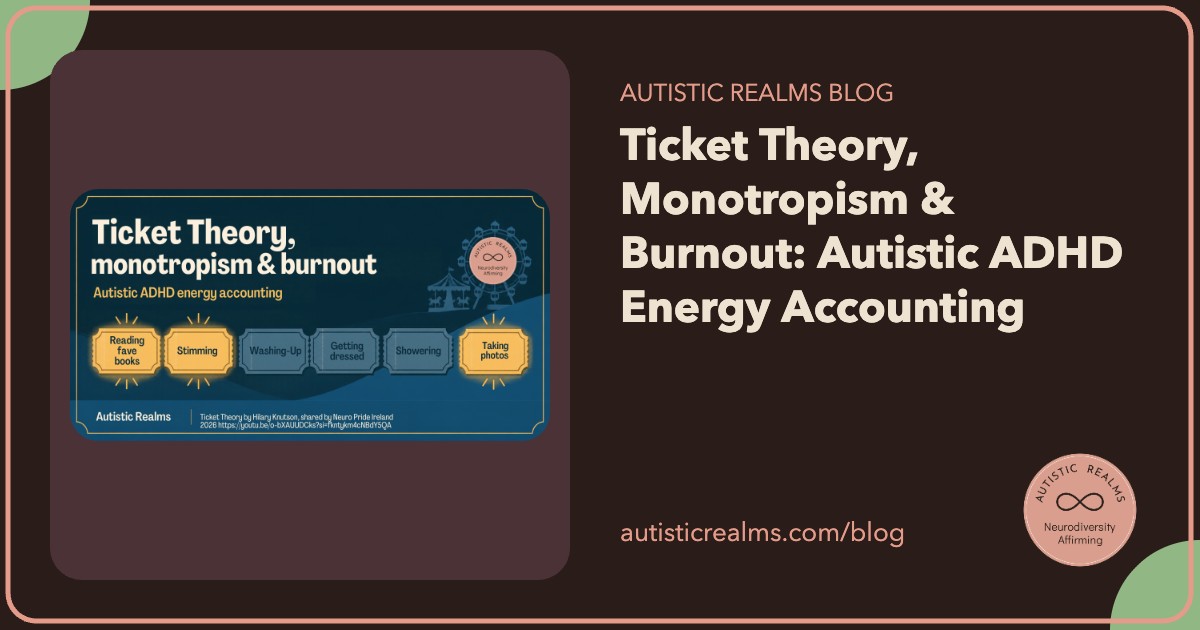
Ticket Theory, Monotropism & Burnout: Autistic ADHD Energy Accounting
Written by Helen Edgar,
-
Spoon Theory and Autism: Energy, Burnout and Monotropism
Written by Helen Edgar,
-
Free Resources for Autistic Adults: The Thriving Autistic Discovery Programme
Written by Helen Edgar,
-
Monotropism, Limerence And Autistic ADHD Experiences
Written by Helen Edgar,
-
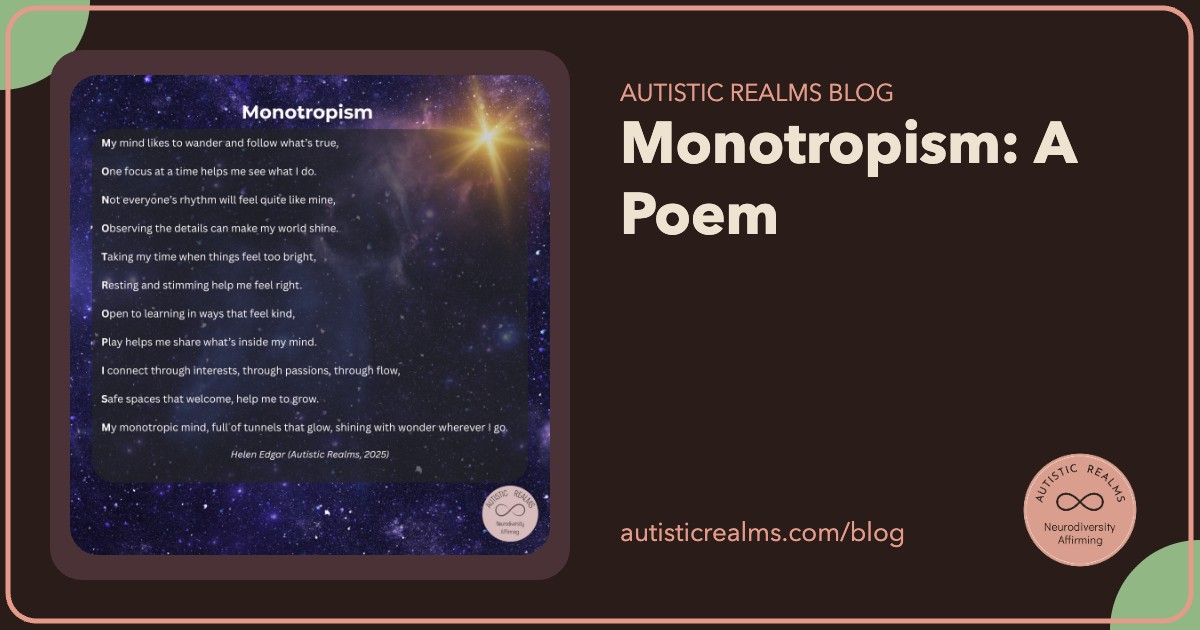
Monotropism: A Poem
Written by Helen Edgar,
-
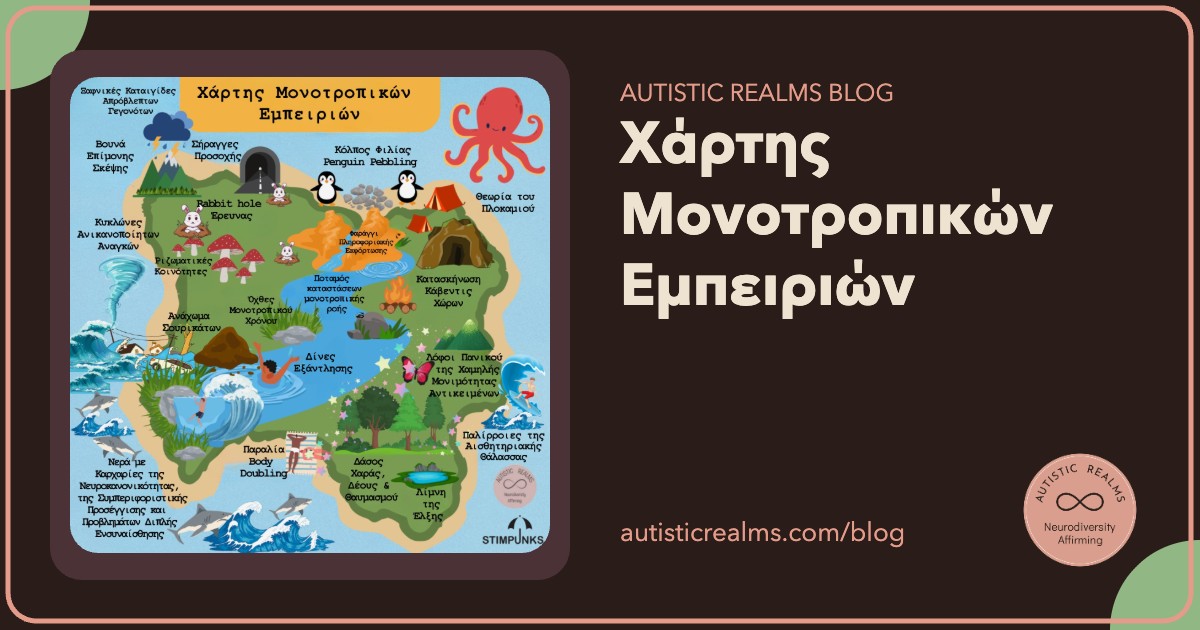
Χάρτης Μονοτροπικών Εμπειριών
Written by Helen Edgar,
-
Why “Interest-Led” Isn’t Enough: Embracing Monotropism & Neuro-Affirming Practice
Written by Helen Edgar,
-
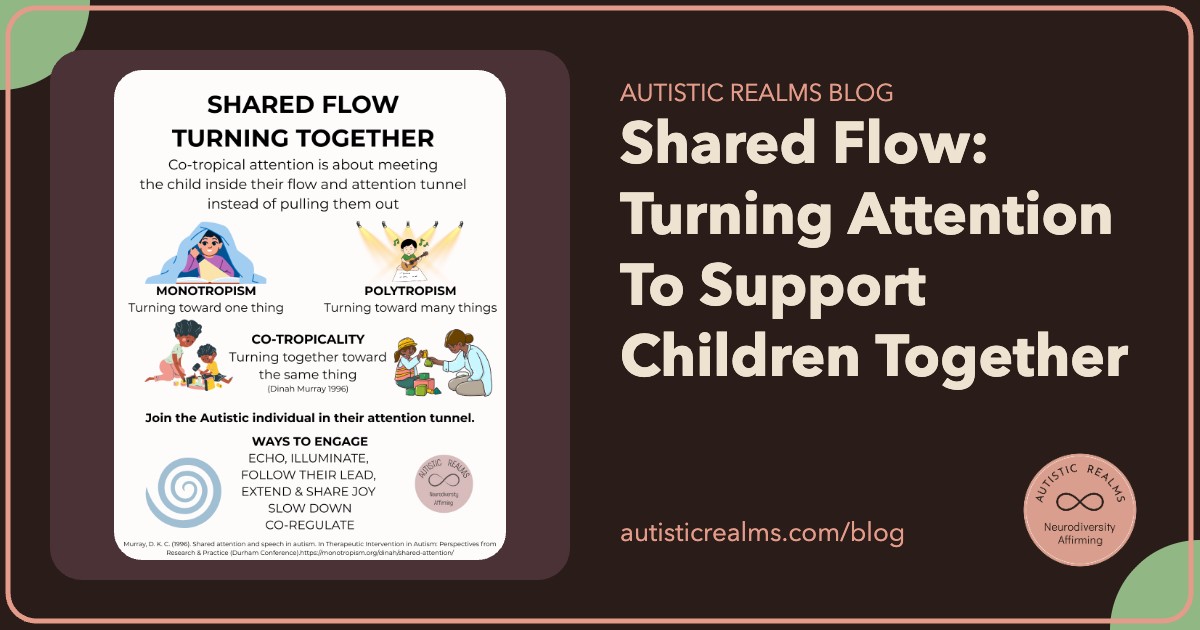
Shared Flow: Turning Attention To Support Children Together
Written by Helen Edgar,
-
Monotropism vs Polytropism: ADHD, AuDHD & Autistic Attention
Written by Helen Edgar,
-
SPACE-TIME: A Monotropism Informed Framework for Autistic People
Written by Helen Edgar,
-
Monotropism and Polytropism Explained
Written by Helen Edgar,
-
Glimmers: Autistic Joy and Monotropism
Written by Helen Edgar,
-
Autistic Pride: Rest, Resistance & Monotropism
Written by Helen Edgar,
-
Unmasking: Reclaiming Our Monotropic Attentional Resources?
Written by Helen Edgar,
-
The Power of Monotropic Flow: Reclaiming Ourselves Through Creative Practice
Written by Helen Edgar,
-
Monotropic Time – A Short Blog
Written by Helen Edgar,
-
-
Monotropic Time
Written by Helen Edgar,
-
Monotropism and Autistic Play
Written by Helen Edgar,
-
The Map of Monotropic Experiences: A Summary
Written by Helen Edgar,
-
Words: Inspired By The Experience Of Being Monotropic
Written by Helen Edgar,
-
Neuronormative Domination, Monotropism & The Map of Monotropic Experiences
Written by Helen Edgar,
-
Gestalt Language Processing, Monotropism & Young People
Written by Helen Edgar,
-
Monotropic Interests and Looping Thoughts
Written by Helen Edgar,
-
Map of Monotropic Experiences
Written by Helen Edgar,
-
Monotropism and Collective Flow
Written by Helen Edgar,
-
Monotropism, Holotropism & Floatation Experiences
Written by Helen Edgar,
-
Interpreting your Monotropism Questionnaire Results
Written by Helen Edgar,
-
Monotropism and The Monotropism Questionnaire
Written by Helen Edgar,
-
Embracing Autistic Children’s Monotropic Flow States
Written by Helen Edgar,
-
Monotropism Questionnaire: Take It and Understand Your Results
Written by Helen Edgar,
-
Monotropism and Experiences of being Monotropic
Written by Helen Edgar,
-
Monotropism = Happy Flow State
Written by Helen Edgar,

For the latest updates, follow monotropism.org on Bluesky.
Shop My Monotropism Visuals
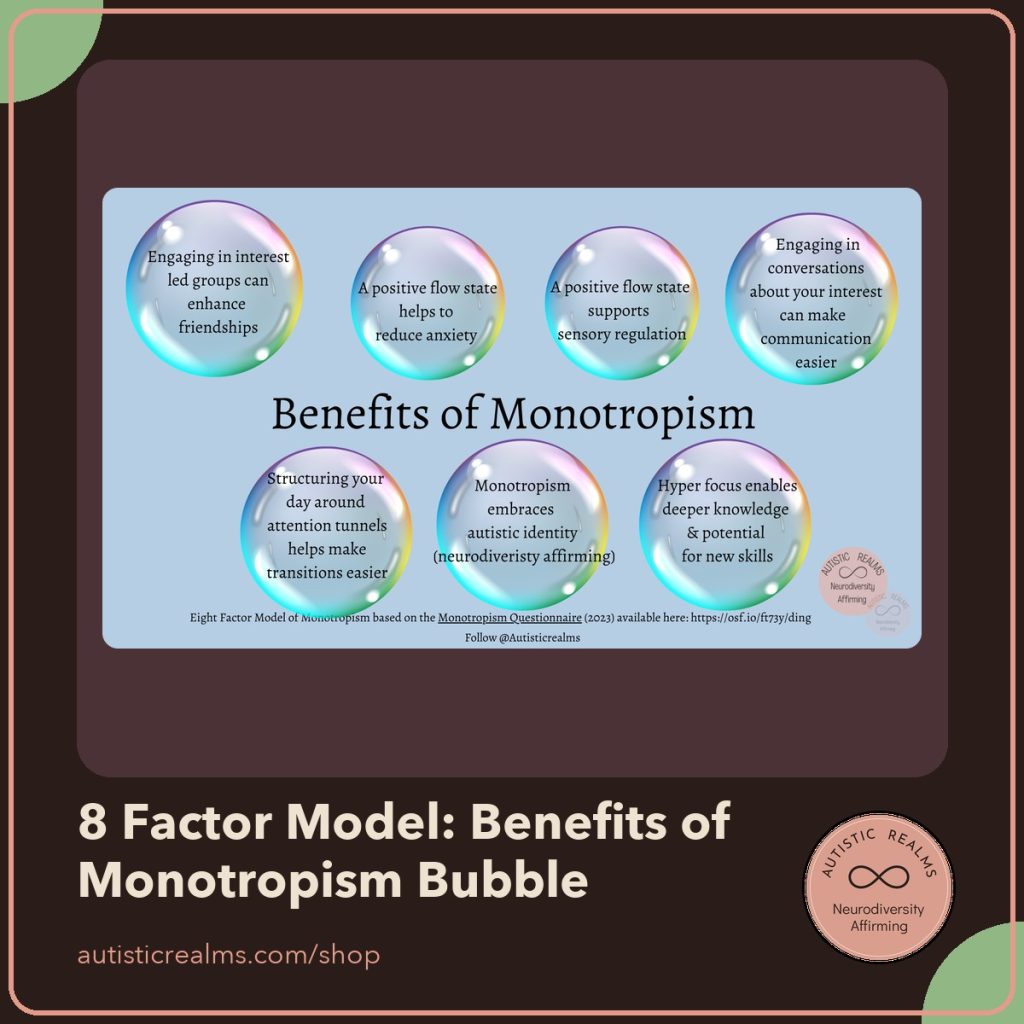
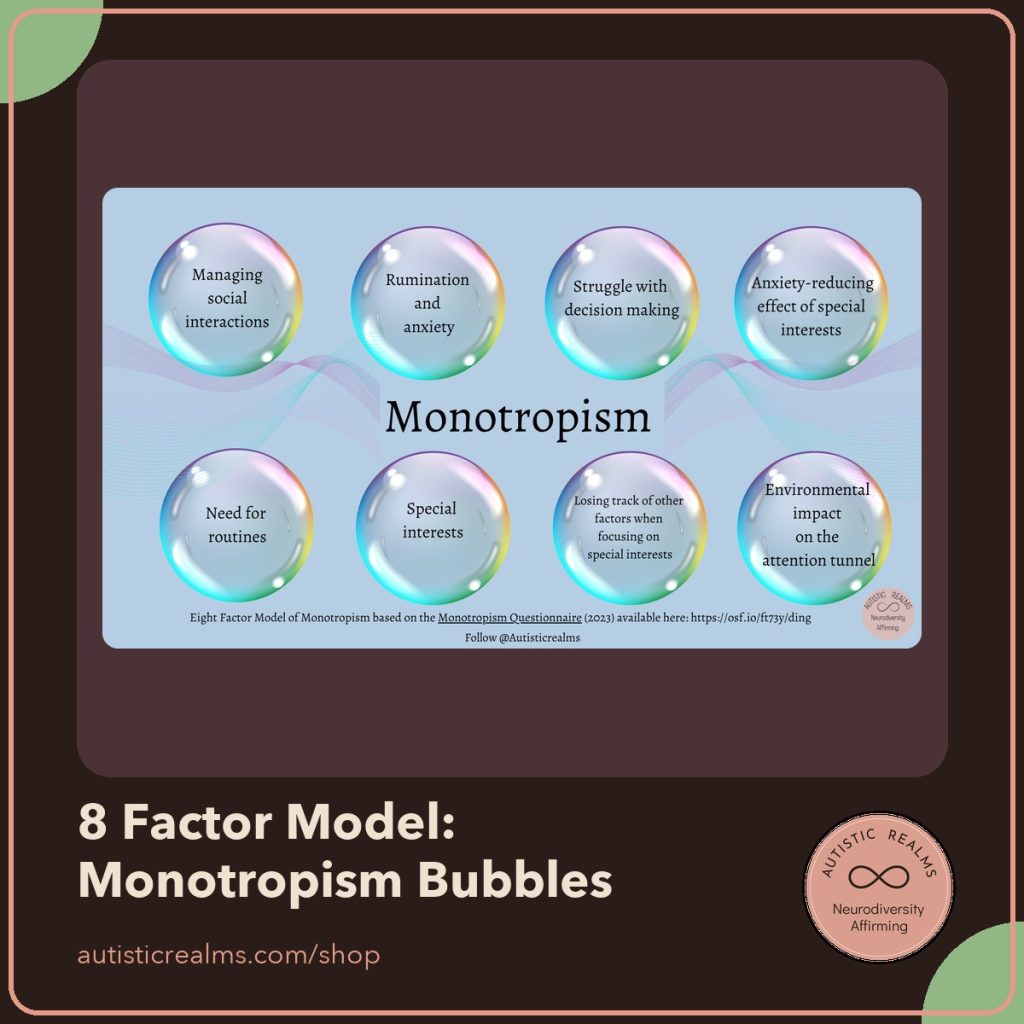
Explore resources that illustrate the Theory of Monotropism and its insights into Autistic attention and interest patterns. These visual supports help explain how attention flows like water, offering powerful frameworks for understanding sensory experiences, information processing, and engagement in neurodivergent individuals.
-
Suggested: £2.00 (pay what you can)
-
Suggested: £2.00 (pay what you can)
-
Free
-
Suggested: £2.00 (pay what you can)
-
Suggested: £2.00 (pay what you can)
-
Suggested: £2.00 (pay what you can)
-
£5.00
-
Suggested: £2.00 (pay what you can)
-
£25.00


Free resources from communities close to my heart
Everything here is free. These resources come from communities close to my heart: Stimpunks Foundation, which I co-direct with Ryan Boren; Thriving Autistic, the Autistic-led social enterprise in Ireland where I am Communications and Community Lead; Re-Storying Autism, the course and workbook David Gray-Hammond and I created together; and Spectrum Gaming, the charity and community for Autistic young people behind Autism Understood and Barriers to Education, where I have volunteered on several projects, including Barriers to Education and their burnout resources.
The Autism Understood and Barriers to Education pages are written especially for Autistic young people, so they are lovely to share with children and teenagers, or to explore together.
Stimpunks Foundation
- Monotropism and Attention Worlds: a rich guide to monotropic attention, flow and interest.
- Monotropism Questionnaire: a free questionnaire for exploring your own attention patterns.
- Monotropism: the glossary entry, with links to related ideas.
- Monotropic Inertia: why switching attention can be so hard, explained kindly.
Thriving Autistic
- Module 4: Monotropism and Attention Styles: Autistic attention, flow and working with your natural attention patterns.
- Discovery by Thriving Autistic: a free, self-paced programme for recently identified Autistic adults, created by Autistic professionals and drawn from the live Discovery Programme.
Re-Storying Autism
- Re-Storying Autism free guides: short, free guides on topics such as monotropism, sensory overload, stimming and co-regulation.
- Free preview lesson: try a lesson from the Autistic-led course and workbook for families, parents, carers and Autistic people, at your own pace.
Autism Understood (for young people)
- Monotropism: Autistic attention explained clearly for young people.
- Autistic Inertia: why starting, stopping and switching can be hard.
- Special Interests: celebrating the joy and comfort of our passions.
What would you add?
Do you know of a resource, organisation, book or piece of research that should be here, or have you spotted a link that has stopped working? I would love to hear from you, as this guide grows with our community.
Last reviewed: November 2026